+86 13163919000
 info@xinmeiintelligent.com

Understanding the Structural Difference
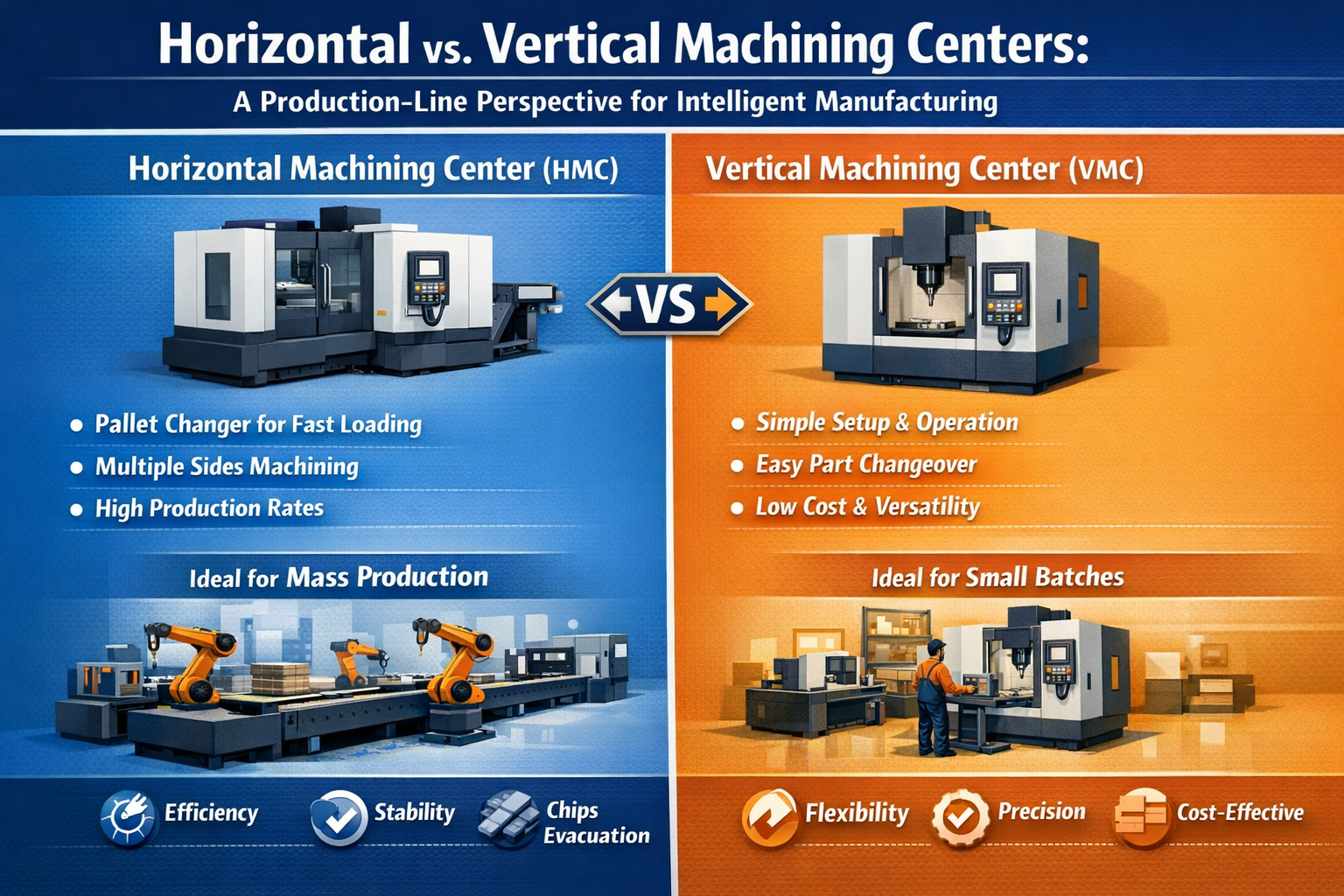
Vertical Machining Centers (VMCs)
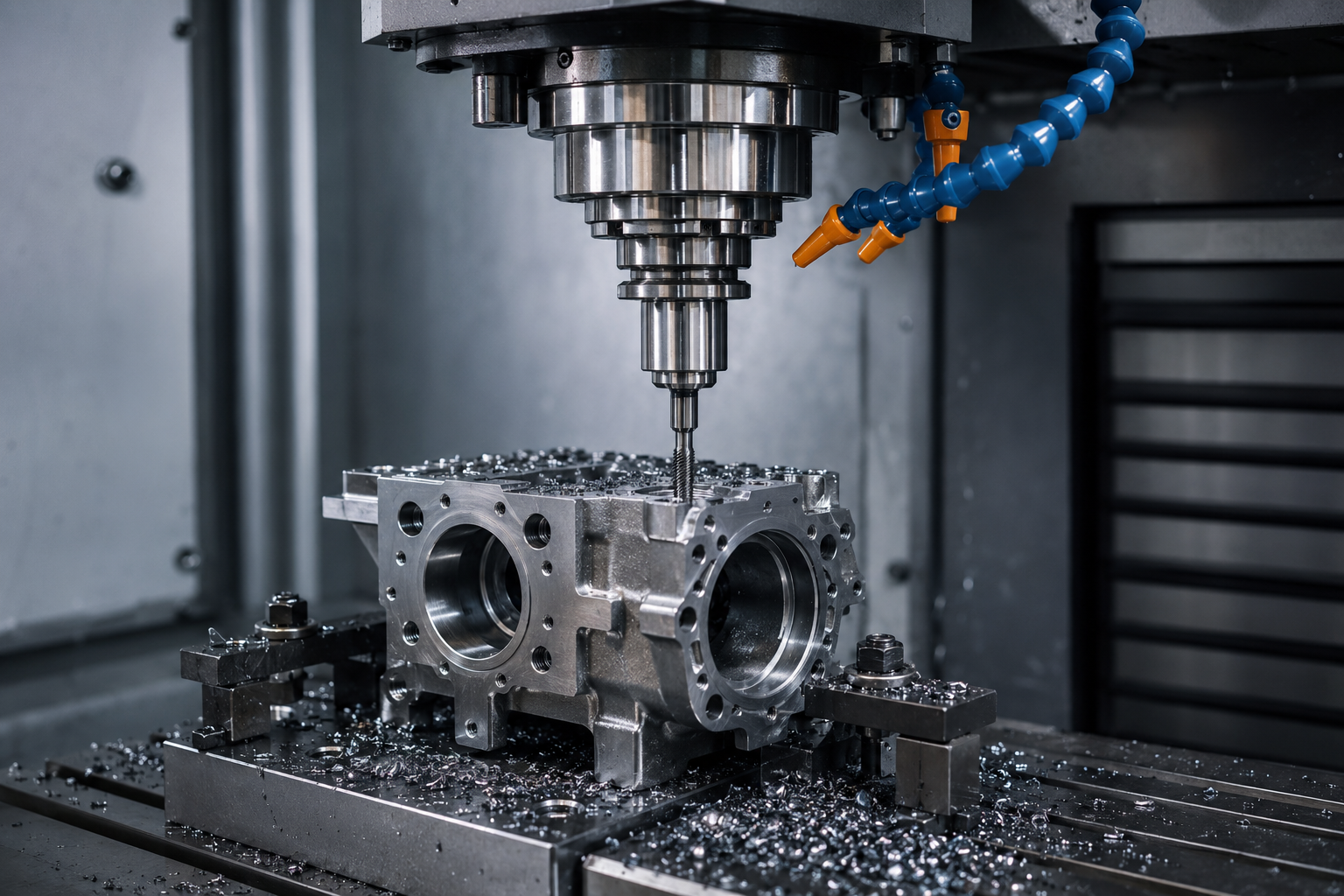
Vertical machining centers position the spindle vertically, making them intuitive to operate and widely adopted across various industries.
Typical characteristics:
-
Easier programming and setup
-
Clear visibility during machining
-
Suitable for drilling, tapping, and surface milling
-
Efficient for small to medium-sized components
VMCs are commonly used where flexibility and cost efficiency are required, especially in production environments with frequent product changes.
Horizontal Machining Centers (HMCs)
Horizontal machining centers feature a horizontally oriented spindle, offering advantages in chip evacuation and multi-face machining.
Typical characteristics:
-
Improved chip removal through gravity
-
Capability for machining multiple faces in one setup
-
Higher efficiency in long production runs
-
Strong compatibility with pallet systems and automation
HMCs are often selected for high-volume production and complex components that demand stable quality and consistent output.
Moving Beyond Machine Comparison
While machine orientation affects machining behavior, productivity gains in modern factories rarely come from machine selection alone. The true efficiency lies in how machining centers are deployed within a complete production workflow.
In industries such as plumbing and sanitary ware, door control hardware, fire-fighting valves, hardware locks, and auto & motorcycle parts, components frequently require multiple processes, including:
-
Drilling
-
Tapping
-
Milling
-
Boring
-
Surface finishing
When these processes are distributed across isolated machines, production efficiency is limited by handling time, repositioning, and labor dependency.
Machining Centers as Core Modules of Intelligent Production Lines
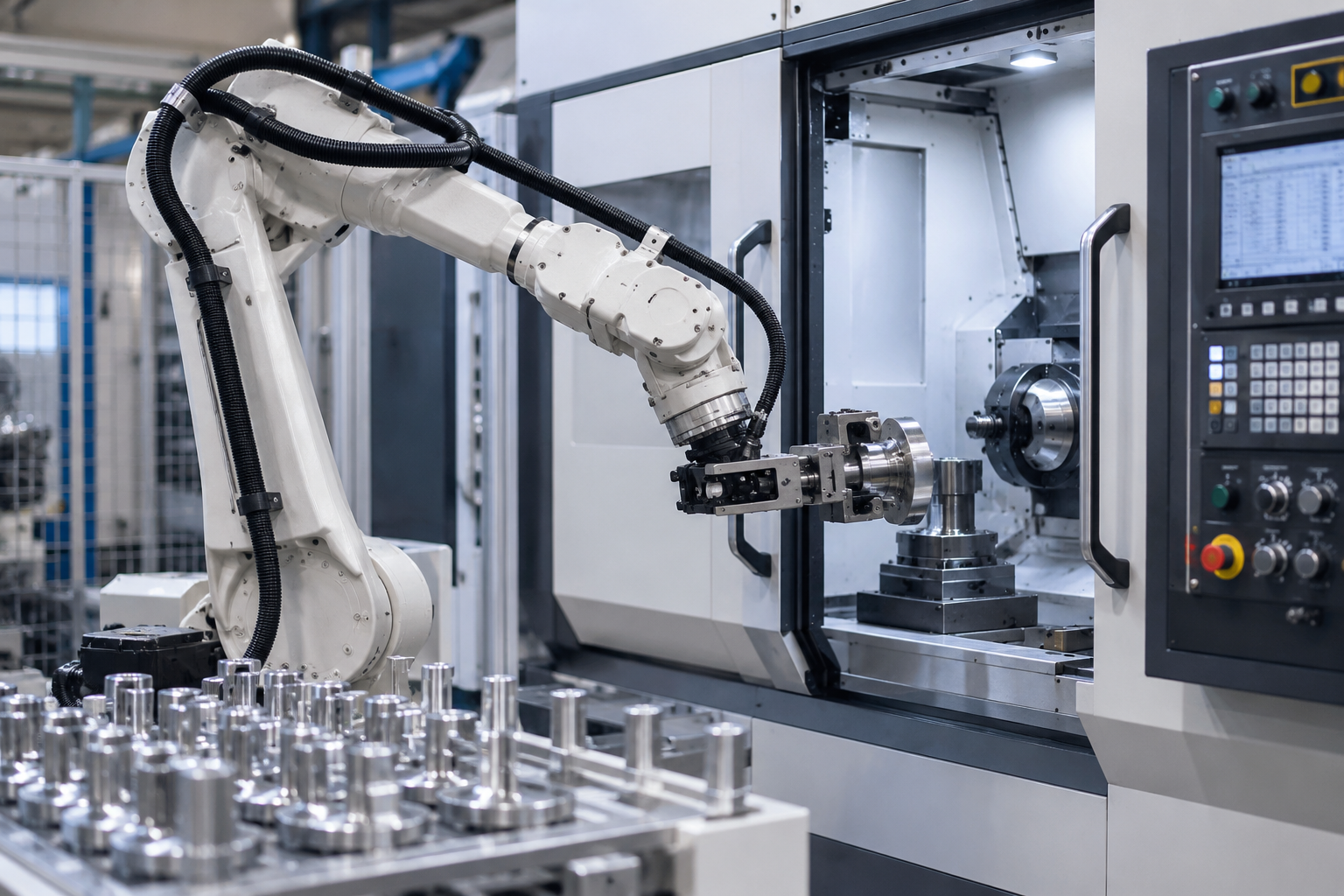
In intelligent manufacturing, machining centers—whether horizontal or vertical—function as process modules within an integrated system, rather than standalone equipment.
By combining machining centers with:
-
CNC drilling, tapping, and milling compound machines
-
CNC combined boring, milling, drilling, and tapping machines
-
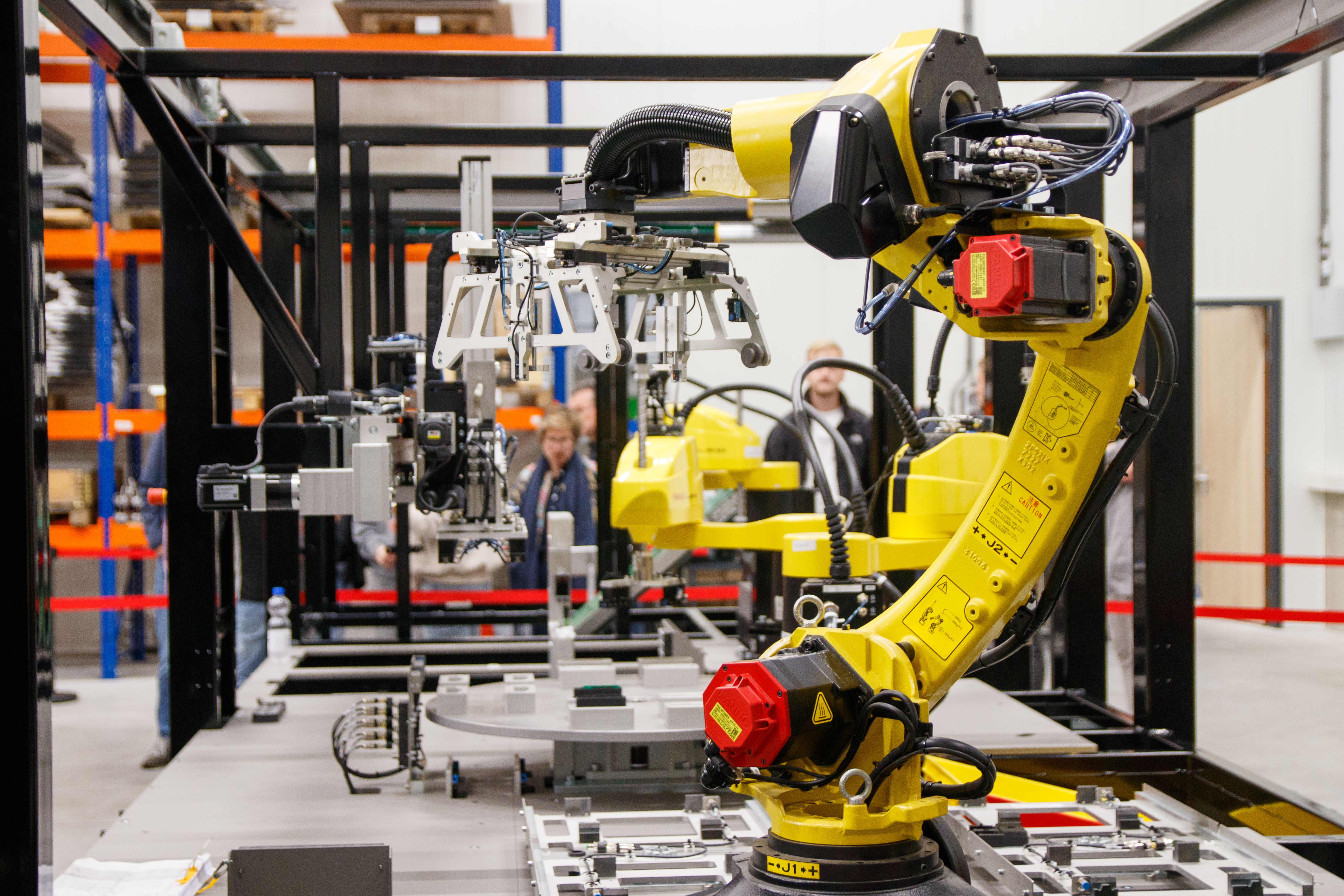
Automated loading and unloading systems
-
Visualized production monitoring
Manufacturers can build flexible, intelligent, and scalable production lines that deliver stable quality and high output.
Choosing the Right Configuration for Your Production Line
When Vertical Machining Centers Are More Suitable
-
Small to medium batch production
-
Parts with simpler geometries
-
Frequent product changes
-
Limited automation requirements
When Horizontal Machining Centers Become Advantageous
-
Medium to large batch production
-
Components with multi-face machining requirements
-
High consistency and repeatability demands
-
Integration with pallet systems and automated lines
In many intelligent production lines, both configurations may coexist, each optimized for specific process stages.
System-Level Benefits of Integrated Machining Lines
Evaluating machining centers from a production-line perspective enables manufacturers to achieve:
-
Reduced workpiece handling
-
Shorter takt times
-
Improved dimensional consistency
-
Higher overall equipment effectiveness (OEE)
-
Easier scalability for future automation upgrades
These system-level advantages directly support the goals of high-end manufacturing enterprises: efficiency, precision, energy savings, and capacity growth.
Designing Intelligent Production Lines for Real Manufacturing Scenarios
At Fujian Xinmei Machinery Technology Co., Ltd., we believe that machining centers should be selected and configured based on real production scenarios, not generic comparisons.
By focusing on flexible, intelligent, and visualized production line solutions, we help manufacturers align equipment configuration with process requirements, industry standards, and long-term development plans.
With extensive experience in equipment manufacturing, R&D, and scenario-based application, Xinmei Machinery supports customers in building intelligent machining lines that deliver measurable and sustainable results.
Conclusion: Think System, Not Orientation
Horizontal and vertical machining centers each offer distinct advantages—but the true value emerges when they are integrated into a well-designed intelligent production line.
For manufacturers planning automation upgrades, the right decision is not choosing one orientation over the other, but designing a production system that maximizes efficiency, precision, and scalability.
Xinmei Machinery remains committed to empowering intelligent manufacturing through system-level thinking, engineering expertise, and a relentless pursuit of excellence in every detail.