+86 13163919000
 info@xinmeiintelligent.com

What Is CNC Tapping?
CNC tapping is an automated machining process used to create internal threads inside metal components through computer-controlled spindle movement and synchronized cutting operations.
Compared with traditional manual tapping methods, CNC tapping machines provide better control over:
- Thread accuracy
- Machining consistency
- Production speed
- Tool movement
- Processing repeatability
For industrial manufacturers, thread machining is a critical process because threaded holes directly affect:
- Component assembly
- Connection reliability
- Product performance
- Manufacturing quality
Industries producing automotive parts, valve components, sanitary ware products, industrial hardware, and mechanical assemblies often require stable CNC tapping processes for high-volume production.
A professional CNC tapping machine manufacturer should not only provide equipment but also understand:
- Material characteristics
- Thread requirements
- Production volume
- Fixture design
- Automation needs
The complete CNC tapping workflow usually includes:
Part analysis → Tool selection → Fixture design → CNC programming → Thread machining → Inspection → Production optimization
Xinmei Intelligent provides industrial CNC solutions including CNC drilling and tapping machines, CNC machining centers, special-purpose CNC equipment, and automation solutions for manufacturers requiring stable production performance.
How Does a CNC Tapping Machine Work?
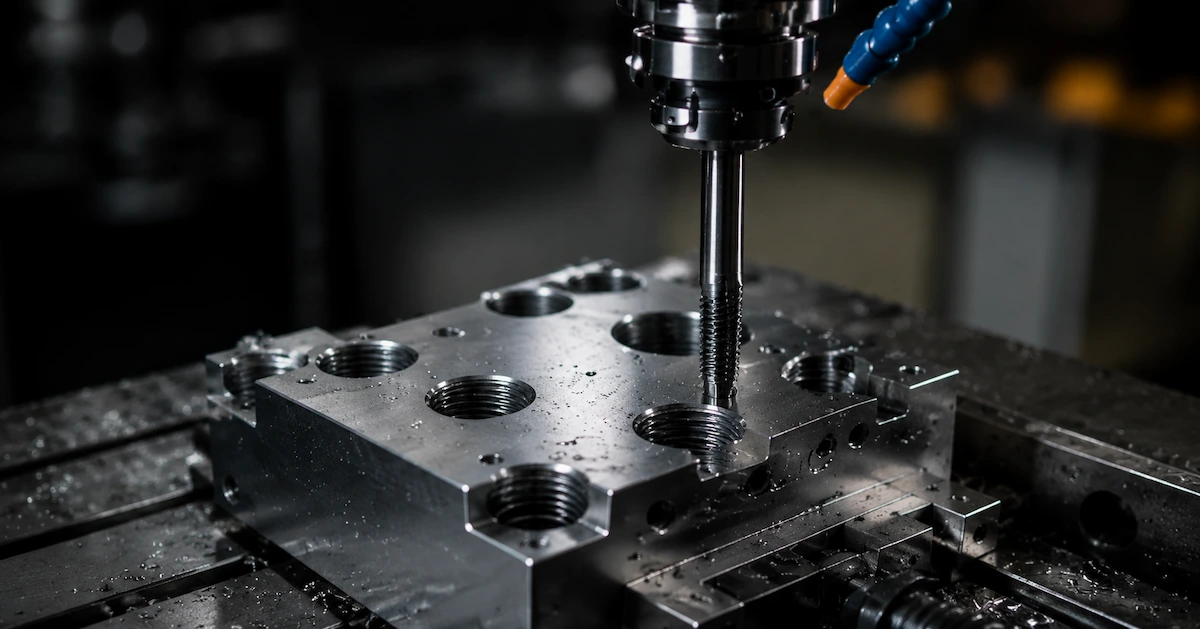
A CNC tapping machine uses a CNC control system to synchronize spindle rotation and tool feed movement to create accurate internal threads.
The main machining process includes several stages.
CNC Program Preparation
Before tapping begins, engineers define machining parameters based on:
- Thread size
- Thread depth
- Material type
- Tool specifications
- Production requirements
The CNC system controls:
- Spindle speed
- Feed rate
- Tool movement
- Tapping depth
Accurate programming helps prevent:
- Thread damage
- Tool breakage
- Inconsistent thread quality
Workpiece Positioning and Fixture Control
Stable workholding is essential for CNC tapping accuracy.
A professional CNC tapping machine manufacturer should consider:
- Fixture rigidity
- Positioning accuracy
- Loading efficiency
- Repeatability
Poor positioning can result in:
- Misaligned threads
- Assembly problems
- Increased scrap rate
For batch manufacturing, optimized fixture design improves both quality and production efficiency.
Synchronized Tapping Operation
During tapping, the spindle rotation and feed movement must remain synchronized.
Important parameters include:
- Rotation speed
- Feed rate
- Cutting depth
- Coolant application
- Tool condition
Proper synchronization helps achieve:
- Accurate thread profile
- Longer tool life
- Stable machining performance
Thread Inspection and Quality Verification
After machining, manufacturers verify:
- Thread dimensions
- Thread depth
- Surface quality
- Assembly compatibility
For precision industries, inspection is essential to maintain consistent production quality.
CNC Tapping Process Explained
A reliable CNC tapping machine manufacturer focuses on the complete machining process rather than only the tapping operation.
Step 1: Analyze Thread Requirements
Before selecting equipment, manufacturers evaluate:
- Thread specification
- Hole diameter
- Material hardness
- Production quantity
- Accuracy requirements
Different materials and applications require different tapping strategies.
For example:
Aluminum Components
Usually require:
- Higher cutting speed
- Proper chip removal
- Suitable lubricants
Steel Components
Usually require:
- Stronger tools
- Stable machine rigidity
- Optimized cutting parameters
Brass and Copper Components
Require:
- Proper tool selection
- Controlled cutting conditions
Step 2: Select Suitable Tapping Tools
Tool selection affects:
- Thread quality
- Tool life
- Production efficiency
Common considerations include:
- Tap material
- Coating
- Thread type
- Cutting geometry
A professional CNC manufacturer should help customers select suitable tools based on actual production requirements.
Step 3: Develop CNC Machining Strategy
The machining strategy includes:
- Tool path planning
- Tapping sequence
- Fixture arrangement
- Process optimization
The goal is to achieve:
- Stable production
- Reduced cycle time
- Lower tool consumption
- Improved consistency
Step 4: Production Testing
Before mass production, manufacturers should validate:
- Thread accuracy
- Machine stability
- Production efficiency
- Process repeatability
This reduces production risks and improves long-term equipment performance.
Types of Taps Used in CNC Machining
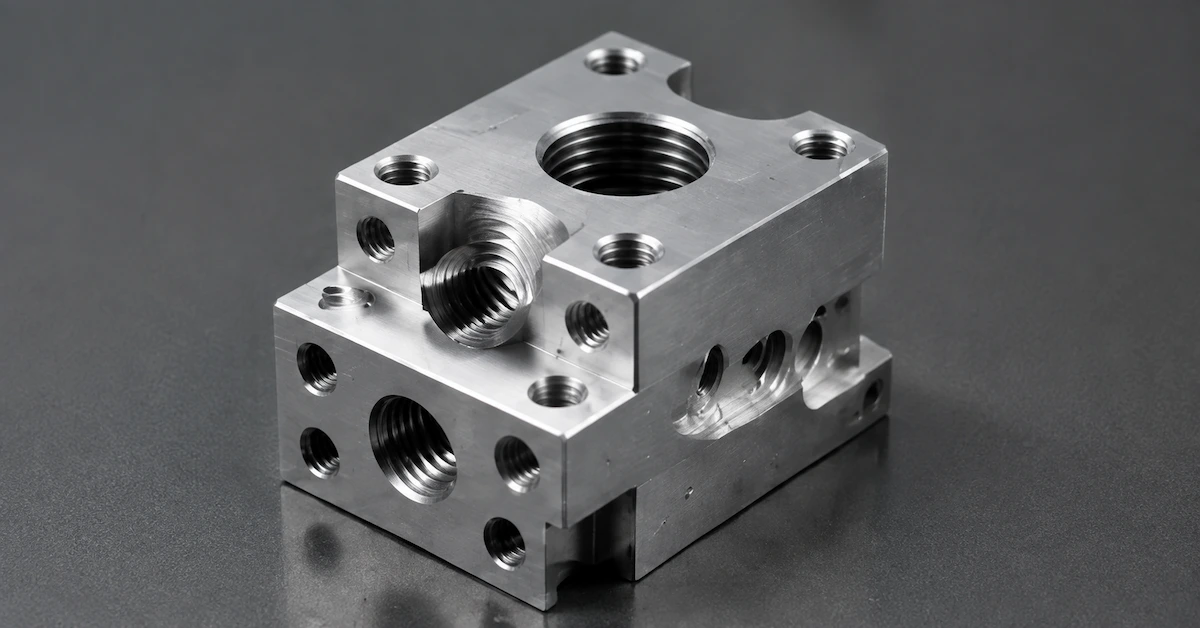
Different tapping applications require different types of taps.
A CNC tapping machine manufacturer should understand the relationship between:
- Tap design
- Material
- Hole type
- Production requirement
Hand Taps
Hand taps are mainly used for:
- Manual repair
- Low-volume production
- Maintenance applications
Advantages:
- Simple operation
- Low initial cost
Limitations:
- Lower efficiency
- Higher dependence on operator skill
- Limited repeatability
For industrial batch production, CNC tapping solutions usually provide better consistency.
Spiral Point Taps
Spiral point taps are commonly used for through holes.
Their design helps push chips forward during cutting.
Advantages include:
- Efficient chip removal
- Higher production speed
- Suitable for automated machining
Typical applications:
- Automotive components
- Hardware parts
- Industrial fittings
Spiral Flute Taps
Spiral flute taps are commonly used for blind holes.
They help move chips backward and reduce chip accumulation.
Advantages include:
- Better chip evacuation
- Improved thread quality
- Suitable for deeper holes
Applications include:
- Precision components
- Mechanical housings
- Complex parts
Forming Taps
Forming taps create threads by material displacement instead of cutting.
Advantages:
- No cutting chips
- Stronger thread profile
- Longer tool life
They are commonly used for:
- Aluminum parts
- Brass components
- Soft metals
Pipe Taps
Pipe taps are designed for threaded pipe connections.
Applications include:
- Valve components
- Fluid control systems
- Industrial piping parts
For valve and sanitary ware manufacturers, accurate pipe threading is essential for product reliability.
CNC Tapping Machine vs CNC Drilling and Tapping Machine
When selecting equipment, manufacturers should understand the difference between dedicated tapping machines and combined drilling and tapping solutions.
| Factor | CNC Tapping Machine | CNC Drilling and Tapping Machine |
|---|---|---|
| Main function | Thread machining | Drilling + tapping |
| Process flexibility | Focused on tapping | Multiple operations |
| Setup requirement | More process transfer | Reduced handling |
| Production efficiency | Suitable for tapping tasks | Higher for combined processes |
| Automation potential | Available | More flexible |
For manufacturers producing components requiring both holes and threads, CNC drilling and tapping machines can reduce:
- Workpiece handling
- Setup time
- Positioning errors
Xinmei provides CNC drilling and tapping solutions designed for industrial applications requiring efficient multi-process machining.