+86 13163919000
 info@xinmeiintelligent.com


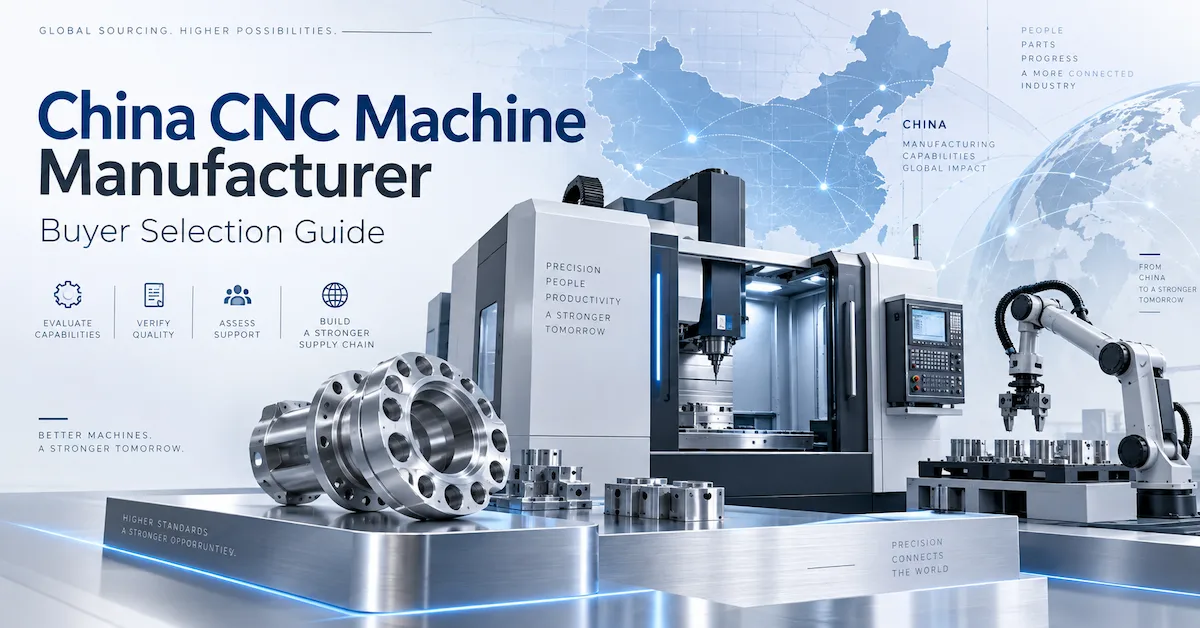
How Should Buyers Evaluate a China CNC Machine Manufacturer?
Selecting a China CNC machine manufacturer is not only about finding a supplier with competitive pricing. For industrial buyers, the more important question is whether the manufacturer can provide the right machining solution for a specific production requirement.
A reliable CNC machine manufacturer should understand the relationship between the workpiece, machining process, equipment structure, tooling, fixtures, quality requirements, and future production goals. The best supplier is not always the one offering the lowest quotation, but the one that can clearly explain why a certain machine configuration matches the buyer’s manufacturing needs.
Xinmei Intelligent focuses on CNC equipment development, special-purpose machining solutions, and automated production systems for industrial applications. Buyers can review the company’s About Us page to understand its manufacturing background, engineering direction, and product development capabilities.
For global buyers sourcing CNC equipment from China, supplier evaluation should include technical capability, production experience, quality management, customization ability, communication efficiency, and after-sales support.
Why Do Global Buyers Choose CNC Machine Manufacturers in China?
China has developed a large CNC manufacturing ecosystem covering machine components, machining technology, automation systems, and industrial supply chains. However, different CNC suppliers may have very different capabilities.
Some manufacturers focus mainly on standard CNC equipment, while others provide application-based solutions involving:
- Dedicated machining equipment
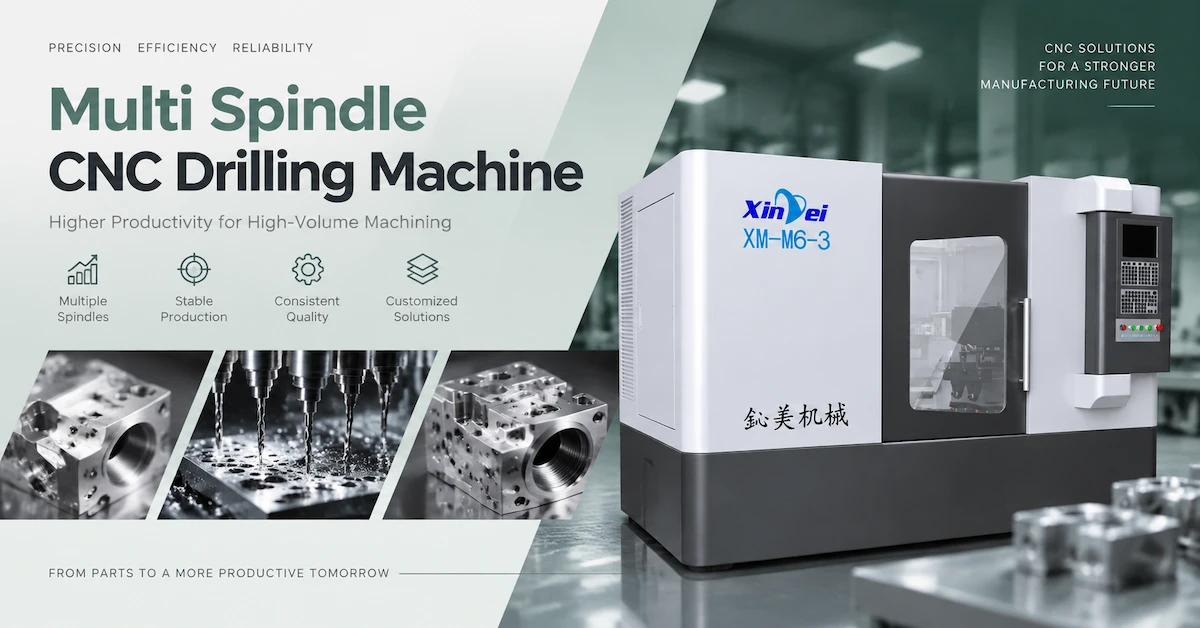
- Multi-spindle CNC systems
- Custom fixtures
- Robot loading solutions
- Complete production-line integration
The correct sourcing choice depends on the buyer’s production situation.
For example, a factory producing standard metal components may require a flexible machining center, while a manufacturer producing thousands of similar parts every month may benefit from a dedicated CNC solution.
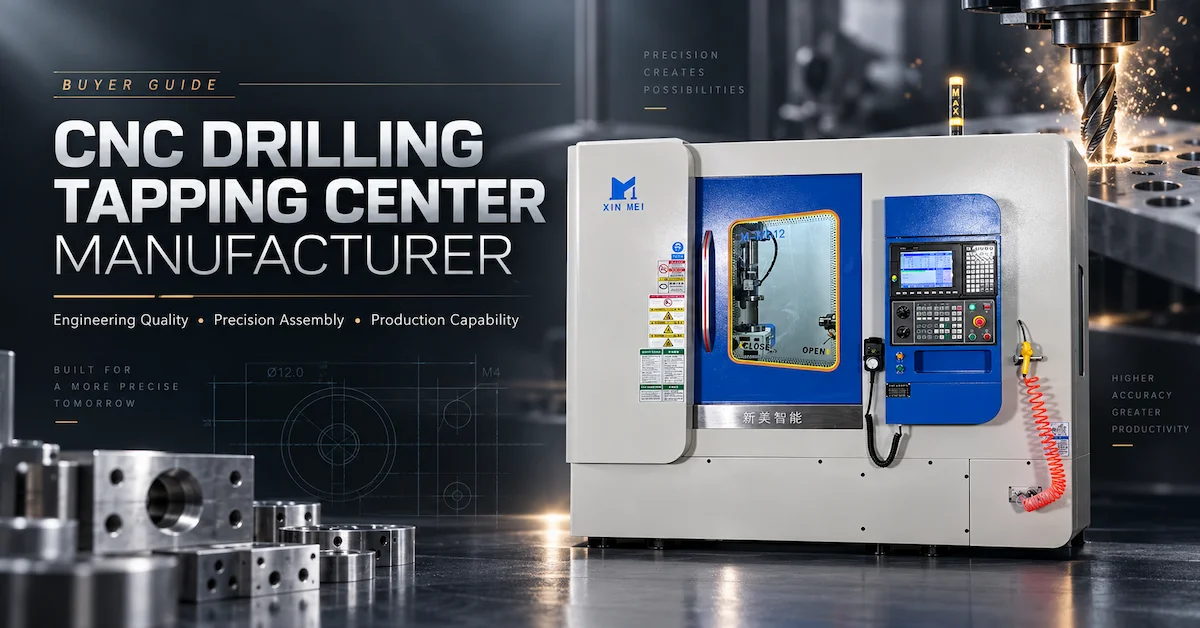
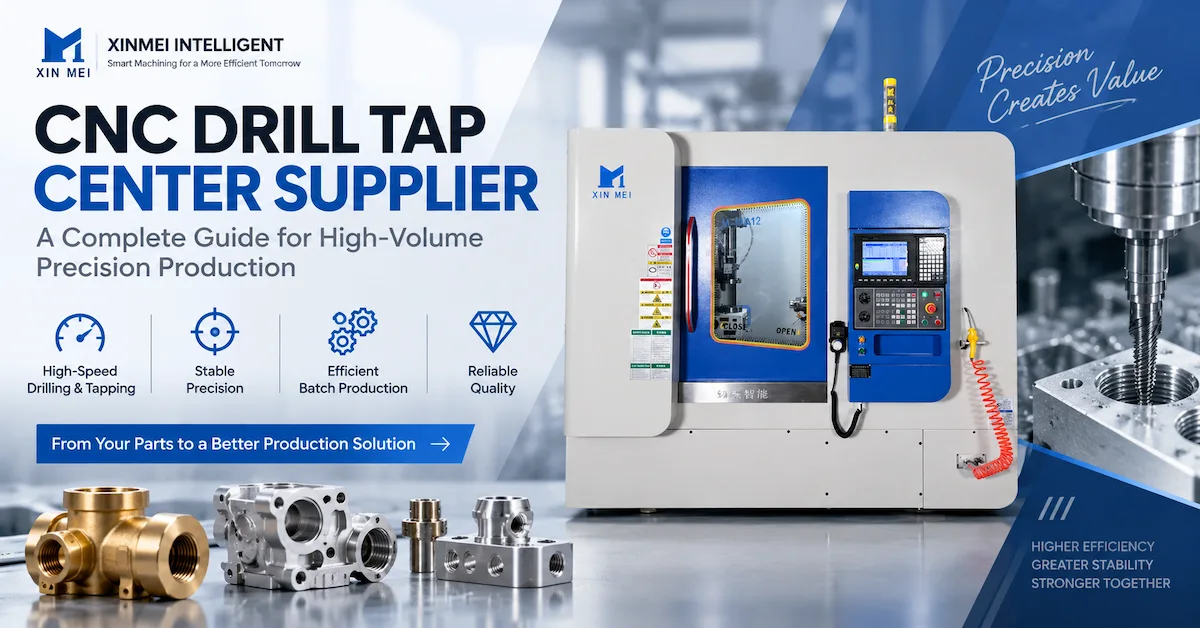
Xinmei provides different equipment categories, including CNC Machining Centers, Special Purpose Machines, and Automation Lines.
These categories represent different production strategies:
CNC Machining Centers
Suitable for manufacturers requiring flexible machining capability.
Typical evaluation points include:
- Machining range
- Spindle performance
- Axis configuration
- Tool capacity
- Fixture requirements
Special Purpose Machines
Suitable for stable production of specific components.
Typical evaluation points include:
- Production volume
- Process integration
- Dedicated fixtures
- Cycle-time improvement
- Product consistency
Automation Lines
Suitable for manufacturers looking to connect machining processes into a coordinated production system.
Typical evaluation points include:
- Robot loading
- Machine communication
- Material transfer
- Inspection integration
- Production monitoring
What Types of Buyers Need a China CNC Machine Manufacturer?
Industrial Component Manufacturers
Industrial manufacturers producing valves, door-control components, automotive parts, connectors, and hardware components often require more than a standard machine.
Their main concerns usually include:
- Stable machining quality
- Reduced manual operations
- Lower setup frequency
- Higher production consistency
- Long-term equipment reliability
For these buyers, the CNC supplier should understand the component and production process, not only provide machine specifications.
OEM and Contract Manufacturers
Contract manufacturers often need flexible CNC equipment because they process different customer products.
Important considerations include:
- Product changeover
- Programming flexibility
- Fixture replacement
- Tool compatibility
- Production scheduling
A flexible CNC machining center may be more suitable than a dedicated machine if product variety is high.
Industrial Equipment Distributors
Distributors usually evaluate:
- Product stability
- Documentation
- Technical training
- Spare parts availability
- Supplier responsiveness
A reliable manufacturer should provide consistent technical information and support for downstream customers.
What Should Buyers Check Before Selecting a CNC Factory in China?
A professional supplier evaluation should go beyond website information or product images.
Buyers should review:
Factory Manufacturing Capability
Important questions include:
- Does the company manufacture CNC equipment directly?
- What types of machines are produced?
- Are customized solutions available?
- Does the factory have engineering teams?
- Are assembly and testing processes controlled internally?
Product Experience
The supplier should have experience related to the buyer’s application.
For example:
A valve manufacturer may need:
- Multi-directional machining
- Thread processing
- Stable fixture positioning
A door-control manufacturer may need:
- Multiple machining operations combined
- Dedicated workholding
- Repeatable production cycles
An automotive supplier may require:
- High production stability
- Process consistency
- Automation compatibility
How Should Buyers Compare CNC Machine Specifications?
Machine specifications should always be evaluated according to the production requirement.
| Evaluation Item | Buyer Should Review | Why It Matters |
|---|---|---|
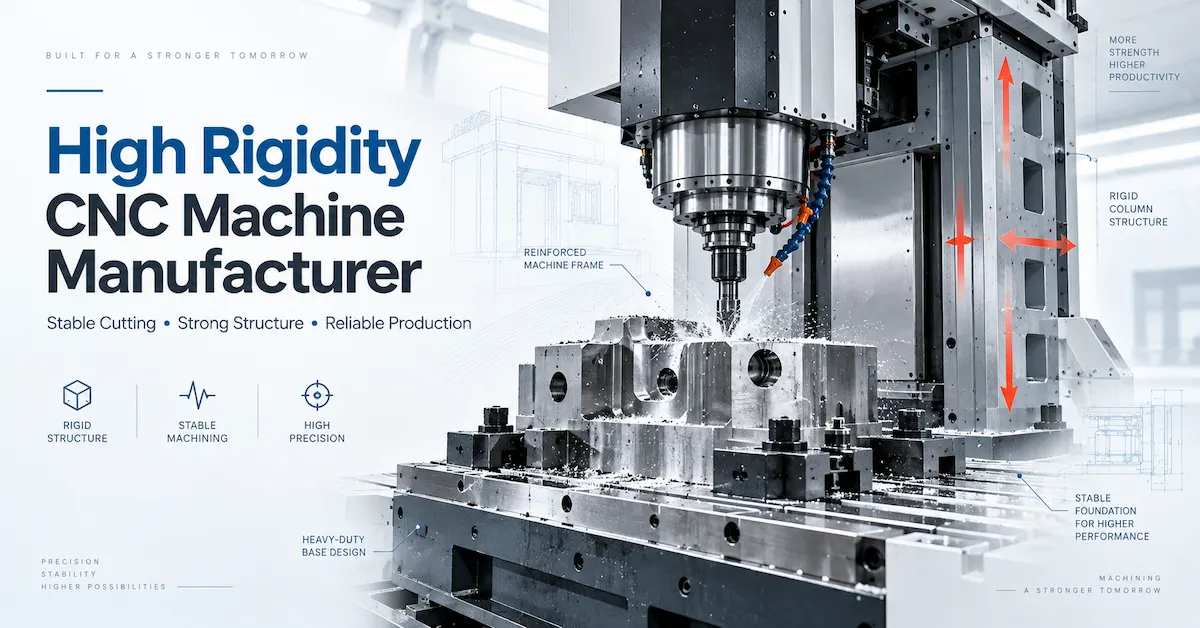
| Machine Structure | Base, column, table, spindle support | Influences machining stability |
| Spindle System | Speed, torque, tool interface | Determines cutting capability |
| Axis Configuration | Required machining directions | Affects process flexibility |
| CNC Control | Operation requirements and compatibility | Influences usability and maintenance |
| Fixture System | Positioning and clamping method | Affects repeatability |
| Tool System | Tool access and replacement | Influences efficiency |
| Automation Compatibility | Robot and production-line needs | Supports future upgrades |
| Inspection Method | Measurement and acceptance process | Controls quality verification |
A higher specification number does not automatically mean a better production solution.
For example:
- Higher spindle speed may not help heavy cutting.
- More axes may not reduce production time.
- More automation may not improve unstable processes.
The machine should be selected according to the complete machining system.
Why Is Engineering Capability Important When Choosing a CNC Supplier?
A CNC machine is not an independent product. It is part of a manufacturing process.
Engineering capability determines whether the supplier can help solve practical production problems.
Important engineering areas include:
- Process analysis
- Fixture design
- Tool selection
- CNC programming
- Automation integration
- Production testing
- Technical documentation
Xinmei's Special Purpose Machines are developed around specific industrial machining applications where production requirements may require dedicated solutions.
For customized projects, buyers should provide:
- Part drawings
- Material information
- Current process details
- Production targets
- Quality requirements
- Automation expectations
This information allows the manufacturer to evaluate the correct equipment approach.
How Should Buyers Evaluate CNC Machine Quality Control?
Quality control should cover both machine manufacturing and machining performance.
A professional CNC machine manufacturer should have processes covering:
- Incoming component inspection
- Mechanical assembly verification
- Electrical system testing
- Machine calibration
- Trial machining
- Final acceptance testing
Xinmei describes its Quality Assurance process, including manufacturing inspection and machine validation.
However, buyers should define their own project acceptance requirements.
Important questions include:
- Which workpiece will be tested?
- Which dimensions will be measured?
- What measurement method will be used?
- How many samples are required?
- Under what machining conditions will testing occur?
A machine specification cannot replace actual production validation.
What Should Be Included in a CNC Factory Acceptance Test?
A Factory Acceptance Test (FAT) allows buyers to verify equipment before shipment.
A practical FAT should define:
| FAT Item | Buyer and Supplier Should Confirm |
|---|---|
| Test Workpiece | Approved drawing and material |
| Machine Configuration | Final equipment setup |
| Machining Process | Cutting tools and machining sequence |
| Quality Requirements | Critical dimensions and measurement method |
| Cycle Verification | Defined production conditions |
| Documentation | Test records and machine information |
| Corrective Actions | Handling of unresolved issues |
For customized CNC equipment, FAT is especially important because the machine may include:
- Dedicated fixtures
- Special tooling
- Automation systems
- Customized structures
A successful single sample does not always represent stable mass production. Buyers should consider repeated machining tests under agreed conditions.
Should Buyers Choose Standard CNC Machines or Custom CNC Solutions?
The answer depends on production requirements.
Standard CNC Machines Are Suitable When:
- Product variety is high
- Flexibility is important
- Production volume changes frequently
- General machining capability is required
Custom CNC Machines Are Suitable When:
- Products are stable
- Production volume is high
- Multiple operations can be combined
- Process consistency is critical
Xinmei provides Custom CNC and Special Purpose Machine Solutions for applications where dedicated production requirements exist.
The purpose of customization should be solving a measurable manufacturing challenge rather than simply creating a more complex machine.
How Can Buyers Reduce Risks When Purchasing CNC Machines From China?
International CNC equipment purchasing involves technical, communication, and delivery risks.
Buyers can reduce these risks by:
Preparing Complete Technical Information
Provide:
- Product drawings
- Materials
- Machining requirements
- Production targets
- Quality standards
Confirming Scope Before Ordering
Clarify:
- Machine configuration
- Included accessories
- Fixture responsibility
- Installation requirements
- Training scope
- Service responsibility
Maintaining Clear Communication
For customized projects, establish:
- Drawing approval process
- Technical confirmation process
- Testing requirements
- Delivery milestones
Clear communication reduces misunderstandings during manufacturing.
How Should Buyers Compare CNC Machine Costs?
The lowest quotation is not always the lowest total cost.
A complete cost evaluation should include:
| Cost Factor | Consideration |
|---|---|
| Machine Price | Initial equipment investment |
| Fixtures | Workholding requirements |
| Tooling | Initial machining tools |
| Automation | Robot and integration cost |
| Installation | Commissioning requirements |
| Training | Operator preparation |
| Spare Parts | Long-term operation |
| Service | Technical support |
A lower quotation may exclude important engineering work.
A higher investment may provide better production stability and lower operational risk.
What Automation Solutions Can CNC Manufacturers Provide?
Many manufacturers begin with CNC equipment and later expand toward automation.
Automation options may include:
- Robot loading
- Automatic unloading
- CNC machine integration
- Production-line coordination
Xinmei provides Robot Loading and Unloading Lines and CNC Robot Integrated Automation Lines.
Before investing in automation, buyers should evaluate:
- Production volume
- Part stability
- Fixture readiness
- Factory layout
- Process consistency
Automation works best when the machining process itself is already optimized.
What Documents Should Buyers Request From a CNC Manufacturer?
For international equipment purchasing, documentation is essential.
Recommended documents include:
- Machine specifications
- Electrical drawings
- Operation manuals
- Maintenance instructions
- Spare parts lists
- Inspection records
- FAT reports
- Training materials
Xinmei provides a User Manual resource area for technical documentation.
Before shipment, buyers should confirm the exact documents included with the purchased machine.
How Should Buyers Contact a China CNC Machine Manufacturer?
A detailed inquiry helps suppliers provide a more accurate solution.
Prepare:
- Part drawings
- Material details
- Required machining processes
- Production quantity
- Quality requirements
- Current equipment information
- Automation expectations
- Delivery requirements
Buyers can review Xinmei’s CNC Products and submit technical requirements through Contact Us.
Providing detailed production information allows the manufacturer to recommend a suitable CNC solution instead of only providing a general quotation.
Frequently Asked Questions
What should I check first when choosing a China CNC machine manufacturer?
Start with application experience, engineering capability, product range, quality control, customization ability, and support capability.
Are CNC machines from China suitable for international factories?
Many global manufacturers purchase CNC equipment from China. Buyers should evaluate supplier capability, technical support, documentation, and acceptance procedures.
How can I verify a CNC factory before ordering?
Review factory capability, product experience, manufacturing process, quality system, customer applications, and testing procedures.
Can CNC manufacturers customize machines?
Customization depends on the manufacturer’s engineering capability and project requirements. It may include fixtures, machine structures, tooling, and automation systems.
What information should I provide for a CNC quotation?
Provide drawings, materials, machining requirements, production targets, quality requirements, and automation expectations.
How do I compare CNC machine suppliers?
Compare technical capability, machine configuration, testing process, support scope, and total project value instead of only comparing price.
What is FAT in CNC machine purchasing?
FAT is Factory Acceptance Testing. It verifies whether the completed machine meets agreed technical and production requirements before shipment.
Can a CNC manufacturer provide automation solutions?
Some manufacturers provide robot loading systems, CNC integration, and automated production-line solutions.
How long does CNC machine delivery usually take?
Delivery depends on machine type, customization level, component availability, testing requirements, and customer approval speed.
What should I prepare before contacting Xinmei?
Prepare your drawings, materials, machining requirements, production targets, and automation needs through Contact Us.
Conclusion
Choosing a China CNC machine manufacturer requires evaluating more than equipment price or product specifications. Global buyers should consider engineering capability, machining experience, quality control, customization ability, testing procedures, documentation, and long-term support before selecting a supplier.
Xinmei Intelligent provides CNC machining centers, special-purpose machines, and automation solutions designed for different industrial production requirements. Buyers can explore CNC machining solutions and submit their workpiece information, production requirements, and technical expectations through Contact Us to discuss a suitable CNC equipment solution.