+86 13163919000
 info@xinmeiintelligent.com


What Does High Rigidity Mean in a CNC Machine?
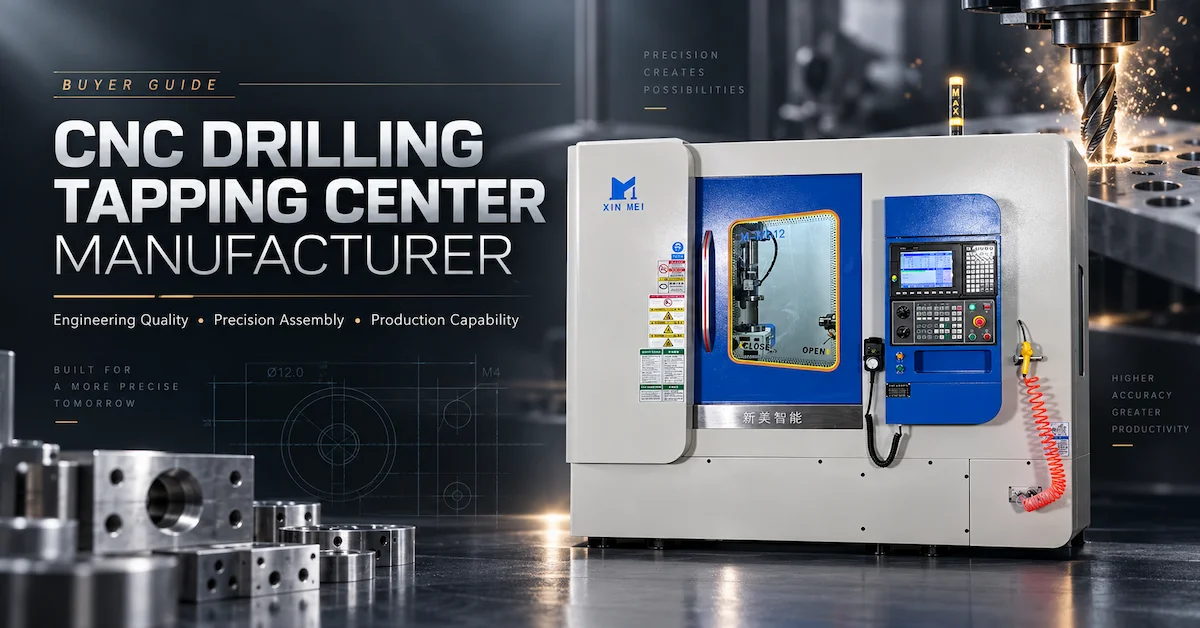
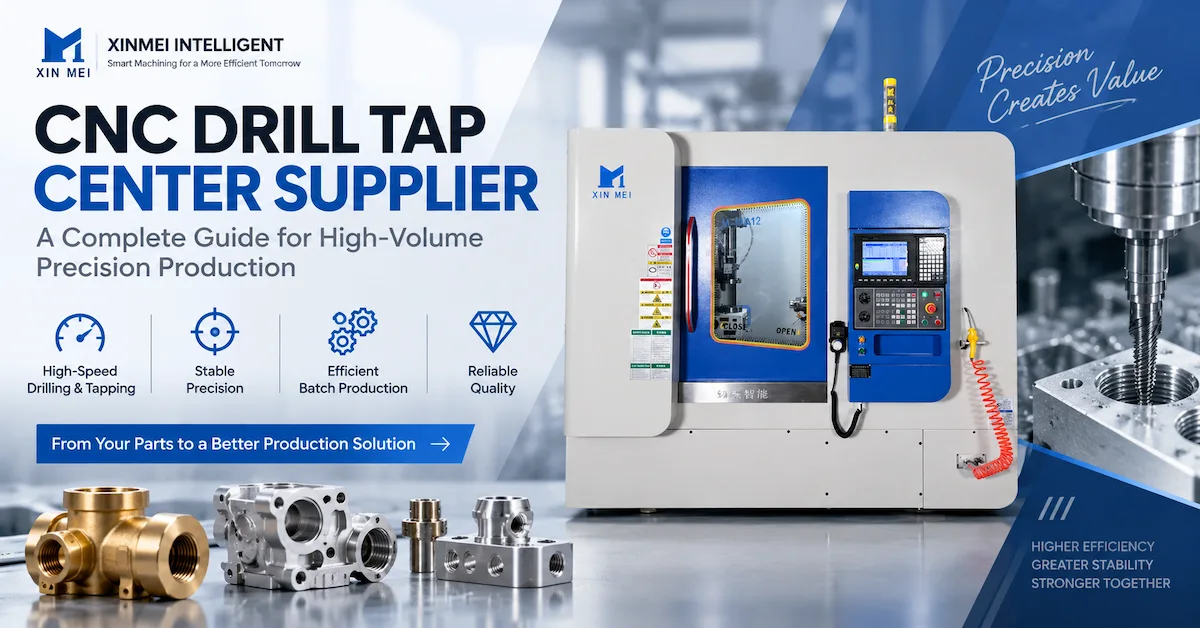
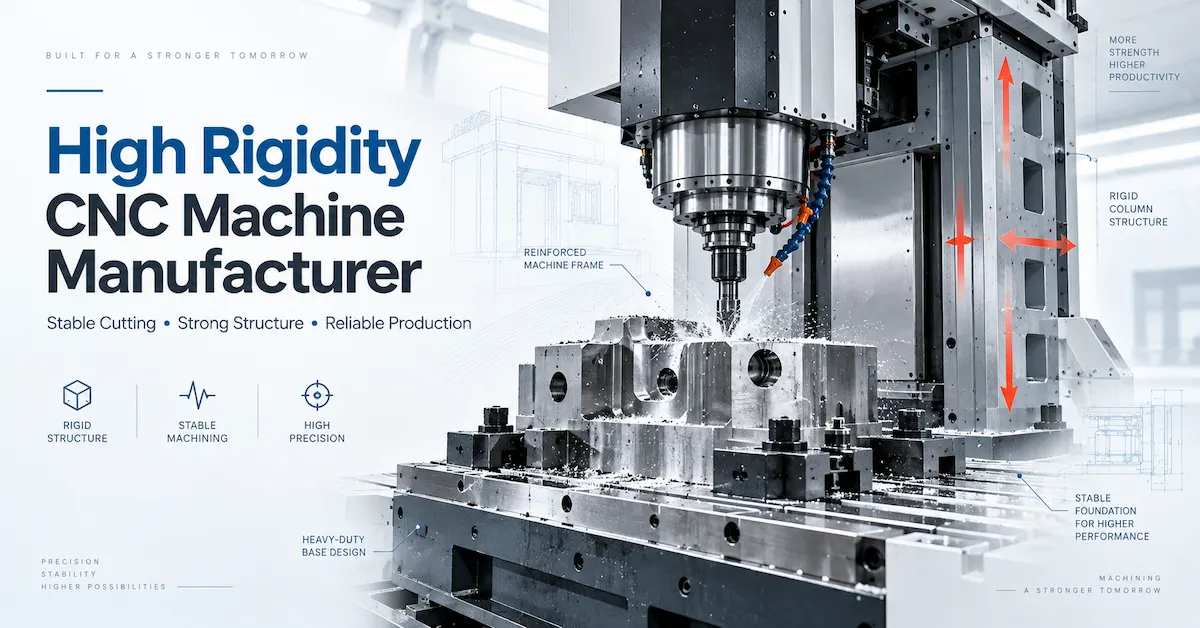
A high rigidity CNC machine manufacturer should be able to explain rigidity as an engineering requirement rather than use it as a general marketing adjective. In practical terms, machine rigidity describes how strongly the machine structure resists deformation when cutting forces act on the spindle, axes, table, fixture, and workpiece. If the same force produces less elastic displacement, the system is more rigid; in simplified form, stiffness can be expressed as k=F/δk = F / \delta, where FF is applied force and δ\delta is resulting displacement. For a buyer, however, the useful question is not the formula alone. It is whether the complete machining system remains stable enough for the selected material, tool engagement, workpiece geometry, cycle time, and batch-production requirement. Xinmei’s CNC Machining Centers category describes its machining centers around rigid machine structures, CNC control, stable accuracy, and repeatability for industrial production.
Rigidity should also be separated from several related concepts. A machine can be heavy without being optimally stiff in the directions that matter to the cutting process. High positioning accuracy does not automatically guarantee high cutting rigidity. Structural strength means the machine can withstand loads without failure, while rigidity concerns elastic deformation under load. Dynamic behavior adds another layer because vibration can occur even when static stiffness appears adequate. For production buyers, this is why a serious evaluation should consider machine structure + spindle + guide system + fixture + tool + workpiece + cutting parameters as one system.
Who Actually Needs a High-Rigidity CNC Machine?
High rigidity becomes particularly relevant when the machining process creates substantial cutting forces, when the workpiece contains deep or interrupted cuts, when tools have difficult access, when batch consistency is important, or when a factory wants to maintain stable cutting over long production runs. Typical applications can include valve bodies, door-control components, automotive parts, industrial housings, bearing-related components, and other metal parts where bore position, surface condition, tool stability, and repeatability matter. Xinmei’s door-closer application case specifically describes a compact housing with limited machining space and identifies machine rigidity and stable cutting as important considerations for maintaining dimensional and assembly-related consistency.
A high-rigidity architecture is not automatically the best answer for every buyer. If a component is light, requires only modest drilling or finishing operations, changes frequently, or is produced in small batches, an oversized dedicated structure may add cost without producing equivalent manufacturing value. Likewise, a factory should not purchase a more rigid machine merely to compensate for poor fixtures, excessive tool overhang, incorrect cutting parameters, or unstable raw material. A competent manufacturer should first determine where deformation or vibration is entering the process.
Do Not Judge CNC Rigidity by Machine Weight Alone
Machine mass can contribute to vibration resistance, but weight by itself is an incomplete purchasing metric. A heavy machine can still have weak load paths, excessive overhang, insufficient local stiffness, or structural arrangements that do not match the direction of cutting forces. Buyers should instead ask how loads move through the spindle, headstock, column, base, table, fixture, and foundation during the actual machining operation.
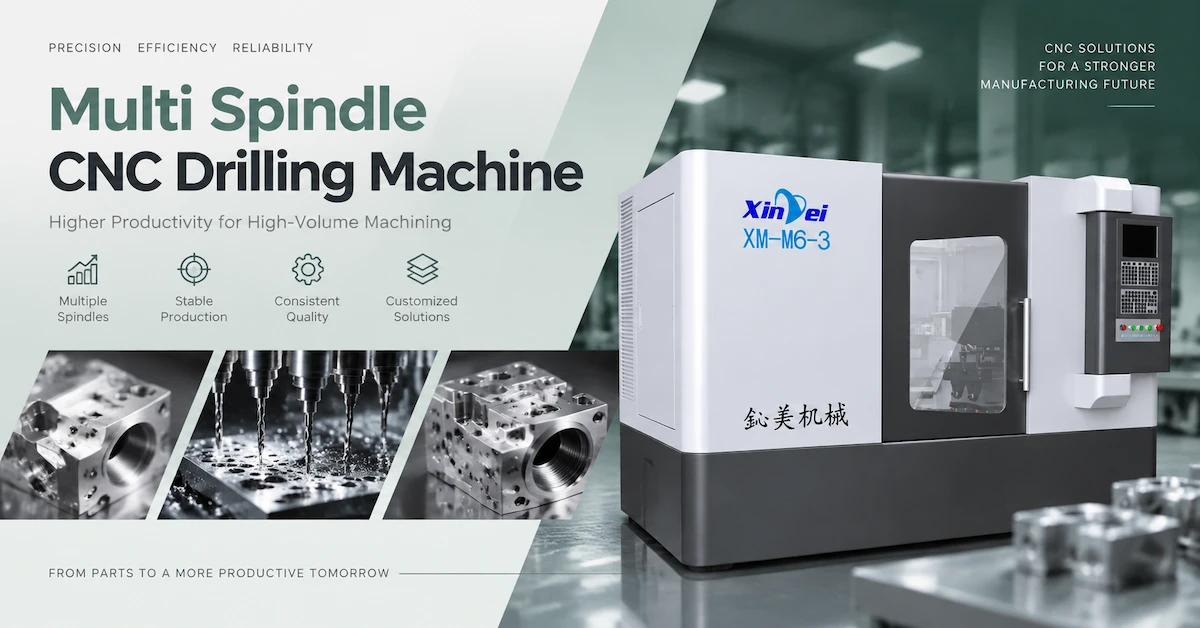
Xinmei’s six-spindle horizontal lifting CNC drilling and tapping machine describes a reinforced machine body, horizontal structure with lifting column, high-rigidity internal components, and an optimized mechanical layout intended to reduce vibration and support stable continuous production. These published characteristics provide useful areas for technical review, but the buyer still needs to determine whether that architecture fits the actual part and cutting process.
A better RFQ question is therefore not “How many kilograms does the machine weigh?” but “What parts of the structure resist cutting loads in my process, and how is that verified during machining?”
Start With Cutting Forces and the Workpiece
A high-rigidity machine should be selected around the workpiece, not around a generic “heavy-duty” label. Provide the supplier with the part drawing, material, blank condition, required features, tolerances, tool-access restrictions, current machining sequence, and target output. A large valve body with several intersecting bores may impose a different rigidity requirement from a smaller door closer housing, even if both need drilling and milling. Likewise, aluminum, stainless steel, cast iron, brass, and other materials can create different tool-engagement and chip-control requirements.
The supplier should then identify which operations create the greatest mechanical demand. Rough milling, boring, interrupted cutting, deep drilling, large-diameter tools, long tools, or multi-spindle simultaneous cutting can all change how the structure is loaded. The objective is not to specify the stiffest machine possible; it is to create enough structural and process rigidity to achieve the required result without unnecessary machine complexity.
What Should Buyers Put in a High-Rigidity CNC Machine RFQ?
The following table is a buyer-side specification framework rather than a universal Xinmei machine specification. It helps convert the vague requirement “we need a rigid machine” into engineering information that a manufacturer can actually evaluate.
| Evaluation Area | Buyer Should Provide | Manufacturer Should Explain |
|---|---|---|
| Workpiece | Drawing, material, blank condition, dimensions and weight | Suitable machine architecture and work envelope |
| Cutting operations | Milling, drilling, boring, tapping, turning or combined operations | Main cutting-force directions and structural support |
| Critical features | Datums, bores, hole positions, flatness and surface requirements | How the process minimizes deflection and vibration risk |
| Tooling | Tool size, length, cutter type and difficult-access features | Spindle/tool interface and overhang limitations |
| Production | Batch size, shifts and target output | Continuous-production assumptions |
| Workholding | Locating surfaces and raw-part variation | Fixture support and clamping strategy |
| Machine structure | Required machining directions | Column, table, spindle and axis architecture |
| Thermal conditions | Long production cycles and workshop conditions | Warm-up, thermal stability and verification approach |
| Acceptance | Test components and measurement method | FAT machining and inspection plan |
| Automation | Manual, robot or line integration | Effects on fixture, layout and process stability |
Machine Structure Is Only the First Layer of Rigidity
The bed, base, column, headstock, table, and other structural elements establish the mechanical foundation of a CNC machine, but production stability depends on how these elements behave together. Buyers should ask where the main load paths are located, whether long structural overhangs are present, how the spindle is supported, and how the workpiece sits relative to the machine structure. Published renderings are useful for understanding layout but do not replace a process-specific review.
Xinmei’s automotive steering application case describes a high-rigidity turret structure designed to maintain stable cutting and reduce vibration in steering-component production. The same case combines rigidity with one-time clamping and integrated drilling, tapping, and milling, illustrating an important point: machine stiffness creates more value when it is paired with a process layout that reduces repeated repositioning.
Spindle Rigidity Must Match the Cutting Process
The spindle is a critical part of the force path between the cutting tool and machine structure. Buyers should evaluate spindle interface, bearing support, toolholder type, tool diameter, expected radial and axial loads, speed range, and the machining process rather than focusing only on maximum rpm. A high-speed spindle may be ideal for one application and poorly matched to another process that prioritizes lower-speed cutting stability or larger tools.
Xinmei’s dual-spindle machining-center information describes a BT40 servo spindle and high-rigidity internal components designed around batch-production applications. The six-spindle horizontal machine similarly combines multiple simultaneous machining capability with a reinforced structure and precision guide components. These are different machine architectures, so buyers should compare them by workpiece and process rather than assume that one published specification defines a universal “high-rigidity” platform.
Axis Support and Motion Systems Affect Cutting Stability
Linear guides, drive systems, axis layout, bearing arrangements, and moving-component geometry influence how cutting forces travel through the machine. High positioning speed can reduce non-cutting time, but rapid movement and cutting rigidity are different design objectives. When reviewing a proposal, ask how the axis system behaves during the actual cutting load, not only how fast the axis moves without cutting.
Xinmei’s six-spindle horizontal machine lists HIWIN linear guide rails and describes its internal structure as designed for smooth motion, minimal vibration, and consistent long-term accuracy. Buyers should still request the exact configuration for the ordered machine because a brand or component family shown on one model cannot automatically be assumed for another.
The broader Supply Chain page can help buyers understand Xinmei’s component ecosystem, but a purchasing decision should rely on the project-specific configuration sheet rather than a general supplier list.
Fixture Rigidity Can Be the Weakest Link
A rigid CNC machine cannot compensate for a workpiece that is poorly supported or inadequately clamped. Xinmei’s fixture rigidity guidance explains that inadequate workholding can allow vibration, elastic movement, dimensional variation, surface-finish problems, and unstable tool behavior. Its broader CNC fixture guide likewise describes the importance of locating, support, clamping, and repeatable workpiece positioning.
For purchasing purposes, ask where the main cutting force acts relative to the fixture supports. Long unsupported sections of the workpiece can reduce effective system rigidity even when the machine structure is strong. Clamping points should also avoid deforming thin or sensitive features. For repeated production, fixture wear, chip contamination, locating-surface cleanliness, and clamping consistency should be included in the process plan because all of these can gradually change the apparent rigidity of the machining system.
Tool Overhang Can Cancel the Benefit of a Rigid Machine
A high-rigidity machine is only one part of the cutting loop. Long tools behave like cantilevers: increasing unsupported tool length generally increases deflection sensitivity and vibration risk. A buyer may therefore see poor surface finish or inconsistent dimensions even on a structurally capable machine if the part geometry forces excessive tool overhang.
Xinmei’s fixture and cutting-tool system guide recommends considering workholding, cutting-force direction, tool access, chip evacuation, and tool overhang together. This systems approach is more useful than asking whether the machine alone is “rigid enough.”
For difficult parts, buyers should request the proposed tool length and toolholder arrangement during the process review, particularly where deep cavities, offset features, or multiple machining directions are involved.
Static Rigidity and Dynamic Stability Are Not the Same
Static rigidity describes how much the structure elastically deflects under a relatively steady load. Actual machining also involves dynamic forces caused by tooth engagement, spindle rotation, interrupted cuts, acceleration, tool imbalance, and changing contact conditions. These forces can excite vibration or chatter.
This distinction matters because a machine may appear solid in a static inspection yet perform poorly at a particular spindle speed and tool engagement. Conversely, a well-designed machining process can avoid unstable operating regions even without maximizing every structural dimension. A high rigidity CNC machine manufacturer should therefore discuss tooling and cutting parameters together with mechanical structure.
Buyers should be cautious with absolute claims such as “zero vibration.” Every cutting process generates some dynamic response. The useful purchasing objective is controlled vibration under the agreed machining conditions.
Rigidity Does Not Automatically Mean Better Accuracy
Rigidity supports machining consistency because a more stable structure can reduce elastic movement under cutting load, but accuracy also depends on positioning, geometric alignment, spindle condition, thermal behavior, programming, fixtures, tools, and measurement. Xinmei’s precision-machining content similarly presents machine structure, spindle, axis motion, and fixture rigidity as interconnected elements rather than treating any one of them as the complete explanation for precision.
This is why buyers should not accept a phrase such as “high-rigidity structure guarantees ±X mm accuracy” without test conditions. The quotation should identify whether a number refers to axis positioning, repeatability, geometric inspection, or an actual workpiece dimension. A finished-part result should also specify the workpiece, material, tool, fixture, environmental condition, and measurement method.
Thermal Stability Matters During Long Production Runs
A machine can be mechanically rigid yet still experience dimensional drift as heat develops in the spindle, bearings, drives, cutting zone, coolant system, or surrounding workshop. For buyers running one or two shifts, the meaningful question is not simply whether the first part is correct but whether the process remains controlled as operating temperature changes.
Ask the manufacturer what warm-up procedure is recommended, which systems are temperature-sensitive, how long production tests are conducted, and whether the acceptance plan includes measurements at different stages of the run. This is especially relevant when the buyer’s production requirement involves repeated precision machining rather than occasional short cycles.
Compare Machine Architectures by the Part, Not by a “Rigidity Ranking”
Different machine architectures place loads through the structure differently. The table below uses published Xinmei equipment directions as a comparison framework; it does not rank one machine as universally more rigid or more accurate.
| Xinmei Equipment Direction | Published Structural/Process Focus | Application to Evaluate | Rigidity Question to Ask |
|---|---|---|---|
| Six-Spindle Horizontal Drilling & Tapping Machine | Reinforced structure, horizontal layout, multiple simultaneous spindles | Repetitive multi-hole batch production | How are simultaneous cutting loads supported? |
| Dual-Spindle Vertical Machining Center | Dual-spindle production and high-rigidity internal structure | Batch machining of precision industrial parts | How does the spindle arrangement affect cutting load and fixture design? |
| Door Closer Special Purpose Machine | Dedicated component processing and multi-process integration | Door closer housing production | Which features can be completed without re-clamping? |
| Automotive Steering CNC Solution | High-rigidity turret structure and integrated machining | Steering-related component production | How are high-load operations distributed through the structure? |
| CNC Machining Center Platform | Vertical, horizontal and customized configurations | General industrial part production | Which architecture best matches force direction and part access? |
How Should a Buyer Verify Rigidity During FAT?
Rigidity itself may be analyzed through engineering calculations or machine testing, but most B2B buyers ultimately care about production behavior. The Factory Acceptance Test should therefore connect the structural claim to actual machining performance.
Xinmei’s Quality Assurance information describes machine assembly, calibration, measurement systems, and final validation. For a specific high-rigidity project, the buyer should add a workpiece-based FAT defining drawing revision, material, machining sequence, cutting tools, critical dimensions, surface requirements, sample quantity, test duration, and cycle conditions.
Where vibration risk is important, the test should reproduce representative cutting conditions rather than only run the axes without load. Record abnormal sound, chatter, tool condition, dimensional results, and surface quality across repeated parts. If the supplier adjusts cutting parameters during the test, those final conditions should be documented so the accepted result can later be reproduced at the buyer’s factory.
Use Repeated Parts Instead of One “Perfect” Sample
One correctly machined component does not demonstrate batch-production stability. A production buyer needs to understand whether results remain consistent across repeated cycles.
For example, if ten or more parts are machined under the agreed test conditions, the buyer can review dimensional spread, surface consistency, tool behavior, and whether adjustments were required during the run. The exact quantity should match project risk rather than follow a universal number.
For high-volume production, this repeatability mindset is especially important. Structural rigidity is valuable because the machine must resist changing loads repeatedly, not simply produce a good showroom sample.
Quality Control Should Cover the Machine Before the Cutting Test
A useful machine acceptance process begins before the workpiece enters the fixture. Ask what mechanical alignment, spindle, axis, geometry, and assembly inspections are performed during machine construction and final calibration. Then connect those machine-level checks to the workpiece test.
Xinmei states that its quality-control process includes assembly, calibration, and testing supported by measurement equipment such as CMM and Renishaw systems. Buyers should confirm which checks apply to the specific machine and request the agreed records rather than assuming every inspection method is used identically for every model.
The same principle applies to certifications: verify the exact certificate, scope, issuing organization, and validity when a purchasing requirement depends on certification. General quality-control capability and model-specific certification are not the same thing.
High Rigidity May Cost More—But Compare the Complete Production System
A structurally robust machine can require more material, different structural design, larger components, stronger spindle support, or more extensive engineering. That can affect machine price. However, a purchasing comparison should not reduce the decision to “heavier machine equals higher cost.”
Evaluate the total production system: machine price, fixtures, tooling, installation, floor requirements, energy use, maintenance, spare parts, tool consumption, achievable cutting parameters, rejected-part risk, and expected production utilization. A more expensive machine may be justified in one demanding process while adding little value in another.
Likewise, purchasing a very rigid machine while keeping an unstable fixture and excessive tool overhang can produce poor return on investment. The weakest part of the machining system can limit the value of stronger components elsewhere.
Customization Should Focus on the Force Path and Process
When a standard machine does not fit the part, custom engineering may involve spindle orientation, table layout, fixtures, multiple machining units, rotary stations, robot loading, or a dedicated machine structure. Xinmei’s Special Purpose Machines are developed around defined component and process requirements, while its machining-center range includes several machine architectures for different production conditions.
For a custom high-rigidity project, request an explanation of why each structural change is needed. A larger base, different spindle direction, shorter tool access, additional workpiece support, or more direct loading path should correspond to an actual process requirement. Customization that adds complexity without solving a measurable manufacturing problem increases cost and maintenance risk.
What Information Should You Send a High Rigidity CNC Machine Manufacturer?
A useful inquiry should include the workpiece drawing, material grade, raw blank condition, critical tolerances, expected machining operations, tool sizes where known, current quality problems, current cutting parameters if available, annual or shift production target, current fixture information, number of setups, and target automation level. If vibration, chatter, poor surface finish, premature tool wear, or dimensional variation is already occurring, provide examples rather than only stating that a “stronger machine” is required.
Buyers can review Xinmei’s CNC machining center range, related manufacturing solutions, and quality assurance process, then send project drawings and production requirements through Contact Us for application-specific discussion.
Frequently Asked Questions
1. What is a high-rigidity CNC machine?
A high-rigidity CNC machine is designed to resist elastic deformation and unwanted vibration under machining loads. The useful level of rigidity depends on the workpiece, cutting forces, tool arrangement, fixture, and production requirement rather than one universal specification.
2. Is a heavier CNC machine always more rigid?
No. Machine mass can contribute to stability, but structural geometry, load paths, spindle support, axis design, local stiffness, and fixture arrangement also matter. Weight alone is not a sufficient comparison.
3. Does high machine rigidity guarantee machining accuracy?
No. Rigidity supports cutting stability, but finished-part accuracy also depends on axis positioning, spindle condition, fixture repeatability, tooling, programming, temperature, workpiece material, and measurement.
4. Why does rigidity matter during heavy cutting?
Higher cutting forces can cause greater elastic deformation and excite vibration. A sufficiently rigid machine and workholding system can reduce these effects and help maintain a more stable tool-workpiece relationship.
5. Can a rigid CNC machine still experience chatter?
Yes. Chatter is a dynamic phenomenon affected by the complete machine-tool-fixture-workpiece system, tool geometry, spindle speed, engagement, and cutting parameters. High rigidity helps, but does not make every cutting condition automatically stable.
6. How important is fixture rigidity compared with machine rigidity?
Both matter. A rigid machine with weak workholding can still produce vibration or inconsistent dimensions. Fixture support, locating points, clamping, chip contamination, and workpiece geometry should be reviewed with the machine structure.
7. Which parts benefit most from a high-rigidity machining center?
Parts involving larger cutting loads, demanding bores, interrupted cuts, multiple machining directions, difficult tool access, or repeated precision production may benefit. The decision should be based on the specific process rather than the industry name alone.
8. How can I verify rigidity before buying the machine?
Review the structural design, spindle and axis configuration, fixture concept, and supplier’s validation methods. Then conduct a workpiece-based FAT under representative cutting conditions and evaluate repeated dimensional and surface results.
9. Does high rigidity mean slower machine movement?
Not necessarily. Structural rigidity and rapid-axis performance are different characteristics. A machine can be designed for both stable cutting and fast non-cutting movement, but the final balance depends on architecture and application.
10. What should I send Xinmei for a high-rigidity CNC machine evaluation?
Send the workpiece drawing, material, blank information, machining features, tolerances, present production problems, tool-access requirements, target cycle or output, and planned automation. This allows the engineering team to evaluate the machine, fixture, tooling, and process together rather than quoting from a general specification.
Conclusion
Selecting a high rigidity CNC machine manufacturer should begin with the forces, workpiece, fixture, tooling, and production conditions that the machine must handle. Buyers should not evaluate rigidity from machine weight or marketing descriptions alone; the more meaningful questions concern structural load paths, spindle support, axis behavior, fixture stiffness, tool overhang, vibration, thermal stability, repeated machining results, and how these factors are verified during FAT. Xinmei Intelligent’s CNC Machining Centers include rigid-structure machining platforms for different industrial production requirements, while its special-purpose solutions allow equipment to be configured around more defined component and process needs. If your current production is affected by chatter, dimensional variation, unstable surface quality, difficult cutting conditions, or the need for more consistent batch production, submit your part drawing, material, machining process, fixture information, and output target through Xinmei Contact Us so the required machine rigidity and complete machining system can be evaluated against the actual application.