+86 13163919000
 info@xinmeiintelligent.com

How to Choose a Reliable CNC Machining Center Supplier for Industrial Production
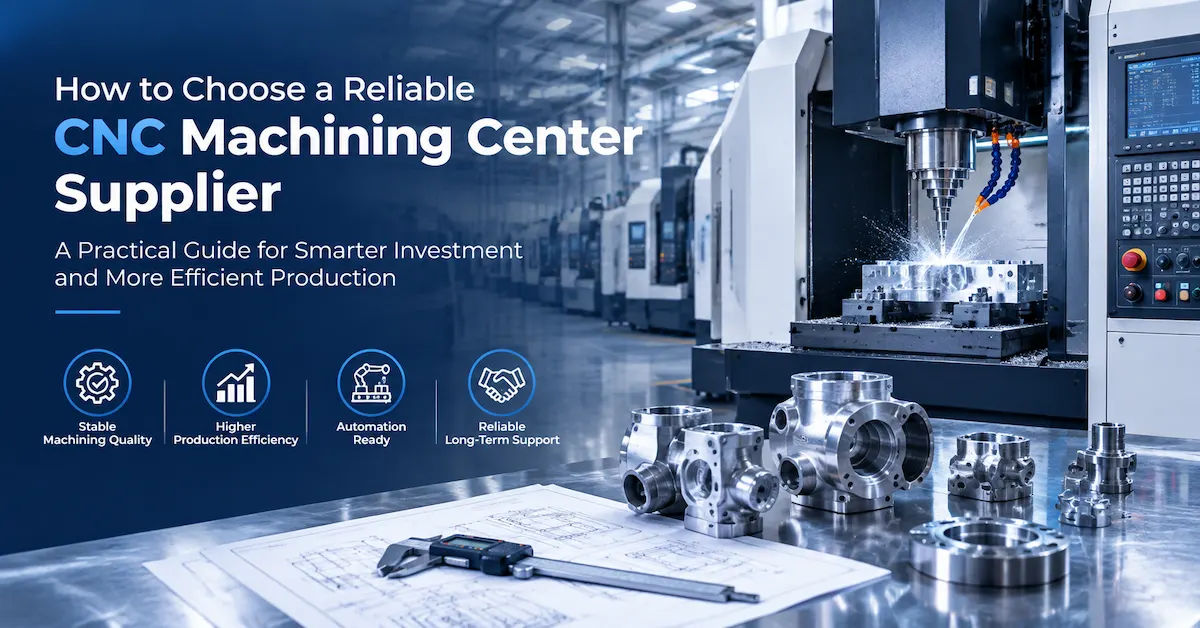
Choosing a CNC machining center supplier is an important decision for manufacturers investing in long-term production capability. A CNC machine is not only a piece of equipment; it directly affects machining accuracy, production efficiency, labor requirements, product consistency, and future automation opportunities.
For factories producing precision components such as valve bodies, faucet parts, automotive components, door hardware, connectors, and industrial housings, selecting the right supplier requires evaluating much more than machine specifications.
A reliable CNC supplier should understand the complete manufacturing process:
Part requirements → Material analysis → Machining process → Fixture design → Machine configuration → Automation planning → Quality inspection → Production optimization
The right supplier should help manufacturers achieve:
- Stable production quality
- Reduced machining cycle time
- Fewer unnecessary setups
- Better production flexibility
- Lower long-term manufacturing costs
Xinmei Intelligent provides industrial CNC equipment solutions including CNC machining centers, special-purpose machines, grinding equipment, robot loading systems, and integrated automation solutions for medium and large-batch manufacturing applications.
Why CNC Machining Center Supplier Selection Matters
A CNC machining center is usually a long-term manufacturing investment. Unlike standard equipment purchases, CNC systems influence the entire production workflow.
A suitable CNC machining center supplier should help customers solve practical manufacturing challenges:
- How to machine the part more efficiently?
- How many setups are required?
- Can multiple operations be combined?
- How can production consistency be improved?
- Can the system support future automation?
- How can downtime and maintenance risks be reduced?
Many buyers initially focus on:
- Machine price
- Spindle speed
- Travel distance
- Control system
- Delivery time
However, these specifications only represent part of the purchasing decision.
For industrial production, the more important factors are:
Application Experience
Can the supplier understand your specific industry and workpiece requirements?
Engineering Capability
Can the supplier optimize machining processes, fixtures, and tooling?
Customization Ability
Can the supplier develop solutions beyond standard machines?
Production Support
Can the supplier provide installation, commissioning, and technical service?
A CNC supplier with strong engineering capability can help customers avoid costly mistakes during equipment selection.
CNC Machining Center Supplier vs CNC Machine Reseller
Before purchasing CNC equipment, manufacturers should understand the difference between a direct CNC manufacturer and a simple equipment reseller.
| Comparison Factor | CNC Machining Center Supplier | CNC Machine Reseller |
|---|---|---|
| Machine development | Direct involvement in equipment design | Mainly sells existing products |
| Process engineering | Provides machining analysis | Usually limited |
| Custom solutions | Can develop customized systems | Depends on third parties |
| Fixture optimization | Can support workholding design | Usually separate |
| Automation integration | Can provide production solutions | Often limited |
| Technical communication | Direct engineering support | May involve multiple suppliers |
| Long-term service | More integrated support | Depends on supplier network |
For manufacturers with standard machining requirements, a reseller may provide a suitable solution.
However, for companies producing complex industrial parts or planning production upgrades, working with a CNC manufacturer usually provides stronger technical advantages.
A professional supplier should not only answer:
“Which machine do you want?”
Instead, they should ask:
“What part are you producing, what process limitations do you have, and what production goal are you trying to achieve?”
Evaluate CNC Machining Capability Before Choosing a Supplier
A reliable CNC machining center supplier should demonstrate experience in different machining applications.
Different industries require different machine configurations and process solutions.
CNC Machining Solutions for Valve and Sanitary Ware Components
Valve and sanitary ware manufacturers often process:
- Faucet bodies
- Valve housings
- Angle valves
- Water manifolds
- Brass components
- Stainless steel parts
Typical machining requirements include:
- Drilling
- Tapping
- Milling
- Boring
- Thread processing
- Multi-face machining
For these applications, suppliers need to understand:
- Material characteristics
- Fixture stability
- Chip control
- Batch production requirements
- Surface quality requirements
CNC Solutions for Door Hardware Manufacturing
Door-control components such as:
- Door closer bodies
- Floor spring bodies
- Lock components
often require:
- Multiple machining operations
- Stable positioning
- Dedicated fixtures
- High repeatability
A supplier with application experience can help determine whether the best solution is:
- Standard machining center
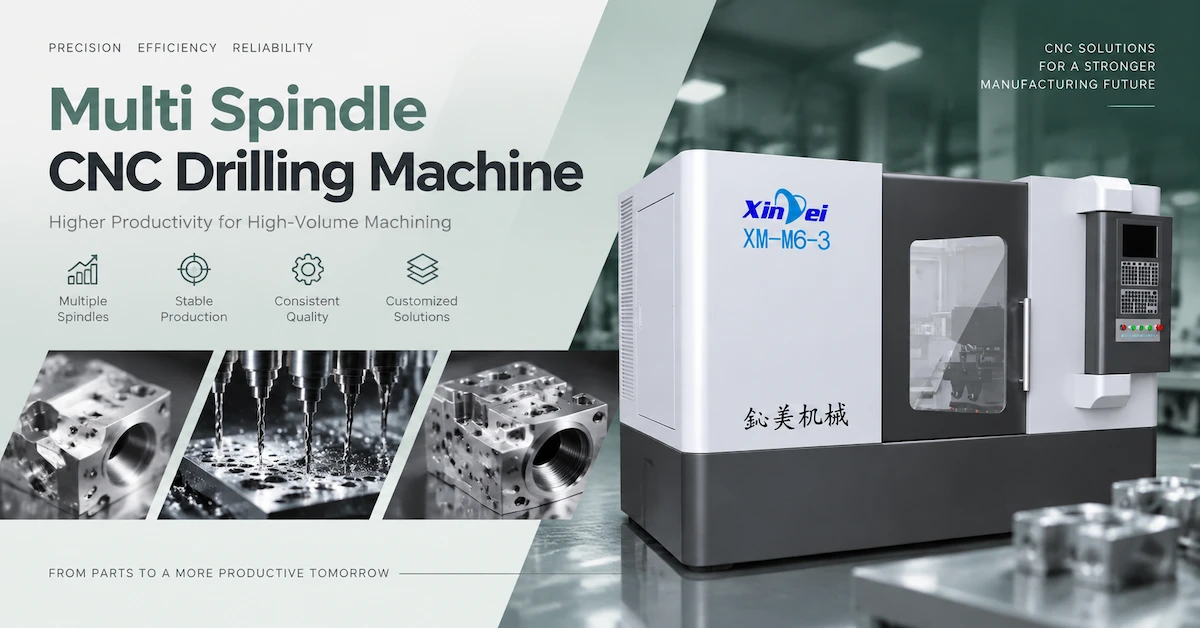
- Multi-spindle CNC machine
- Special-purpose machine
- Automated production line
CNC Solutions for Automotive Components
Automotive parts usually require:
- Stable dimensional accuracy
- High production consistency
- Efficient cycle time
- Reliable process control
Components such as:
- Steering parts
- Brake components
- Cylinder-related parts
- Suspension components
often benefit from process optimization and automation integration.
Xinmei Intelligent develops CNC equipment solutions for applications including automotive components, valves, sanitary ware, door-control hardware, connectors, and other industrial parts.
CNC Machining Center Supplier Equipment Capability
A professional supplier should have a complete equipment portfolio because different manufacturing requirements require different machine structures.
Vertical Machining Centers
A vertical machining center uses a vertical spindle configuration and is widely used for:
- Drilling
- Tapping
- Milling
- General precision machining
- Flexible production
For factories producing parts where most machining features are accessible from the top surface, a vertical machining solution can provide a practical balance between flexibility and investment.
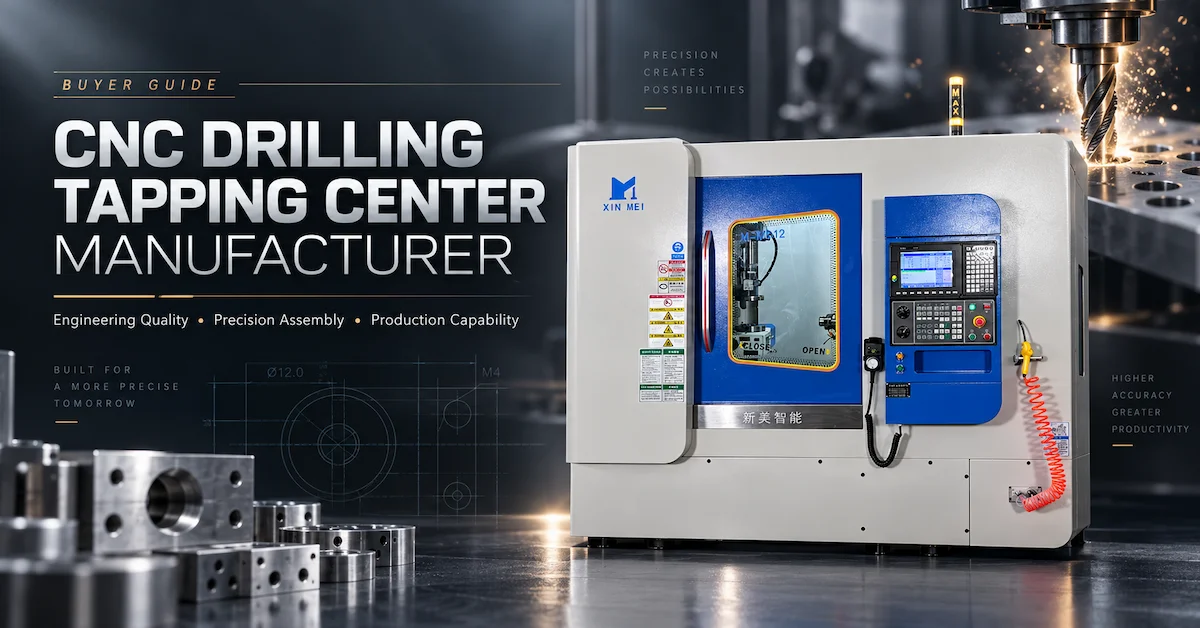
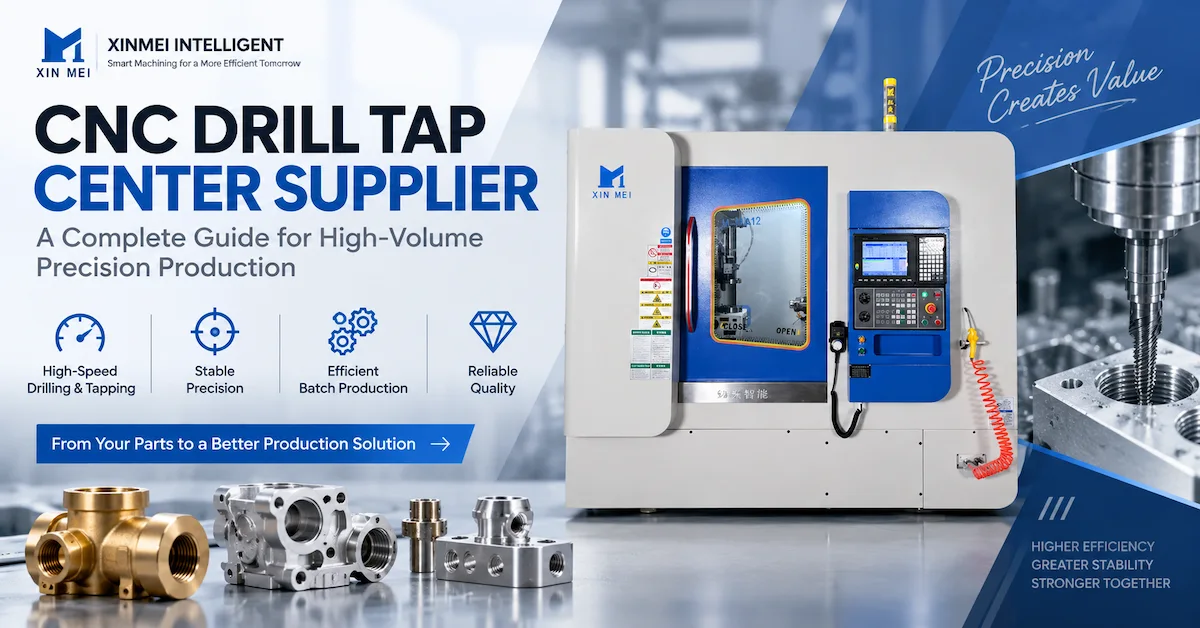
Xinmei provides vertical CNC drilling and tapping machines designed for high-speed drilling and tapping operations, stable production, and industrial batch manufacturing.
Horizontal Machining Centers
A horizontal machining center uses a horizontal spindle arrangement and is often considered for:
- Multi-side machining
- Reduced re-clamping
- High-volume production
- Automated manufacturing cells
For complex components requiring machining on multiple faces, horizontal machining solutions can improve process efficiency by reducing unnecessary workpiece handling.
Xinmei's horizontal machining center solutions focus on flexible production, multi-station machining, chip management, and integration with automated manufacturing systems.
Special Purpose CNC Machines
Not every production challenge can be solved with a standard machining center.
For dedicated components with stable demand, special-purpose CNC machines may provide advantages through:
- Dedicated fixtures
- Optimized machining sequence
- Higher production efficiency
- Reduced operator involvement
Xinmei develops special purpose CNC machines for specific industrial applications where customized machining processes are required.
CNC Automation Capability and Future Production Upgrades
Modern CNC purchasing decisions increasingly involve automation planning.
A CNC machining center supplier should consider not only today's production requirements but also future factory development.
Automation solutions may include:
- Robot loading and unloading
- Automatic material handling
- CNC production cells
- Automated assembly systems
- Integrated inspection processes
Factories should evaluate:
- Current labor dependency
- Production volume
- Product repeatability
- Future expansion plans
Xinmei provides CNC automation solutions that combine machining equipment with production automation for manufacturers seeking higher efficiency and more stable production workflows.
Evaluate CNC Machining Center Supplier Engineering Capability
A reliable CNC machining center supplier should provide more than equipment manufacturing. The supplier’s engineering capability determines whether the machine can truly solve production challenges after installation.
Before recommending a CNC solution, an experienced supplier should analyze:
Part Geometry
Understanding the part structure is the first step.
Important factors include:
- Overall dimensions
- Complex features
- Machining surfaces
- Hole positions
- Thread requirements
- Critical tolerance areas
- Surface finish requirements
A machine that works well for one component may not be suitable for another.
Material Characteristics
Different materials create different machining challenges.
Common industrial materials include:
- Brass
- Aluminum
- Stainless steel
- Cast iron
- Zinc alloy
- Engineering plastics
Material properties affect:
- Cutting parameters
- Tool selection
- Chip formation
- Tool life
- Surface quality
A professional CNC supplier should consider material behavior when designing the machining process.
Production Volume
Production quantity directly affects machine selection.
A supplier should evaluate whether the customer requires:
- Flexible small-batch production
- Medium-volume manufacturing
- High-volume continuous production
- Fully automated machining
For example:
A factory producing different components in smaller quantities may prioritize flexibility.
A factory producing thousands of identical components may benefit more from:
- Dedicated fixtures
- Multi-spindle systems
- Automated loading
- Special-purpose machines
Current Manufacturing Problems
A good CNC supplier should understand existing production limitations, such as:
- Too many manual operations
- Long setup time
- Repeated clamping problems
- Unstable quality
- Low machine utilization
- Labor dependency
The goal of CNC equipment investment should be solving production problems, not simply replacing old machines.
CNC Supplier Process Optimization Before Machine Configuration
Professional CNC machining center suppliers usually follow a process-oriented approach.
A typical engineering workflow includes:
Step 1: Analyze Part Requirements
The supplier reviews:
- Drawings
- 3D models
- Material
- Production targets
- Quality requirements
Step 2: Develop Machining Process
The engineering team evaluates:
- Machining sequence
- Cutting strategy
- Tool selection
- Fixture concept
- Number of setups
Step 3: Configure CNC Equipment
Machine selection may consider:
- Spindle requirements
- Axis configuration
- Work envelope
- Tool capacity
- Automation options
Step 4: Validate Production Performance
Before final delivery, the supplier should verify:
- Machining stability
- Part quality
- Process repeatability
- Production efficiency
This engineering-based approach helps manufacturers avoid selecting machines that appear suitable on paper but fail to meet actual production needs.
Quality Assurance: A Key Factor When Choosing a CNC Supplier
Machine quality directly affects manufacturing stability.
Therefore, buyers should evaluate how a CNC machining center supplier controls quality throughout the manufacturing process.
A complete quality system should include:
Component Inspection
Before assembly, important components should be checked for:
- Material consistency
- Dimensional accuracy
- Manufacturing quality
Mechanical Assembly Control
Machine assembly influences:
- Structural stability
- Axis alignment
- Long-term reliability
Important areas include:
- Machine structure
- Linear guides
- Spindle installation
- Mechanical precision
Electrical System Integration
The electrical system should be verified for:
- Control system compatibility
- Wiring quality
- Safety functions
- Communication stability
Machine Testing and Validation
Before shipment, a professional supplier should perform:
- Functional testing
- Accuracy verification
- Operation testing
- Production simulation
Xinmei Intelligent emphasizes quality control throughout machine manufacturing, including component inspection, assembly control, precision measurement, and final machine validation.
Learn more about the company's quality assurance process and production standards.
CNC Machining Center Supplier Cost Evaluation
When purchasing CNC equipment, many buyers focus only on the initial machine quotation.
However, professional manufacturers should evaluate the total investment.
Initial Equipment Cost
Includes:
- CNC machine
- Control system
- Optional functions
- Tooling package
- Fixtures
- Automation equipment
Production Cost
Long-term operating costs may include:
- Labor requirements
- Tool consumption
- Maintenance
- Energy usage
- Downtime
- Spare parts
Productivity Value
A higher-value CNC solution may provide:
- Shorter cycle time
- Fewer setups
- Better consistency
- Lower scrap rate
- Higher equipment utilization
Therefore, the real comparison should be:
Cost per qualified finished part
rather than:
Lowest machine purchase price
A reliable CNC machining center supplier should help customers understand the complete production economics before investment.
How to Reduce CNC Purchasing Risks
Selecting CNC equipment involves technical and financial risks.
Manufacturers can reduce risk by evaluating several areas.
1. Verify Supplier Manufacturing Capability
Check:
- Factory background
- Equipment portfolio
- Engineering team
- Production experience
- Customer applications
A supplier with its own manufacturing and engineering capability usually provides better control over machine quality and customization.
2. Review Similar Applications
Ask whether the supplier has experience with similar:
- Materials
- Components
- Industries
- Production volumes
Relevant experience helps reduce process uncertainty.
3. Confirm After-Sales Support
Important questions include:
- Who provides installation?
- Is operator training available?
- How are technical issues handled?
- Are spare parts available?
- Is remote support provided?
For overseas buyers, after-sales capability is especially important because CNC equipment requires long-term technical support.
4. Evaluate Future Expansion Possibility
A good CNC investment should support future growth.
Consider whether the supplier can provide:
- Additional automation
- Process upgrades
- New fixture solutions
- Production line expansion
Why Xinmei Intelligent Can Support Industrial CNC Projects
Xinmei Intelligent focuses on CNC machining equipment and intelligent manufacturing solutions for industrial production environments.
The company provides:
- CNC machining centers
- Special-purpose CNC machines
- Grinding and surface processing equipment
- Robot loading systems
- CNC automation production lines
Xinmei's solution approach focuses on:
Production requirement → Process analysis → Machine configuration → Automation integration → Installation → Production optimization
This helps manufacturers select equipment based on actual production goals instead of only comparing machine specifications.
The company's application experience covers industries including:
- Bathroom and sanitary ware
- Valves
- Door-control hardware
- Automotive components
- Aerospace connectors
- Bearing housings
- Industrial components
More information about Xinmei's company background and engineering approach is available on the Xinmei Intelligent About Us page.
CNC Machining Center Supplier Evaluation Checklist
Before choosing a supplier, manufacturers can use this checklist:
| Evaluation Item | Key Questions |
|---|---|
| Industry experience | Does the supplier understand my application? |
| Machine capability | Can the equipment complete required processes? |
| Engineering support | Can the supplier optimize machining methods? |
| Customization | Can fixtures or special machines be developed? |
| Quality control | How is machine performance verified? |
| Automation | Can production be upgraded later? |
| Service | Is installation and technical support available? |
| Long-term value | Can the solution reduce production cost? |
Information Required Before Requesting a CNC Machining Center Quote
To receive an accurate proposal, manufacturers should prepare:
Part Information
- CAD drawings
- 3D models
- Material specifications
- Required tolerances
- Surface requirements
Production Information
- Monthly output
- Annual production volume
- Current process
- Cycle time
- Number of operators
- Current production challenges
Equipment Requirements
- Machining operations
- Automation expectations
- Inspection requirements
- Future expansion plans
Providing complete information allows suppliers to recommend a more suitable CNC machining solution.
FAQ
1. What makes a reliable CNC machining center supplier?
A reliable supplier combines machine manufacturing capability, engineering experience, quality control, customization ability, automation support, and after-sales service.
2. Should I choose a CNC manufacturer or a CNC trading company?
For standard equipment requirements, both options may work. For customized industrial applications, a direct manufacturer usually provides stronger engineering communication and technical support.
3. How do I compare different CNC machining center suppliers?
Compare suppliers based on machining experience, equipment capability, quality system, customization ability, automation solutions, service support, and total ownership cost.
4. Can a CNC machining center supplier customize equipment?
Yes. Depending on production requirements, customization may include special fixtures, machine configuration changes, dedicated CNC machines, and automation integration.
5. What industries use CNC machining centers?
CNC machining centers are widely used in automotive parts, valves, sanitary ware, aerospace components, electronics, industrial hardware, medical equipment, and general precision manufacturing.
6. How long does CNC machine installation usually take?
Installation time depends on machine complexity, factory preparation, automation level, and commissioning requirements. Customized production lines usually require more engineering support than standalone machines.
7. What information affects CNC machine pricing?
Pricing depends on machine structure, spindle configuration, control system, automation options, tooling, fixture requirements, and project complexity.
8. Can CNC suppliers help improve existing production efficiency?
Yes. Experienced suppliers can analyze current processes and recommend improvements involving machining sequence, fixtures, tooling, automation, and equipment configuration.
9. Why is application experience important when selecting a CNC supplier?
Because different parts require different machining strategies. A supplier familiar with similar applications can better optimize the machine solution and reduce production risks.
10. How can I contact a CNC machining center supplier for a project evaluation?
Prepare your drawings, material information, production requirements, and current manufacturing challenges. Suppliers can then evaluate the appropriate CNC configuration and production solution.
Conclusion
Choosing a CNC machining center supplier is a strategic decision that influences production efficiency, quality stability, and long-term manufacturing competitiveness.
The best supplier is not simply the company offering the lowest equipment price.
A reliable CNC partner should provide:
- Appropriate machine configuration
- Professional process engineering
- Custom machining solutions
- Reliable quality control
- Automation possibilities
- Long-term technical support
For manufacturers planning to improve machining efficiency, upgrade production capacity, or develop automated manufacturing systems, selecting a supplier with both machine capability and application experience is essential.
Xinmei Intelligent provides CNC machining equipment and customized manufacturing solutions based on real production requirements. Manufacturers can share their part drawings, production targets, and machining challenges through the Contact Xinmei Intelligent page for a project-based evaluation.