+86 13163919000
 info@xinmeiintelligent.com

How to Choose a Reliable CNC Machining Center Manufacturer for Your Factory
Choosing a CNC machining center manufacturer is a strategic decision for factories that depend on stable machining quality, production efficiency, and long-term equipment reliability.
A CNC machining center is not only a machine tool. It is the foundation of a manufacturing process that includes:
- Part analysis
- Machining process design
- Fixture development
- Tool selection
- Machine configuration
- Quality inspection
- Production optimization
- Automation planning
For manufacturers producing industrial components such as valve bodies, faucet parts, door hardware, automotive components, connectors, and precision mechanical parts, selecting the right CNC manufacturer can directly influence:
- Production capacity
- Product consistency
- Manufacturing cost
- Equipment utilization
- Future automation opportunities
A professional CNC machining center manufacturer should provide more than standard equipment. The manufacturer should have the ability to understand customer applications, optimize machining processes, develop suitable configurations, and support production after installation.
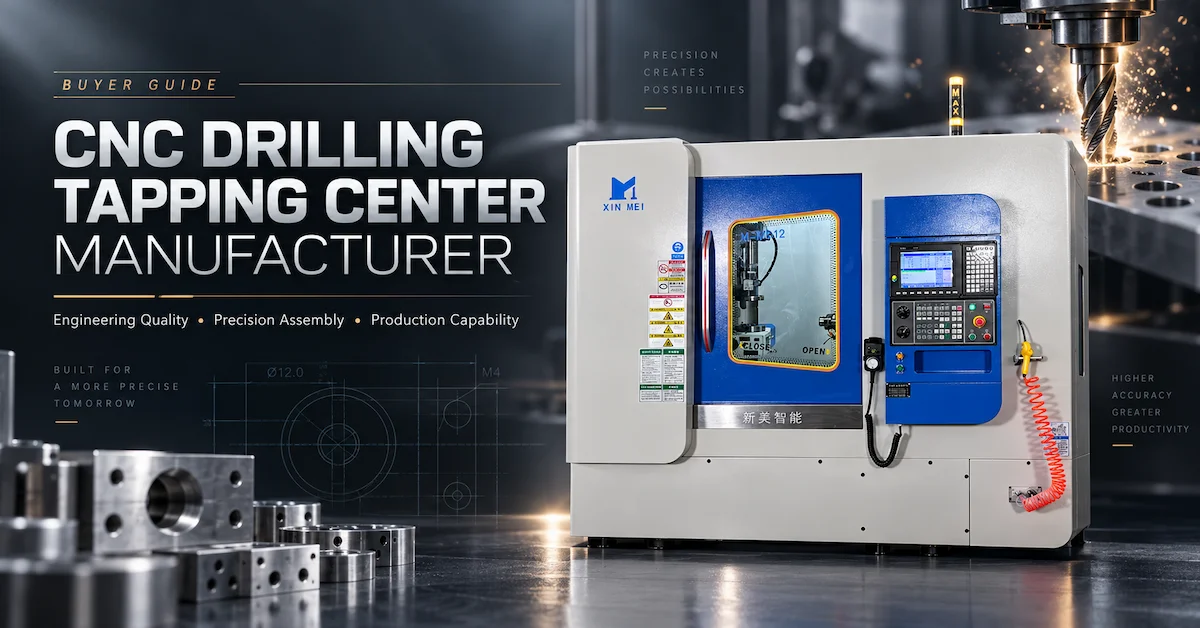
Xinmei Intelligent focuses on CNC machining equipment, special-purpose CNC machines, and intelligent manufacturing solutions for industrial production environments. The company provides CNC machining centers, customized machining solutions, and automation integration based on actual manufacturing requirements.
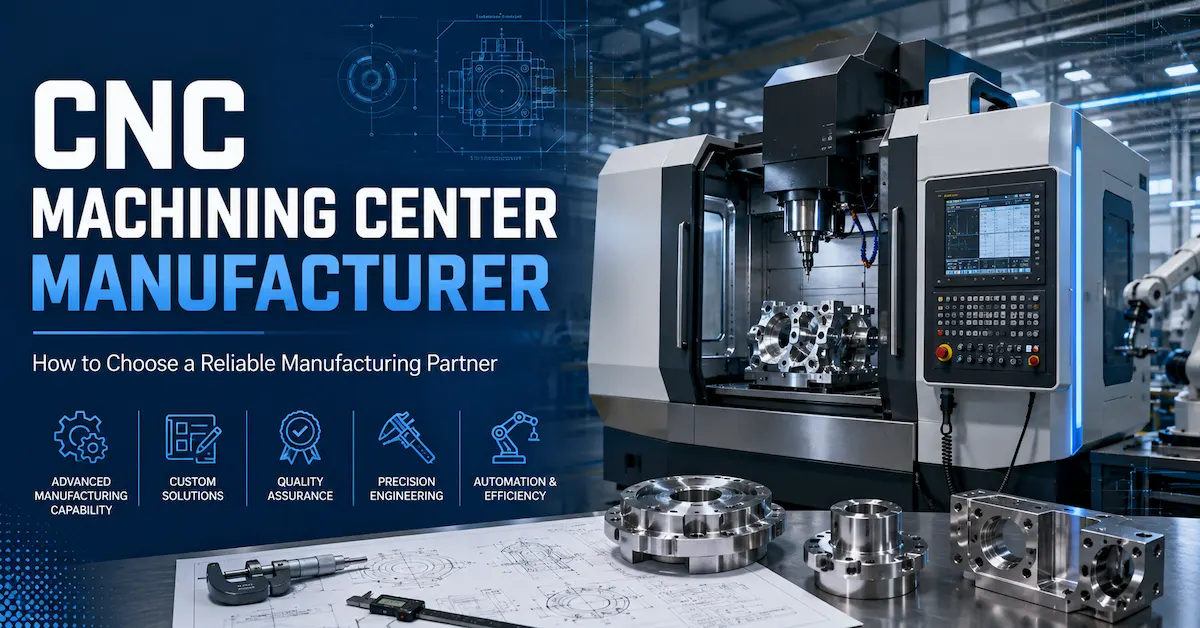
CNC Machining Center Manufacturer vs Supplier vs Reseller
Before purchasing CNC equipment, manufacturers should understand the difference between a CNC machining center manufacturer and other types of equipment providers.
Although these terms are sometimes used interchangeably, their capabilities can be very different.
| Evaluation Factor | CNC Machining Center Manufacturer | CNC Supplier | CNC Reseller |
|---|---|---|---|
| Own manufacturing facility | Usually yes | May vary | Usually no |
| Machine design capability | Strong | Limited or depends on partners | Limited |
| Process engineering | Strong | Depends on technical team | Usually limited |
| Custom machine development | Available | Possible through cooperation | Limited |
| Fixture and tooling support | Integrated capability | Partial | Usually external |
| Automation integration | Stronger capability | Depends on resources | Limited |
| After-sales technical support | Direct engineering support | Variable | Depends on manufacturer |
For standard CNC purchases, different purchasing channels may be suitable.
However, when a factory requires:
- Customized machining solutions
- Special-purpose machines
- Automated production systems
- Process optimization
- Long-term technical support
working directly with a CNC machining center manufacturer can reduce communication problems and technical risks.
The key question should not only be:
“Which machine model can you provide?”
It should be:
“How can your manufacturing capability help improve our production process?”
Why Factory Capability Matters When Choosing a CNC Manufacturer
A professional CNC machining center manufacturer should have strong internal manufacturing capability.
This includes:
- Machine design
- Mechanical assembly
- Electrical integration
- Precision adjustment
- Performance testing
- Production validation
A manufacturer with complete production capability can better control:
Machine Structure Quality
The machine structure affects:
- Rigidity
- Stability
- Vibration control
- Long-term machining performance
For industrial production, machine stability is often more important than short-term maximum specifications.
Assembly Capability
Precision CNC equipment requires careful assembly of:
- Mechanical components
- Transmission systems
- Spindle systems
- Electrical systems
- Control systems
Improper assembly can influence:
- Accuracy
- Repeatability
- Service life
Testing Capability
Before shipment, CNC machines should undergo validation procedures to confirm:
- Machine operation
- Axis movement
- Machining performance
- Safety functions
- Production stability
Xinmei Intelligent develops CNC equipment with a focus on practical industrial applications, combining machine manufacturing, process engineering, and production requirements.
CNC Machining Center Manufacturer Engineering Capability
A major difference between a machine manufacturer and a simple equipment seller is engineering capability.
Industrial buyers usually do not need only a machine.
They need a production solution.
A professional CNC manufacturer should analyze:
Part Requirements
The engineering team should understand:
- Component drawings
- Material characteristics
- Machining features
- Required tolerances
- Surface requirements
Different parts require different machining strategies.
For example:
A valve body may require:
- Drilling
- Tapping
- Milling
- Thread processing
- Multi-face machining
An automotive component may require:
- Higher repeatability
- Stable cycle time
- Continuous production capability
A connector component may require:
- Precision positioning
- Small-feature machining
- Strict dimensional control
Machining Process Planning
Before recommending equipment, a CNC manufacturer should evaluate:
- Machining sequence
- Number of setups
- Fixture design
- Cutting tools
- Tool paths
- Automation possibility
Reducing unnecessary operations is often one of the most effective ways to improve production efficiency.
For example, replacing multiple independent machining steps with a more integrated process can help reduce:
- Handling time
- Repeated positioning
- Operator involvement
- Production variation
Fixture and Workholding Development
Fixture design is a critical factor in CNC machining performance.
A reliable CNC machining center manufacturer should consider:
- Workpiece positioning
- Clamping stability
- Tool accessibility
- Loading efficiency
- Repeatability
Even a high-performance CNC machine cannot achieve stable production if the fixture design is unsuitable.
CNC Machining Center Product Capability
A professional CNC machining center manufacturer should provide different machine solutions based on different production requirements.
Xinmei's equipment portfolio includes CNC machining centers, special-purpose CNC machines, grinding equipment, and automation solutions.
Vertical CNC Machining Centers
Vertical machining centers use a vertical spindle configuration and are widely used for:
- Drilling
- Tapping
- Milling
- General precision machining
They are suitable for manufacturers requiring:
- Flexible production
- Efficient setup
- Convenient operation
- Stable batch machining
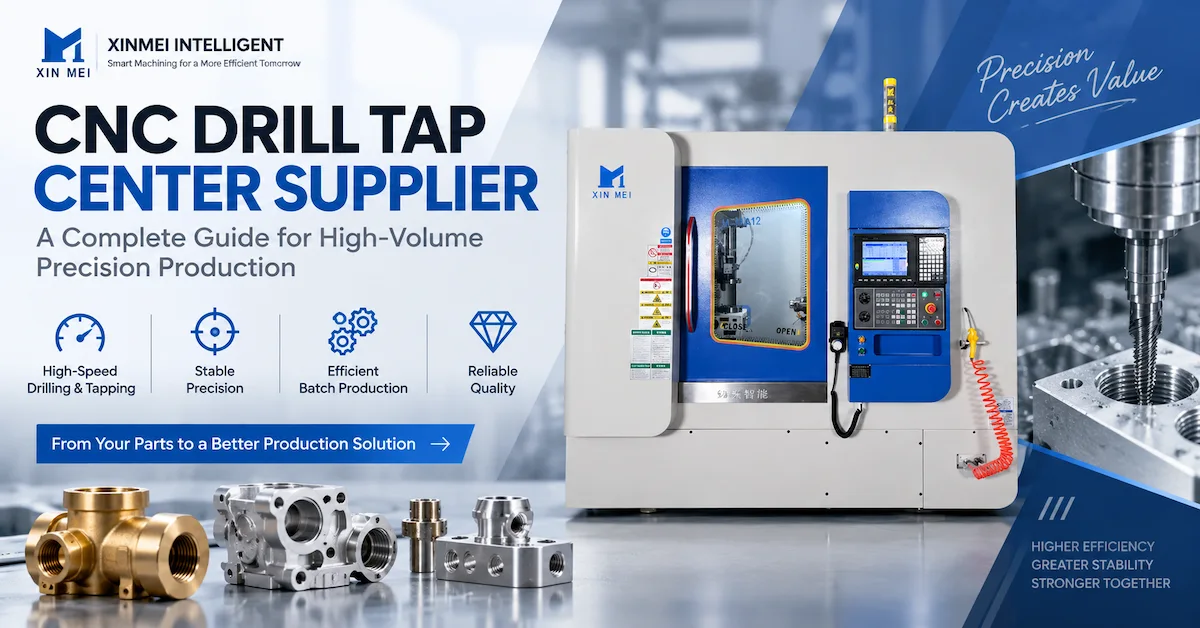
Xinmei provides vertical CNC drilling and tapping machines designed for industrial batch production, including applications in hardware, sanitary ware, automotive components, and other metal-processing industries.
Horizontal Machining Centers
Horizontal machining centers use a horizontal spindle structure and are commonly considered for:
- Multi-side machining
- Reduced re-clamping
- High-volume production
- Automated machining cells
For components requiring machining on several surfaces, horizontal machining solutions may improve efficiency by reducing unnecessary workpiece handling.
Xinmei develops horizontal machining center solutions for flexible production environments, multi-station machining, and automation integration.
Special Purpose CNC Machines
Standard CNC machines are not always the best choice for dedicated production.
For high-volume components with stable demand, special-purpose CNC machines can provide:
- Dedicated machining processes
- Optimized production flow
- Reduced operator involvement
- Improved production consistency
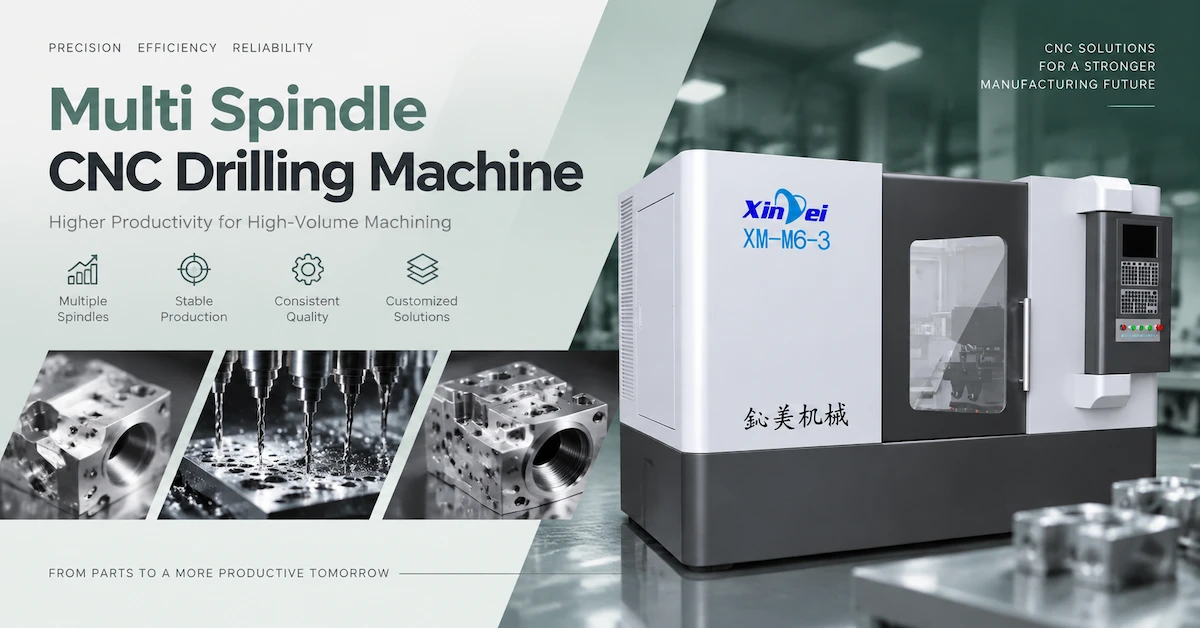
Xinmei provides special purpose CNC machine solutions for manufacturers requiring customized production equipment.
CNC Automation and Intelligent Manufacturing Solutions
Modern factories increasingly require CNC systems that can support automation upgrades.
A professional CNC machining center manufacturer should consider future expansion possibilities, including:
- Robot loading and unloading
- Automatic material handling
- CNC production cells
- Automated assembly systems
- Integrated manufacturing lines
Automation can help manufacturers improve:
- Production consistency
- Equipment utilization
- Labor efficiency
- Manufacturing scalability
Xinmei provides CNC automation solutions that combine machining equipment with intelligent production systems for industrial customers.
CNC Machining Center Manufacturing Process: From Design to Production Validation
A professional CNC machining center manufacturer should have a structured manufacturing process that ensures equipment reliability, machining stability, and consistent production performance.
Unlike simple equipment assembly, CNC machine manufacturing requires coordination between:
- Mechanical design
- Precision machining
- Component selection
- Electrical integration
- Software configuration
- Machine calibration
- Production testing
A complete manufacturing process usually includes several important stages.
Engineering Design and Machine Configuration
The first stage is understanding the customer's production requirements and developing a suitable machine configuration.
The manufacturer evaluates:
Workpiece Requirements
Including:
- Part size
- Material
- Machining operations
- Required tolerance
- Production volume
- Surface finish requirements
Production Objectives
Including:
- Target cycle time
- Number of operations
- Automation requirements
- Future expansion plans
Machine Configuration
Based on these factors, the manufacturer determines:
- Machine structure
- Spindle configuration
- Axis requirements
- Tool capacity
- Fixture concept
- Automation options
This application-driven approach helps avoid selecting equipment based only on standard specifications.
Mechanical Assembly and Component Integration
A CNC machining center manufacturer must control the quality of mechanical assembly because machine structure directly affects machining stability.
Important systems include:
Machine Structure
The machine base and structural components influence:
- Rigidity
- Vibration resistance
- Long-term accuracy
Motion Systems
Including:
- Linear guides
- Ball screws
- Servo systems
- Axis transmission components
These components affect:
- Positioning accuracy
- Repeatability
- Machining consistency
Spindle System
The spindle is one of the most important CNC machine components.
Performance factors include:
- Rotation stability
- Cutting capability
- Thermal behavior
- Tool compatibility
Xinmei Intelligent works with industrial component suppliers and applies structured manufacturing processes to develop CNC equipment for industrial production environments.
Electrical Integration and CNC Control System Setup
Modern CNC machining centers combine mechanical systems with advanced electrical control.
A professional manufacturer should manage:
- Control system installation
- Servo parameter adjustment
- Electrical wiring
- Safety functions
- Communication systems
Control system selection depends on:
- Machine requirements
- Customer preference
- Application complexity
Common industrial CNC control solutions include systems from manufacturers such as:
- Siemens
- FANUC
- SYNTEC
The CNC control system should support stable operation, accurate movement control, and efficient production programming.
CNC Machine Testing and Production Validation
Before delivery, CNC machining centers should undergo testing to confirm machine performance.
A professional CNC machining center manufacturer should validate:
Machine Operation
Including:
- Axis movement
- Spindle operation
- Tool changing
- Safety functions
Precision Performance
Including:
- Positioning accuracy
- Repeatability
- Machining stability
Production Trial
A production test helps confirm whether the machine can meet actual manufacturing requirements.
Important validation factors include:
- Part quality
- Machining consistency
- Cycle stability
- Process reliability
This step reduces risks after installation and helps customers transition into production faster.
Quality Control System of a CNC Machining Center Manufacturer
Quality control is one of the most important factors when selecting a CNC manufacturer.
A reliable manufacturer should have quality management throughout the complete production process.
Incoming Component Inspection
Before assembly, components should be evaluated for:
- Manufacturing quality
- Dimensional consistency
- Material reliability
Assembly Quality Control
During machine assembly, manufacturers should check:
- Mechanical alignment
- Component installation
- Electrical connections
- System integration
Final Machine Inspection
Before shipment, the machine should be tested for:
- Functional operation
- Machining performance
- Safety requirements
- Production stability
Xinmei Intelligent applies quality assurance procedures covering component inspection, assembly control, precision testing, and final machine validation.
More information can be found on the Xinmei quality assurance page.
Industries Served by CNC Machining Center Manufacturers
A capable CNC machining center manufacturer should understand different industrial applications because each industry has unique machining challenges.
Automotive Component Manufacturing
Automotive parts often require:
- High production consistency
- Stable machining accuracy
- Efficient cycle times
Typical components include:
- Steering components
- Brake-related parts
- Cylinder components
- Suspension parts
For automotive suppliers, CNC equipment selection should focus on repeatability, production efficiency, and process stability.
Valve and Sanitary Ware Manufacturing
Valve and sanitary ware industries commonly process:
- Faucet bodies
- Valve housings
- Angle valves
- Brass components
- Stainless steel parts
Important requirements include:
- Drilling
- Tapping
- Thread machining
- Multi-face processing
- Stable batch production
The right CNC solution depends on part geometry, production quantity, and required machining operations.
Door Hardware Manufacturing
Door-control products such as:
- Door closer bodies
- Floor spring bodies
- Lock components
often require:
- Multiple machining processes
- Dedicated fixtures
- High repeatability
- Efficient production flow
Special-purpose CNC machines and automation solutions can be suitable for high-volume production.
Aerospace and Precision Connector Applications
Precision components such as connectors require:
- Stable positioning
- Tight process control
- Consistent quality
CNC machining center manufacturers supporting these industries need strong process knowledge and quality management capabilities.
Custom CNC Machining Solutions Development Process
A professional CNC machining center manufacturer should provide customized solutions when standard machines cannot fully meet production requirements.
The typical workflow includes:
Step 1: Project Analysis
The manufacturer reviews:
- Product drawings
- Production targets
- Machining challenges
- Quality requirements
Step 2: Process Optimization
The engineering team evaluates:
- Machining sequence
- Fixture design
- Tool selection
- Automation possibilities
Step 3: Machine Solution Development
The solution may include:
- Standard CNC machining center
- Modified machine configuration
- Special-purpose CNC equipment
- Automated production system
Step 4: Installation and Commissioning
After delivery, the supplier supports:
- Machine installation
- Parameter adjustment
- Production testing
- Operator training
Xinmei Intelligent provides project-based CNC solutions covering process consultation, customized equipment, installation, commissioning, and production optimization.
Customers can learn more about Xinmei's engineering approach through the About Xinmei Intelligent page.
Cost and Risk Factors When Choosing a CNC Manufacturer
Choosing a CNC machining center manufacturer should include a complete evaluation of investment risk.
The lowest equipment price does not always create the lowest manufacturing cost.
Consider Total Ownership Cost
Important factors include:
Equipment Investment
Including:
- CNC machine price
- Optional configurations
- Tooling
- Fixtures
- Automation equipment
Production Efficiency
Including:
- Cycle time
- Setup reduction
- Operator requirements
- Equipment utilization
Maintenance and Service
Including:
- Spare parts availability
- Technical support
- Training
- Long-term reliability
Why Manufacturing Capability Matters for Long-Term Value
A CNC manufacturer with strong engineering and production capability can help customers:
- Reduce process uncertainty
- Improve production stability
- Upgrade automation gradually
- Optimize future manufacturing expansion
The supplier relationship should continue after machine delivery.
For industrial manufacturers, a CNC machining center manufacturer should become a technical partner rather than only an equipment provider.
How to Evaluate a CNC Machining Center Manufacturer
Before making a purchase decision, manufacturers should evaluate:
| Evaluation Area | Key Questions |
|---|---|
| Factory capability | Does the company manufacture CNC equipment directly? |
| Engineering team | Can they analyze machining processes? |
| Product range | Can they provide different CNC solutions? |
| Application experience | Do they understand similar industries? |
| Customization | Can they develop special solutions? |
| Quality control | How are machines tested before shipment? |
| Automation | Can the system support future upgrades? |
| Service | Is installation and support available? |
A reliable CNC manufacturer should provide clear answers based on engineering capability rather than only sales information.
FAQ
1. What is a CNC machining center manufacturer?
A CNC machining center manufacturer is a company that designs, develops, assembles, tests, and supplies CNC machining equipment for industrial production.
2. What is the difference between a CNC machining center manufacturer and a supplier?
A manufacturer usually has direct control over machine development, production, customization, and technical support. A supplier may provide equipment but may not directly manufacture it.
3. Why should I choose a CNC manufacturer instead of a reseller?
A direct manufacturer can usually provide better engineering communication, customization capability, process support, and long-term technical assistance.
4. Can CNC machining center manufacturers customize machines?
Yes. Depending on production requirements, manufacturers can provide customized machine configurations, special-purpose equipment, fixtures, and automation solutions.
5. What industries use CNC machining centers?
CNC machining centers are widely used in automotive, valves, sanitary ware, aerospace components, connectors, hardware, medical equipment, and precision manufacturing industries.
6. How do CNC manufacturers ensure machine quality?
Manufacturers typically use component inspection, assembly control, precision testing, machine validation, and production trials before shipment.
7. What information should I provide when contacting a CNC manufacturer?
Provide:
- Part drawings
- Material information
- Production volume
- Required machining processes
- Quality requirements
- Automation expectations
8. Can CNC manufacturers help improve existing production processes?
Yes. Experienced manufacturers can analyze current processes and recommend improvements involving machining sequence, fixtures, tooling, and automation.
9. How long does CNC machine production take?
Production time depends on machine configuration, customization requirements, testing procedures, and project complexity.
10. How do I select the best CNC machining center manufacturer?
Evaluate factory capability, engineering experience, application knowledge, quality systems, customization ability, automation capability, and after-sales support.
Conclusion
Selecting a CNC machining center manufacturer is not simply about finding a company that can supply a machine.
The right manufacturing partner should provide:
- Strong CNC equipment capability
- Engineering-driven solutions
- Reliable quality control
- Customization support
- Automation integration
- Long-term technical service
For industrial factories, the best CNC manufacturer is the one that understands the relationship between the machine, the process, and the final production goal.
Xinmei Intelligent provides CNC machining centers, customized CNC solutions, and intelligent manufacturing systems based on real industrial applications.
Manufacturers evaluating new CNC equipment can share their part drawings, production requirements, and automation goals through the Xinmei contact page to discuss a suitable machining solution.