+86 13163919000
 info@xinmeiintelligent.com

What Is CNC Milling and Why Does Machine Selection Matter?
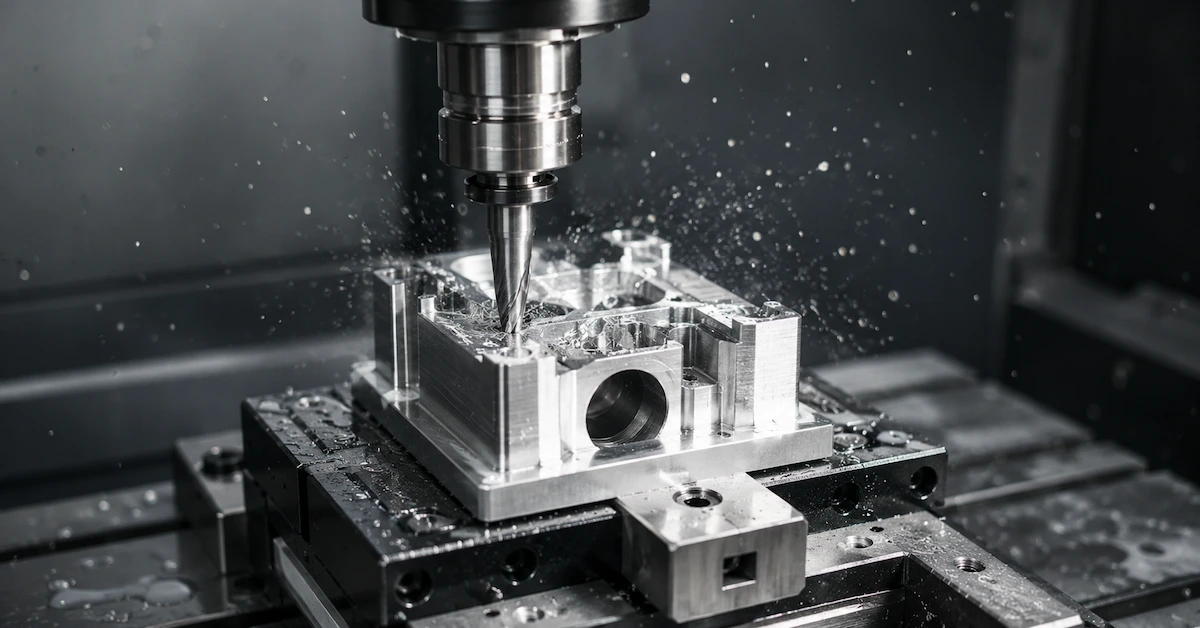
CNC milling is a subtractive manufacturing process in which a computer-controlled rotating cutting tool removes material from a workpiece to create surfaces, pockets, slots, holes, contours, and other geometric features.
Modern CNC milling systems coordinate machine-axis movement, spindle rotation, feed rate, tool changes, and programmed cutting paths to produce repeatable components.
For an industrial buyer, however, understanding what CNC milling is is only the first step.
The more important questions are:
- Which milling machine architecture fits the part?
- How many machining faces must be reached?
- How many setups will be required?
- What materials will be processed?
- What production volume is expected?
- Does the machine need future automation?
- Can the supplier help optimize fixtures, tooling, and process flow?
These factors determine whether a machine that looks capable on a specification sheet will actually perform efficiently in production.
A professional CNC milling machine supplier should therefore evaluate the complete manufacturing requirement rather than recommend equipment based only on nominal specifications.
Xinmei Intelligent develops CNC equipment for drilling, tapping, milling, boring, and integrated manufacturing applications. Its equipment and engineering approach are designed around actual production conditions, particularly medium- and large-batch manufacturing. Buyers can review the broader Xinmei CNC equipment and manufacturing solutions before comparing individual machine configurations.
How Does a CNC Milling Machine Work?
A CNC milling machine converts a digital machining program into coordinated mechanical motion.
The process usually involves four main elements:
CNC Control and Programming
A part is first represented through CAD data or engineering drawings.
CAM software or manual CNC programming is then used to create machining instructions defining:
- Tool paths
- Cutting sequence
- Spindle speed
- Feed rate
- Cutting depth
- Tool changes
- Axis movement
The CNC control executes these commands repeatedly during production.
Good programming is not only about making the tool reach the correct coordinate. It must also consider:
- Tool engagement
- Cutting direction
- Chip evacuation
- Fixture interference
- Machine acceleration
- Tool life
- Cycle time
Cutting Tool Rotation
Unlike CNC turning, where the workpiece typically rotates, milling normally uses a rotating cutting tool to remove material from a clamped workpiece.
Depending on the operation, tools may include:
- Face mills
- End mills
- Ball-nose cutters
- Slot cutters
- Chamfer tools
- Drills
- Taps
- Boring tools
Tool geometry and material must match the workpiece material and cutting conditions.
Workpiece Positioning
The component must be located and clamped securely before machining.
Common workholding methods include:
- Machine vises
- Dedicated fixtures
- Modular fixtures
- Rotary tables
- Tombstones
- Hydraulic or pneumatic fixtures
Fixture rigidity directly affects process stability.
Even a capable CNC milling machine may produce inconsistent parts if:
- The workpiece shifts
- Datum surfaces are contaminated by chips
- Clamping force varies
- Tool access requires excessive overhang
- The fixture is not rigid enough
Material Removal
Once machining begins, the rotating cutter removes material according to the programmed tool path.
The relationship between:
machine rigidity + spindle + cutting tool + fixture + material + cutting parameters
determines actual production performance.
This is why machine selection should be treated as a manufacturing system decision rather than simply an equipment purchase.
CNC Milling Process: From Part Drawing to Stable Production
For batch manufacturing, a reliable process normally begins before the machine is selected.
Step 1: Analyze the Part
The supplier should evaluate:
- Workpiece dimensions
- Material
- Machining faces
- Hole and thread requirements
- Tolerances
- Surface requirements
- Production quantity
A flat component requiring mainly top-side machining may need a very different machine from a valve body requiring machining on several faces.
Step 2: Define the Machining Sequence
The next step is determining how the component should be processed.
Engineers may evaluate:
- Rough machining
- Finish machining
- Drilling
- Tapping
- Boring
- Slotting
- Pocket milling
- Contouring
An effective sequence minimizes unnecessary movement and repeated setup.
Step 3: Design the Workholding Strategy
Fixture design should determine:
- Where the part is located
- Which surfaces remain accessible
- How clamping force is applied
- How quickly the operator can load parts
- Whether one clamping can complete several operations
For repetitive production, reducing unnecessary re-clamping can improve both cycle time and batch consistency.
Step 4: Select Tools and Cutting Parameters
Tool selection depends on:
- Material
- Feature geometry
- Required surface finish
- Cutting depth
- Machine capability
Machining parameters should then be optimized around:
- Spindle speed
- Feed rate
- Depth of cut
- Coolant
- Chip formation
- Tool life
Step 5: Trial Machining and Validation
Before mass production, the complete process should be validated.
Typical checks include:
- Critical dimensions
- Feature position
- Surface condition
- Tool performance
- Cycle stability
- Repeatability
Only after the process is stable should the factory focus on increasing throughput.
CNC Milling vs Turning: Which Process Fits the Part?
CNC milling and CNC turning are both subtractive machining processes, but they are suited to different part geometries.
| Factor | CNC Milling | CNC Turning |
|---|---|---|
| Main rotating element | Cutting tool | Workpiece |
| Typical geometry | Prismatic, flat, irregular, multi-face | Round, cylindrical, rotational |
| Common features | Pockets, slots, faces, holes, contours | Diameters, grooves, threads, tapers |
| Workpiece holding | Fixture or vise | Chuck or collet |
| Typical selection question | How many faces/features must be milled? | Is the geometry mainly rotational? |
Some components require both processes.
For example, a shaft may first be turned to create cylindrical features and later milled to add:
- Flats
- Cross holes
- Keyways
- Mounting features
The correct solution depends on the complete process route rather than selecting milling or turning in isolation.
CNC Milling vs Laser or Waterjet Cutting
Laser and waterjet cutting can be highly effective for flat sheet processing, but they are not direct replacements for CNC milling in many three-dimensional parts.
CNC Milling Is Better Suited When You Need:
- Pockets
- Counterbores
- Precision bores
- Multi-level surfaces
- Three-dimensional features
- Threads
- Controlled machined surfaces
- Complex housings or bodies
Sheet Cutting Is Often Better Suited When You Need:
- Flat profiles
- Sheet blanks
- Two-dimensional contours
- High-speed profile cutting
For an equipment buyer, the important question is not which technology is universally superior.
It is:
Which process removes the required material with the fewest unnecessary operations at an acceptable production cost?
Common CNC Milling Operations
A CNC milling machine can perform several types of machining operations depending on tooling and machine configuration.
Face Milling
Face milling creates flat surfaces and is often used to establish:
- Reference surfaces
- Mounting surfaces
- Finished faces
End Milling
End milling can create:
- Slots
- Shoulders
- Pockets
- Side surfaces
- Contours
It is one of the most widely used CNC milling operations.
Slot Milling
Slot milling is used when a workpiece requires:
- Keyways
- Channels
- Grooves
- Structural slots
Tool width, rigidity, and chip evacuation are important considerations.
Pocket Milling
Pocket milling removes material from an enclosed area.
It is commonly found in:
- Housings
- Valve components
- Structural parts
- Automotive components
Contour Milling
Contour milling is used to produce complex external or internal shapes.
Multi-axis control becomes especially useful when the geometry includes angled or curved surfaces.
Milling Combined with Drilling and Tapping
Many industrial components require more than milling.
A single part may need:
- Face milling
- Pocket milling
- Drilling
- Boring
- Tapping
Combining these operations in one machining center can reduce part transfers and setup operations.
This is particularly important when selecting a CNC milling machine for medium- or high-volume production.
Vertical vs Horizontal CNC Milling Machines
Machine orientation is one of the most important choices buyers face.
Vertical CNC Milling Machines
A vertical machining center has a vertically oriented spindle.
It is often suitable for:
- Top-facing features
- Drilling and tapping
- General milling
- Flexible production
- Frequent part changes
Typical advantages include:
- Convenient loading
- Straightforward fixture access
- Compact production layouts
- Broad general-purpose capability
Horizontal CNC Milling Machines
A horizontal machining center positions the spindle horizontally.
It becomes especially attractive when:
- Several sides require machining
- Re-clamping is a bottleneck
- Chip accumulation affects production
- Pallet systems are required
- Batch quantities are high
For a deeper machine-orientation comparison, buyers can review Xinmei's guide to vertical vs horizontal machining centers.
Do Not Choose Orientation by Machine Price Alone
A vertical machine may have a simpler investment structure but require additional setups for a multi-face component.
A horizontal machine may require greater initial investment but reduce:
- Handling
- Repositioning
- Work-in-process
- Operator intervention
The correct comparison is therefore based on cost per qualified finished component, not only machine purchase price.
What Materials Can CNC Milling Machines Process?
CNC milling can process a broad range of industrial materials, but machine configuration, tooling, coolant, cutting parameters, and fixture design must be matched to the material.
Xinmei's current application capability includes materials such as:
- Aluminum
- Brass and copper alloys
- Stainless steel
- Cast iron
- Zinc alloy
- Engineering plastics
Aluminum
Aluminum is widely machined because it can support high cutting speeds with appropriate tooling.
Typical priorities include:
- Chip evacuation
- Surface finish
- Preventing built-up edge
- High productivity
Brass and Copper Alloys
These materials are common in:
- Faucets
- Valves
- Sanitary hardware
- Electrical components
Manufacturers often focus on:
- Stable hole quality
- Thread machining
- Tool selection
- Efficient batch processing
Stainless Steel
Stainless steel machining generally demands more attention to:
- Cutting force
- Heat
- Tool wear
- Machine rigidity
The correct spindle and tool strategy becomes particularly important.
Cast Iron
Cast iron is commonly used for:
- Housings
- Bases
- Machinery components
Dust and chip management should be considered when developing the process.
Where Are CNC Milling Machines Commonly Used?
Xinmei's application focus makes CNC milling especially relevant to several industrial sectors.
Valve and Sanitary Ware Production
Typical workpieces include:
- Faucet bodies
- Valve bodies
- Water manifolds
- Angle valves
Machining may involve:
- Facing
- Drilling
- Boring
- Tapping
- Multi-side milling
Door-Control Components
Examples include:
- Door closer bodies
- Floor spring bodies
- Lock components
These parts may contain multiple bores, mounting faces, pockets, and threaded features.
Automotive Components
Typical applications include:
- Steering-system parts
- Brake components
- Cylinder-related parts
- Shift components
- Structural housings
Batch consistency and cycle stability are especially important.
Connector and Precision Component Manufacturing
Connector bodies and related components may require:
- Accurate positioning
- Repeated feature machining
- Tight process control
- High batch consistency
A supplier with application experience can usually make a more useful machine recommendation than one evaluating only axis travel and spindle power.
Advantages of CNC Milling in Industrial Production
Repeatable Programmed Machining
Once a process has been validated, the CNC program allows machining instructions to be repeated consistently.
Multi-Process Capability
Modern machining centers can combine:
- Milling
- Drilling
- Boring
- Tapping
This reduces the need for separate machines in suitable applications.
Production Flexibility
Programs, fixtures, and tooling can be changed for different parts, making CNC milling suitable for both repeat production and multi-product environments.
Automation Potential
CNC milling machines can be integrated with:
- Robot loading
- Pallet systems
- Automated fixtures
- Inspection stations
- Production lines
Xinmei's broader manufacturing approach includes standalone machines as well as CNC and automation solutions for factories planning production upgrades.
What Are the Limitations of CNC Milling?
Good supplier content should also explain when CNC milling creates challenges.
Higher Initial Investment
A CNC milling system may require investment in:
- Machine equipment
- Fixtures
- Cutting tools
- Programming
- Automation
- Inspection
Skilled Process Engineering Is Still Required
Automation does not eliminate the need for technical knowledge.
Factories still require appropriate:
- Programming
- Setup
- Tool management
- Maintenance
- Quality control
Tool Access Can Limit Geometry
Cutting tools physically need access to the machining feature.
Deep pockets, internal corners, and obstructed surfaces may require:
- Longer tools
- Additional setups
- Different machine axes
Maintenance Affects Long-Term Performance
Regular maintenance is required for:
- Spindles
- Lubrication
- Linear motion systems
- Coolant
- Tool changers
- Electrical systems
The correct purchasing question is therefore not simply:
“Can this machine make the part?”
It is:
“Can this machine make the part repeatedly, economically, and maintainably under our production conditions?”
How to Choose a CNC Milling Machine Supplier
This is where industrial purchasing differs from general CNC education.
A reliable CNC milling machine supplier should be evaluated in several areas.
1. Application Engineering Capability
Ask whether the supplier can analyze:
- Part drawings
- Material
- Machining sequence
- Fixtures
- Tooling
- Cycle-time targets
A supplier should be able to explain why a specific configuration fits the application.
2. Machine Configuration Capability
Evaluate whether the supplier offers suitable options for:
- Vertical machining
- Horizontal machining
- Multi-spindle production
- Special-purpose machines
- Automated machining cells
3. Fixture and Process Support
Ask:
- How many setups are proposed?
- What datum strategy will be used?
- Can several operations be consolidated?
- How will tool access be maintained?
- How will chips be controlled?
These answers often reveal more than the machine brochure.
4. Quality Validation
A professional supplier should have a clear process for:
- Component inspection
- Mechanical assembly control
- Accuracy calibration
- Performance testing
- Final validation
Xinmei describes its quality assurance process as covering in-house assembly, testing, accuracy calibration, and precision inspection.
5. Automation Capability
If future production volume may increase, ask whether the machine can integrate with:
- Robot loading
- Automatic fixtures
- Pallet handling
- Inspection
- Production-line systems
6. Installation and After-Sales Support
Clarify:
- Installation responsibility
- Commissioning
- Operator training
- Troubleshooting
- Spare-parts support
- Technical upgrades
These factors affect long-term equipment availability.
CNC Milling Machine Supplier Evaluation Checklist
| Area | Question to Ask Before Buying |
| Workpiece fit | Has the supplier reviewed our drawings? |
| Material | Does the proposed process fit our material? |
| Machine structure | Why is this machine configuration recommended? |
| Setups | How many times must the component be re-clamped? |
| Fixture | Is a dedicated fixture required? |
| Tooling | Which major tools are needed? |
| Cycle time | How will production time be evaluated? |
| Accuracy | How will required dimensions be validated? |
| Automation | Can the system be automated later? |
| QC | What testing is completed before shipment? |
| Service | Who handles installation and commissioning? |
| Lifecycle cost | What maintenance and consumables should be expected? |
What Information Should You Send a CNC Milling Machine Supplier?
For a meaningful technical proposal, provide:
- 2D engineering drawing
- 3D model where available
- Material
- Workpiece dimensions
- Critical tolerances
- Required surface finish
- Monthly or annual production volume
- Current machining method
- Current cycle time
- Existing production bottlenecks
- Automation target
- Factory space constraints
- Inspection requirements
The more complete the production information, the easier it is for the supplier to recommend the correct machine rather than simply quote a standard model.
Xinmei's engineering approach includes process-oriented machine configuration, tooling and fixture optimization, customized solutions, installation, commissioning, and after-sales technical support. More background is available on the About Xinmei Intelligent page.
FAQ
1. What does a CNC milling machine do?
A CNC milling machine uses computer-controlled rotating cutting tools to remove material and create surfaces, holes, pockets, slots, contours, and other features.
2. What is the difference between CNC milling and CNC turning?
CNC milling normally rotates the cutting tool while holding the part in a fixture. CNC turning typically rotates the workpiece while a cutting tool removes material. Milling is generally more suitable for prismatic and multi-face geometry, while turning suits rotational components.
3. What is the difference between a vertical and horizontal CNC milling machine?
The main difference is spindle orientation. Vertical machines are often convenient for top-side machining and flexible work, while horizontal machines can provide advantages for multi-side machining, chip evacuation, pallets, and high-volume production.
4. What materials can CNC milling machines process?
Depending on machine configuration and tooling, CNC milling can process aluminum, brass, copper alloys, stainless steel, cast iron, zinc alloys, plastics, and many other industrial materials.
5. Can CNC milling machines also drill and tap?
Yes. Many CNC machining centers combine milling, drilling, boring, and tapping operations, reducing workpiece transfer between machines.
6. How do I choose a CNC milling machine supplier?
Evaluate application experience, engineering capability, machine options, fixture support, quality control, automation capability, installation, and after-sales service—not price alone.
7. Is a vertical or horizontal milling machine better for mass production?
It depends on workpiece geometry and process layout. Multi-face repeat parts may benefit from horizontal or dedicated systems, while many top-facing components can be produced efficiently on vertical machines.
8. Can a CNC milling machine be automated?
Yes. CNC milling equipment can be integrated with robot loading, pallets, automatic fixtures, inspection equipment, and larger production-line systems.
9. What affects CNC milling machine price?
Major factors include machine structure, spindle, axis configuration, control system, travel, tooling, fixtures, automation requirements, and customization.
10. What should I provide before requesting a CNC milling machine quotation?
Provide part drawings, material, machining requirements, tolerances, production volume, current process information, cycle-time objectives, and expected automation level.
Conclusion
Choosing a CNC milling machine supplier should begin with the component and production process—not with a machine catalog.
A machine that offers impressive specifications may still be the wrong investment if it requires excessive setups, does not match the material, creates fixture limitations, or cannot support the required production volume.
Industrial buyers should evaluate:
Part geometry + machining process + workholding + machine structure + tooling + quality control + automation + lifecycle support
as one complete production system.
Xinmei Intelligent designs CNC equipment around actual manufacturing requirements, supporting milling, drilling, tapping, boring, special-purpose machining, and integrated automation. Manufacturers evaluating a new milling project can contact Xinmei Intelligent with part drawings, production targets, and existing process challenges for a project-specific machine configuration.