+86 13163919000
 info@xinmeiintelligent.com

When a factory searches for a CNC production line manufacturer, the goal is usually not to buy more machines. The real need is to improve output stability, reduce manual handling, shorten cycle time, and make batch quality easier to control. For manufacturers producing door control hardware, faucet bodies, valve components, automotive parts, bearing housings, connectors, and other precision metal parts, a production line must be planned around the real workpiece, not around a fixed machine list.
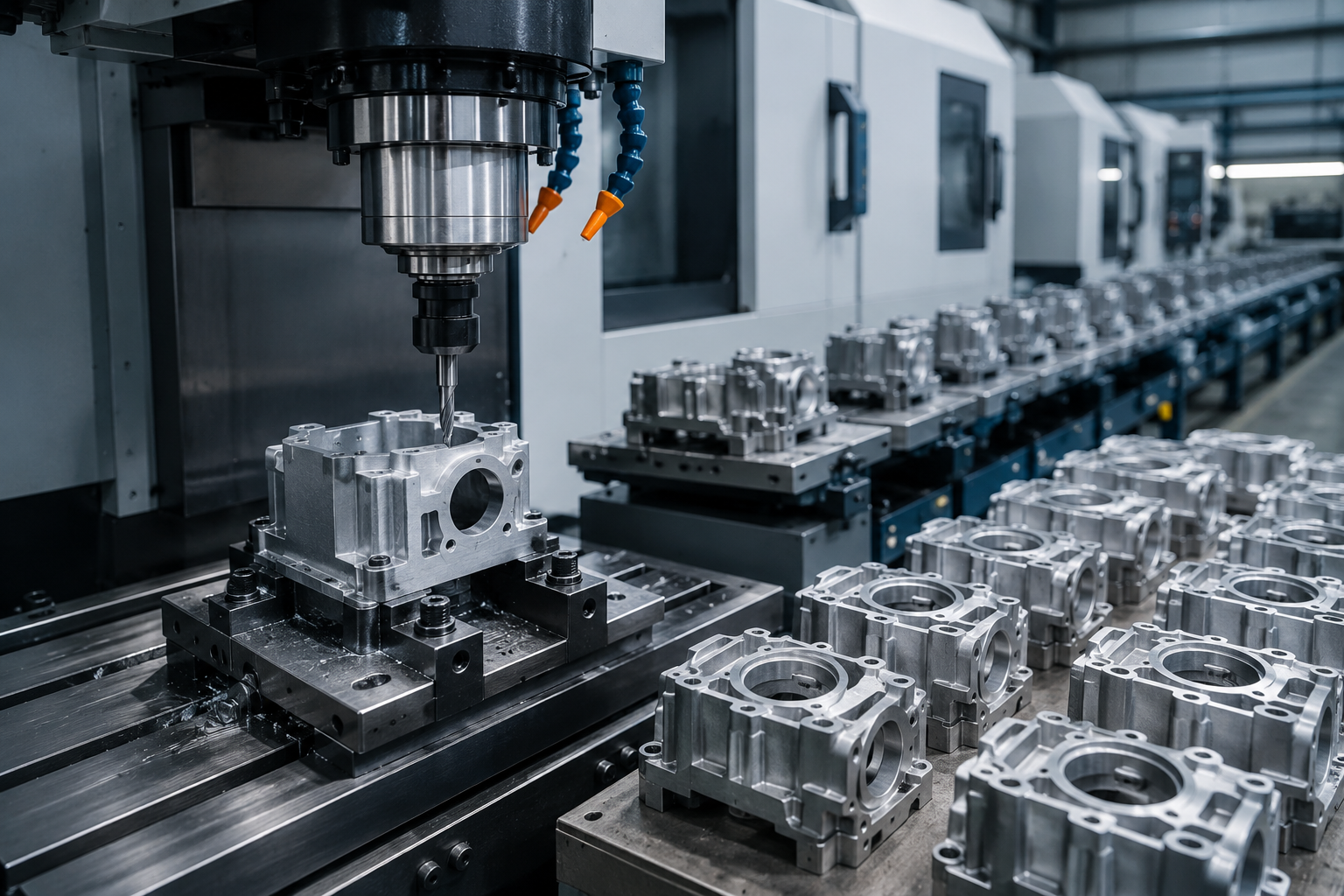
When a Single CNC Machine Can No Longer Solve Production Bottlenecks
Many factories begin with standalone CNC machines. This is practical when order quantity is limited, part types change often, or operators can manage loading and inspection manually.
But when production volume increases, common bottlenecks appear:
- Machines wait for manual loading and unloading.
- Workpieces move between too many separate stations.
- Repeated clamping causes positioning error.
- Cycle time is unstable between operators and shifts.
- Part consistency changes after long production runs.
- Output increases only when more labor is added.
- Quality inspection becomes reactive instead of preventive.
For medium and high-volume production, these problems usually cannot be solved by adding another standalone machine. The factory needs a connected workflow: machining, loading, fixture positioning, inspection, unloading, and material transfer must work as one system.
How a CNC Production Line Works in Real Manufacturing
A CNC production line is a coordinated manufacturing system. It may include CNC machining centers, vertical drilling and tapping machines, robotic loading units, conveyors, fixtures, tool systems, safety modules, inspection points, and production rhythm planning.
The purpose is not only faster cutting. The larger goal is to make the whole process more predictable.
A practical CNC automation production line should answer these questions:
- How is the raw part loaded?
- How many clamping steps are needed?
- Which surfaces or holes must be machined first?
- Can several operations be combined?
- How will chips, coolant, and finished parts be handled?
- Where should inspection happen?
- Can the line be expanded later?
- How much labor is still needed per shift?
A professional supplier should start with part drawings, material, tolerance requirements, production volume, and current bottlenecks. If the discussion starts and ends with machine models, the line may not match the real production problem.
Buyers who want to understand Xinmei’s background in intelligent CNC equipment and automation planning can review the About Us page before comparing specific line configurations.
Standalone Machines vs CNC Production Line Manufacturing
A production line is not always necessary. Some factories still need flexible standalone machines. The key is to match the investment with production reality.
| Evaluation Point | Standalone CNC Machines | CNC Production Line |
|---|---|---|
| Best use case | Small batches, mixed parts, flexible orders | Repeated parts, stable demand, batch production |
| Labor demand | Higher manual loading and transfer | Lower repetitive handling through automation |
| Accuracy risk | More repeated clamping and transfer | Better process control with fixture planning |
| Output stability | Depends strongly on operator rhythm | More standardized cycle control |
| Expansion method | Add machines one by one | Add cells, stations, or robotic systems |
| Management focus | Machine operation | Full workflow efficiency |
For factories producing the same part family every day, an intelligent CNC production line can often deliver better long-term value than simply buying more independent machines.
What a CNC Production Line Manufacturer Should Actually Provide
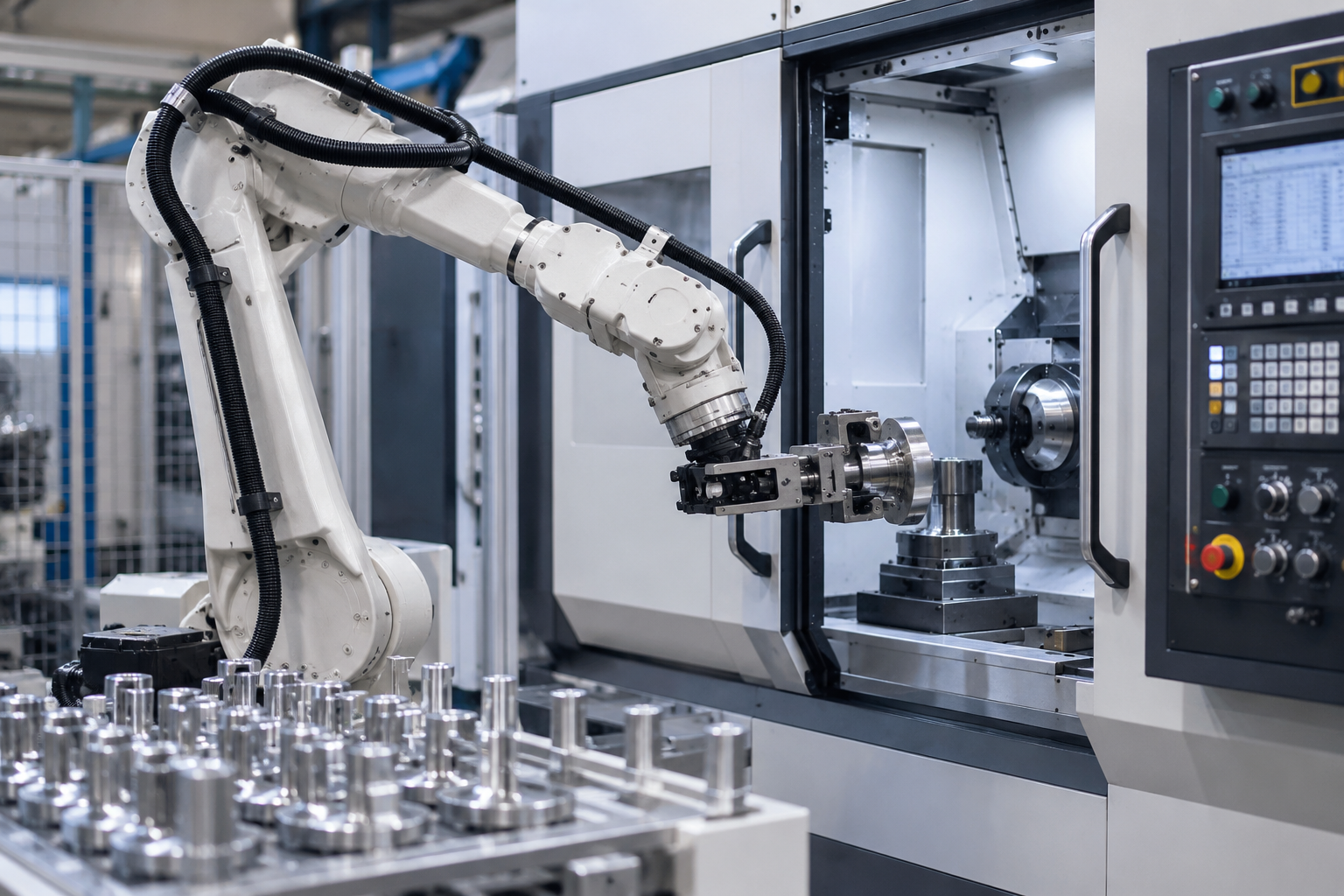
A capable CNC production line manufacturer should not only supply equipment. The supplier should help the buyer design a production flow that reduces waste, improves consistency, and supports future capacity growth.
Process Planning Based on the Workpiece
The first step is understanding the part. A door closer body, brass faucet body, valve component, connector housing, or automotive part will require different fixture logic and machining sequence.
Important details include:
- Material type
- Part size and weight
- Tolerance requirements
- Hole position and surface requirements
- Machining steps
- Loading direction
- Expected cycle time
- Inspection method
- Daily or monthly production target
Without this analysis, a production line may look complete on paper but fail to perform in real factory conditions.
Machine Selection for Each Operation
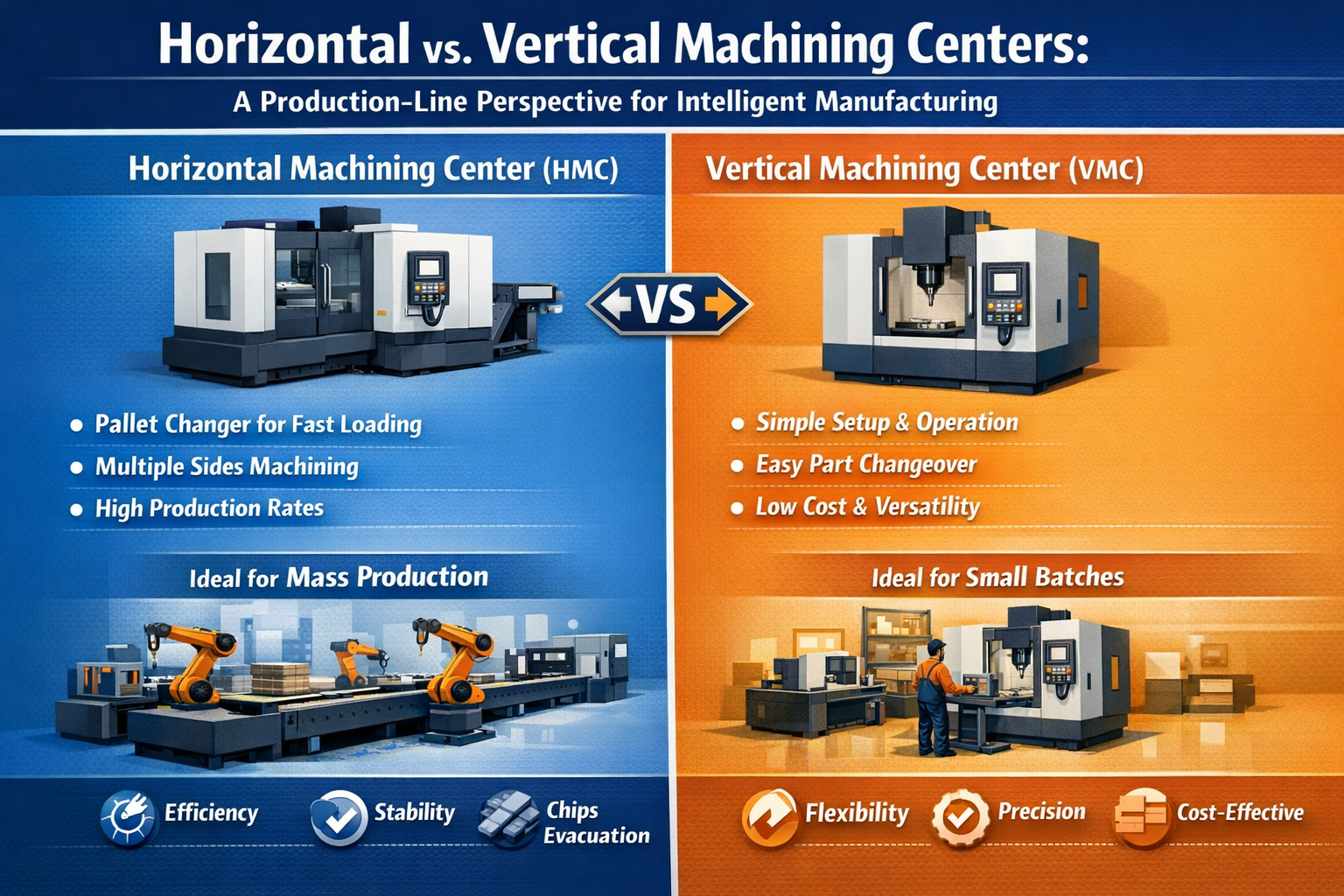
Different processes require different machine types. A vertical drilling and tapping machine may be ideal for high-volume hole machining. A multi-spindle CNC machining line may reduce cycle time for repeated operations. A horizontal machining center may be better for multi-face machining and chip removal.
Buyers can review Xinmei’s Products page to compare equipment directions such as robotic loading and unloading lines, vertical CNC drilling and tapping machines, door closer special-purpose machine tools, robotic grinding equipment, multi-spindle processing equipment, and flexible horizontal machining centers.
Fixture and Workholding Design
Fixture quality directly affects accuracy, loading speed, and repeatability. Poor clamping can cause deformation, unstable hole position, vibration, tool wear, and inconsistent surface quality.
A good fixture should:
- Locate the part quickly and repeatably
- Support the correct machining sequence
- Reduce unnecessary re-clamping
- Allow safe robotic or manual loading
- Provide enough space for chips and tools
- Maintain stability during continuous production
For batch production, fixture design is often as important as the machine itself.
Robotic Loading and Unloading
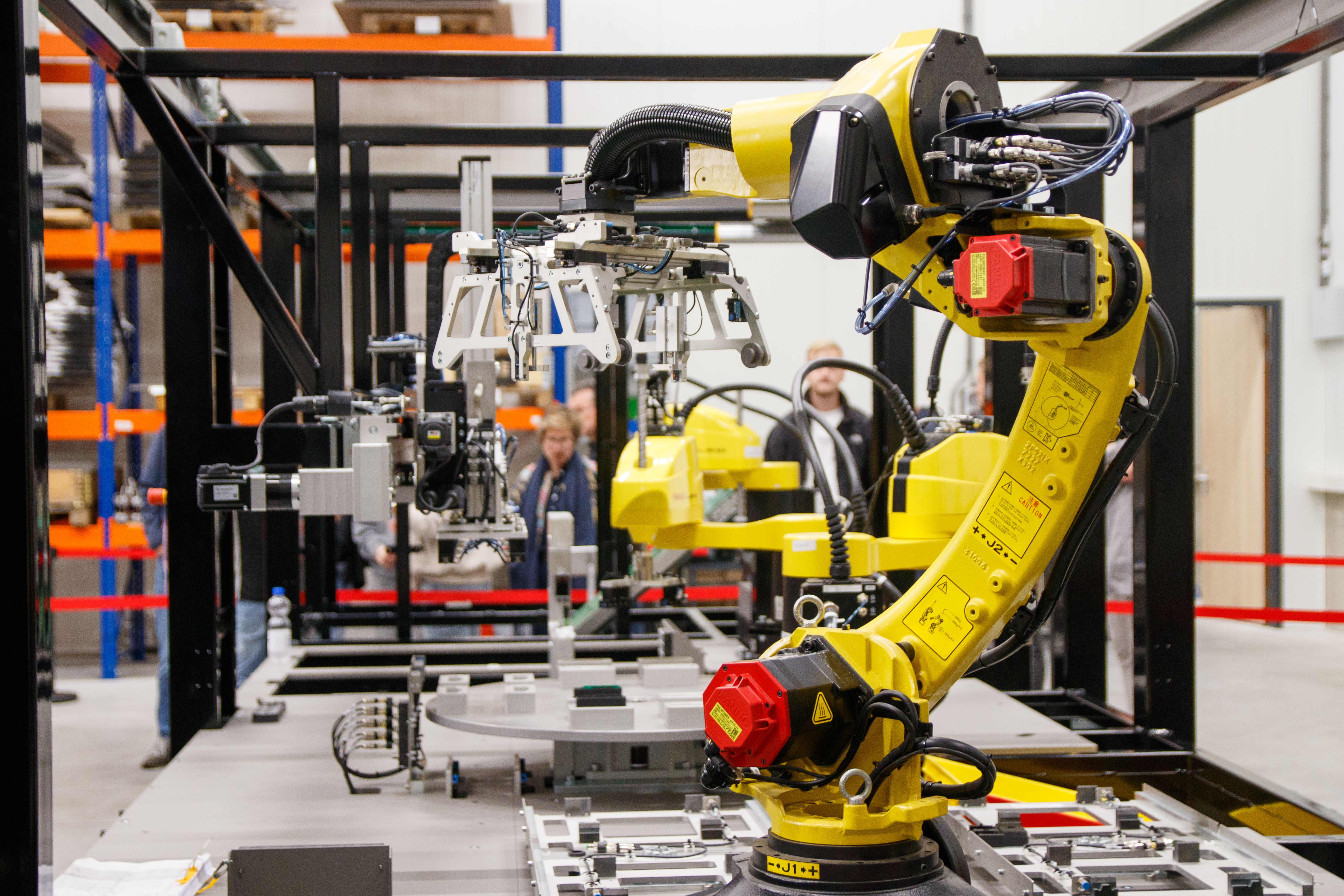
A robotic loading and unloading line is useful when manual handling limits output. Robots can load raw parts, remove finished parts, connect multiple stations, and reduce idle time between cycles.
This is especially valuable in repetitive production environments where the same part is produced continuously. Instead of depending on operator speed, the line follows a stable rhythm.
Inspection and Quality Control
Production line planning should include quality control points. Inspection should not only happen after defects appear.
A stronger line design considers:
- First-piece verification
- Fixture repeatability checks
- Tool wear monitoring
- Critical dimension inspection
- Finished part sampling
- Machine accuracy validation
- Pre-shipment equipment testing
This helps reduce rework, scrap, and delivery risk.
Xinmei’s Approach to CNC Production Line Solutions
Xinmei Intelligent focuses on CNC machines and automation solutions for industrial manufacturing. Its production line direction covers drilling, tapping, milling, boring, robotic loading, robotic grinding, special-purpose machines, multi-spindle processing, and integrated automation planning.
For factories upgrading from single machines to a turnkey CNC production line, Xinmei can support discussions around workpiece analysis, process layout, fixture logic, equipment selection, and automation connection.
The company’s Blog page is useful for buyers who want to understand CNC machining, fixture selection, machine operation, maintenance, and production efficiency before starting a project. For common technical questions and equipment selection concerns, the same FAQ resource can help buyers prepare clearer project requirements.
Key Advantages of a Well-Planned CNC Production Line
A well-designed line should bring measurable production value, not just visual automation.
More Stable Batch Quality
When loading, clamping, machining, and unloading follow a fixed process, part variation becomes easier to control. This is important for components that affect sealing, movement, assembly, or safety.
Higher Machine Utilization
Many factories have CNC machines that are technically capable but underused because operators cannot load parts fast enough. Automation helps machines spend more time cutting and less time waiting.
Lower Manual Dependence
A production line reduces repetitive manual handling. Operators can focus more on monitoring, inspection, tool management, and process improvement.
Shorter Process Flow
By combining operations or connecting stations, factories can reduce unnecessary transfer time. This is valuable for high-volume parts with repeated machining steps.
Easier Capacity Expansion
A planned production line can often be expanded by adding stations, robots, trays, or machining cells. This makes future scaling more controlled than adding machines randomly.
Common Application Scenarios
CNC production lines are suitable for factories where production is repetitive, quality requirements are stable, and output needs to grow.
| Application | Typical Pain Point | Suitable Line Direction |
|---|---|---|
| Door closer body machining | Multi-face machining and repeated clamping | Special-purpose CNC line |
| Faucet body production | Brass parts, high volume, tight delivery | Drilling and tapping automation line |
| Valve body machining | Thread accuracy and sealing consistency | CNC machining line with fixture planning |
| Automotive parts | Repeatability, cycle control, quality stability | Robotic CNC production line |
| Connector components | Small tolerance and precise positioning | Precision CNC automation cell |
| Bearing housing production | Bore accuracy and continuous output | Horizontal or vertical machining line |
| Metal surface processing | Manual grinding inconsistency | Robotic grinding and polishing line |
These applications share one requirement: the production system must stay stable after long repeated operation.
How to Choose the Right CNC Production Line Manufacturer
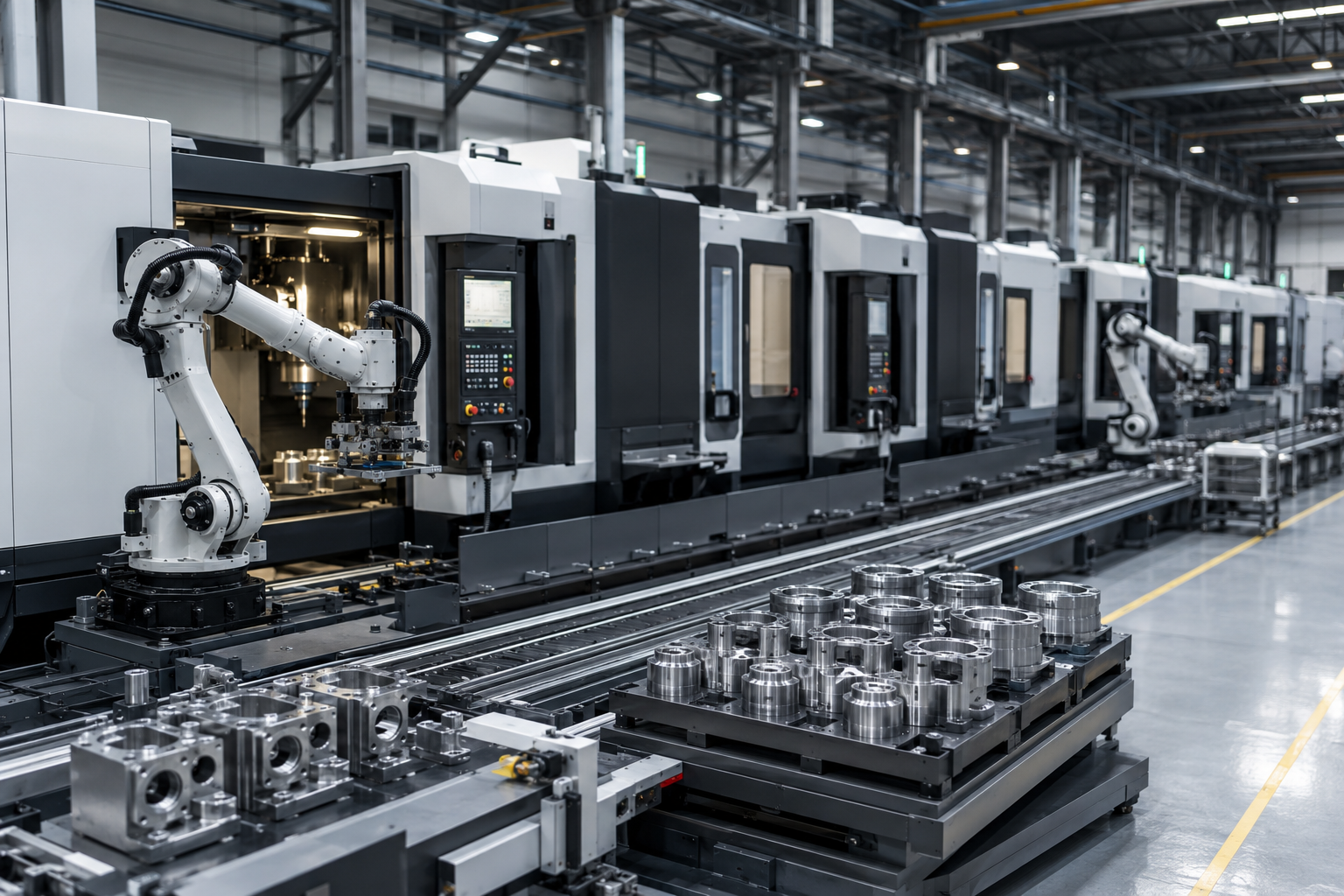
Before choosing a supplier, buyers should evaluate the manufacturer’s engineering ability, not only the price.
1. Check Whether the Supplier Understands Your Industry
A supplier working with door control hardware, bathroom hardware, valves, automotive components, connectors, and bearing housings will better understand real production details than a general equipment reseller.
2. Ask for Process Planning, Not Only a Quotation
A quotation without process logic is risky. Buyers should ask how the supplier plans loading, clamping, machining sequence, inspection, and unloading.
3. Confirm Fixture and Tooling Support
Fixtures and cutting tools directly influence accuracy and cycle time. The supplier should be able to discuss clamping position, deformation risk, tool access, chip removal, and repeatability.
4. Evaluate Robotic Integration Capability
For automated lines, robots must match the machine layout, part weight, loading direction, cycle rhythm, safety system, and future expansion plan.
5. Review Quality Control Before Shipment
Buyers should ask how the manufacturer tests equipment before delivery. A serious supplier should check assembly, motion stability, accuracy, safety, and production readiness.
6. Consider Service and Communication
Production lines usually require installation, commissioning, operator training, and process adjustment. Good communication before purchase can reduce delays after installation.
For project discussion, buyers can prepare drawings, current production flow, output target, workshop layout, and automation goals, then submit details through the Contact Us page.
Production Line Selection Checklist
| Buyer Question | Why It Matters |
|---|---|
| What is the current bottleneck: loading, machining, transfer, or inspection? | Prevents choosing the wrong equipment |
| Are the parts stable enough for automation? | Automation works best with repeatable part families |
| How many clamping steps are currently needed? | Helps reduce accumulated tolerance error |
| What output target must the line reach? | Determines machine quantity and cycle rhythm |
| Is robotic loading needed now or later? | Affects layout and machine access design |
| What inspection standard is required? | Prevents quality risk after mass production |
| Can the line be expanded in the future? | Supports long-term factory growth |
This checklist helps buyers move from “machine purchasing” to “production system planning.”
FAQ
What does a CNC production line manufacturer do?
A CNC production line manufacturer designs and supplies a connected machining system that may include CNC machines, fixtures, robots, conveyors, inspection points, and automation control for batch production.
When should a factory choose a CNC production line instead of a single machine?
A factory should consider a production line when it produces repeated parts in medium or high volume, faces manual loading bottlenecks, or needs more stable batch quality.
Is a CNC production line only suitable for large factories?
No. A factory can start with one automated machining cell and expand later. The key is whether the part family and production volume justify automation.
What information should buyers provide before requesting a line solution?
Buyers should provide drawings, materials, tolerances, current process steps, output targets, available workshop layout, inspection needs, and automation expectations.
How does a robotic loading and unloading line improve production?
It reduces manual handling, shortens waiting time between cycles, improves machine utilization, and makes production rhythm more consistent.
Why is fixture design important in a CNC production line?
Fixture design controls positioning, clamping stability, deformation risk, robot access, and machining repeatability. Poor fixtures can reduce the value of the entire line.
Can a production line include different CNC machine types?
Yes. A line may combine drilling and tapping machines, machining centers, special-purpose machines, robots, conveyors, and inspection stations based on the process.
How can buyers start a project with Xinmei?
Buyers can review Xinmei’s About Us page, compare equipment on the Products page, read technical resources on the Blog page, and send project details through the Contact Us page.
Build the Line Around the Production Bottleneck, Not Around Machine Quantity
Choosing a CNC production line manufacturer should not begin with the question, “How many machines should we buy?” It should begin with the real bottleneck: unstable accuracy, manual loading, repeated clamping, low machine utilization, long transfer time, or inconsistent batch quality.
A well-planned line connects machines, fixtures, robots, tools, inspection, and workflow into one practical production system. For factories producing metal components in repeated batches, this can improve stability, reduce labor pressure, and support long-term capacity growth.
Xinmei Intelligent supports manufacturers that need CNC machines, robotic loading and unloading lines, special-purpose machining equipment, and turnkey CNC production line planning. For factories preparing a new automation project, working with an experienced CNC production line manufacturer can reduce purchasing risk and help the production system stay stable after installation.