+86 13163919000
 info@xinmeiintelligent.com

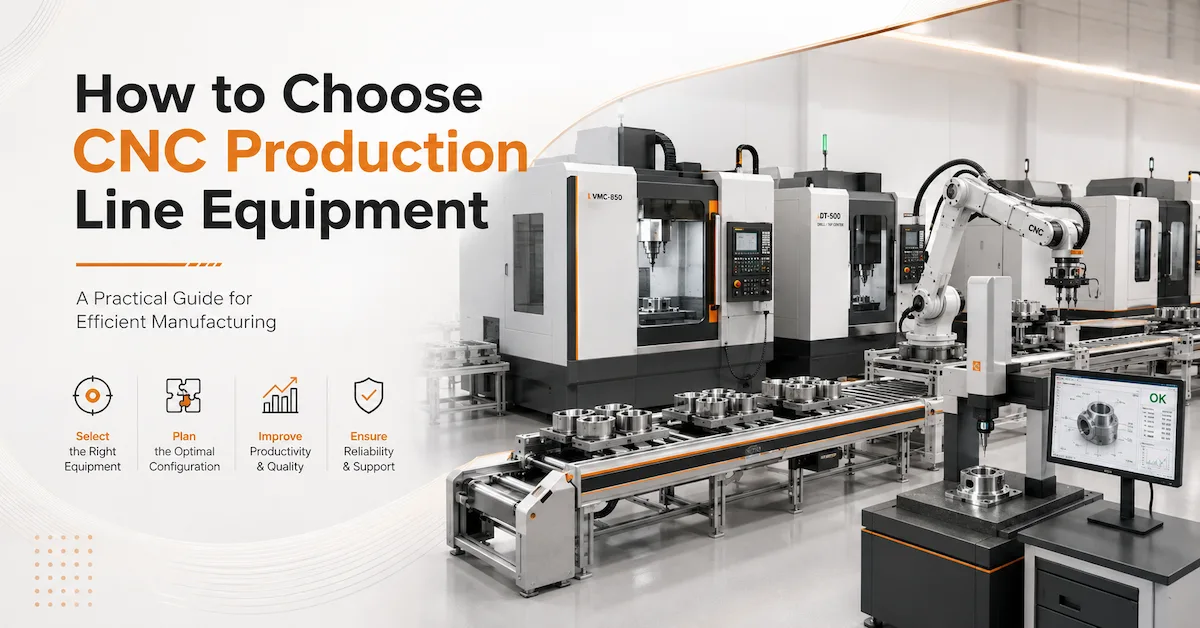
Choosing the right CNC production line equipment is an important decision for factories that want to improve productivity, reduce labor dependency, and achieve stable mass production.
Unlike purchasing a single CNC machine, a production line involves multiple systems working together, including machining equipment, fixtures, robots, material handling, inspection systems, and production management.
Many manufacturers focus only on machine specifications or purchase price, but a successful CNC production line depends on whether the equipment matches the product structure, production volume, machining requirements, and future expansion plans.
Understanding how to choose CNC production line equipment helps factories avoid unsuitable investments and build a manufacturing system that provides long-term value.
Xinmei Intelligent provides CNC equipment and intelligent production-line solutions for industries including automotive parts, valves, bathroom hardware, door control components, connectors, and precision metal manufacturing.
Explore related solutions through the Xinmei products page.
Why CNC Production Line Equipment Selection Matters
A CNC production line is a long-term manufacturing investment. Poor equipment selection can create problems such as:
- Low production efficiency
- Excessive manual operation
- Unstable machining quality
- Difficult maintenance
- Limited future expansion
- Higher operating costs
A suitable production line should help manufacturers achieve:
- Stable machining accuracy
- Higher equipment utilization
- Reduced production cycle time
- Lower labor dependency
- Consistent batch quality
- Easier production management
When considering how to choose CNC production line equipment, factories should focus on the complete manufacturing process rather than individual machines.
Analyze Your Production Requirements First
Before selecting CNC production equipment, manufacturers should clearly define their production requirements.
Understand the Workpiece Characteristics
The product determines the equipment configuration.
Important factors include:
- Part size
- Material type
- Weight
- Machining features
- Required tolerance
- Surface requirements
- Production quantity
For example:
- Valve bodies require accurate drilling, tapping, and sealing surfaces.
- Faucet bodies require stable internal channels and threads.
- Automotive parts require repeatable dimensions and high production consistency.
- Hardware components often require efficient batch machining.
Different products require different CNC production line designs.
Define Production Capacity
Factories should determine:
- Daily output
- Monthly production volume
- Target cycle time
- Number of product models
- Future capacity requirements
A production line designed for small batches may not support large-scale manufacturing.
A system designed for mass production may be unnecessary for highly customized products.
Evaluate Automation Requirements
Automation level should match production needs.
Possible configurations include:
- Manual CNC operation
- Semi-automatic loading
- Robotic loading systems
- Multi-machine automation cells
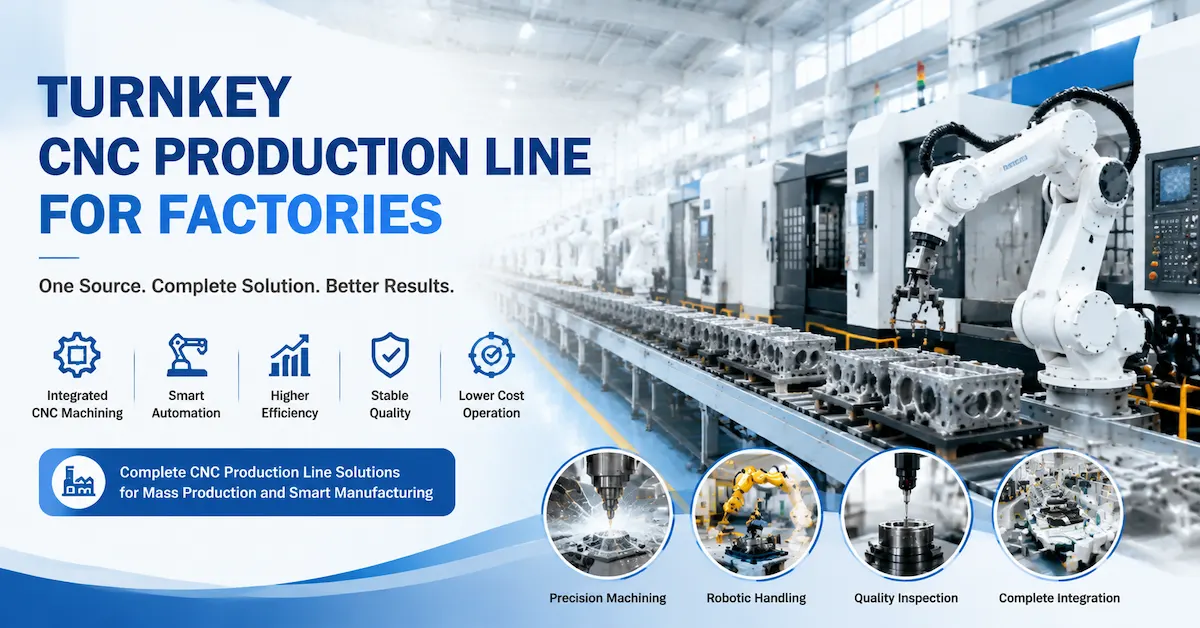
- Complete turnkey production lines
The right automation level balances productivity, flexibility, and investment.
Key Factors When Choosing CNC Production Line Equipment
When evaluating how to choose CNC production line equipment, buyers should consider several important factors.
Machine Accuracy and Stability
Machining accuracy directly affects product quality.
Important factors include:
- Machine rigidity
- Spindle performance
- Axis accuracy
- Thermal stability
- Long-term repeatability
A production line should maintain stable accuracy during continuous operation, not only during initial testing.
Machining Process Compatibility
The equipment should match the required processes.
Common CNC processes include:
- Drilling
- Tapping
- Milling
- Boring
- Turning
- Grinding
- Deburring
The supplier should analyze which processes can be combined to improve efficiency.
Production Efficiency
A good CNC production line should reduce unnecessary operations.
Efficiency improvements may come from:
- Multi-process machining
- Automatic loading
- Reduced workpiece transfer
- Optimized fixtures
- Shorter cycle time
Equipment Reliability
Long-term production requires reliable equipment.
Evaluate:
- Component quality
- Machine structure
- Maintenance requirements
- Spare parts availability
- Technical support
Future Expansion Capability
A good production line should allow upgrades.
Possible future improvements include:
- Additional CNC machines
- More robots
- Automatic inspection
- Expanded production capacity
- Digital production monitoring
Main Equipment in a CNC Production Line
A complete CNC production line may include different types of equipment.
CNC Machining Centers
CNC machining centers are commonly used for:
- Milling
- Drilling
- Boring
- Multi-face machining
They are suitable for complex parts requiring high accuracy and stable processing.
CNC Drilling and Tapping Machines
These machines are ideal for products requiring repeated hole and thread processing.
Applications include:
- Valve components
- Faucet bodies
- Hardware parts
- Automotive components
Special Purpose CNC Machines
Special-purpose CNC machines are designed for specific products and production requirements.
Advantages include:
- Higher efficiency
- Shorter cycle time
- Stable production
- Reduced unnecessary operations
They are suitable for factories producing large quantities of standardized parts.
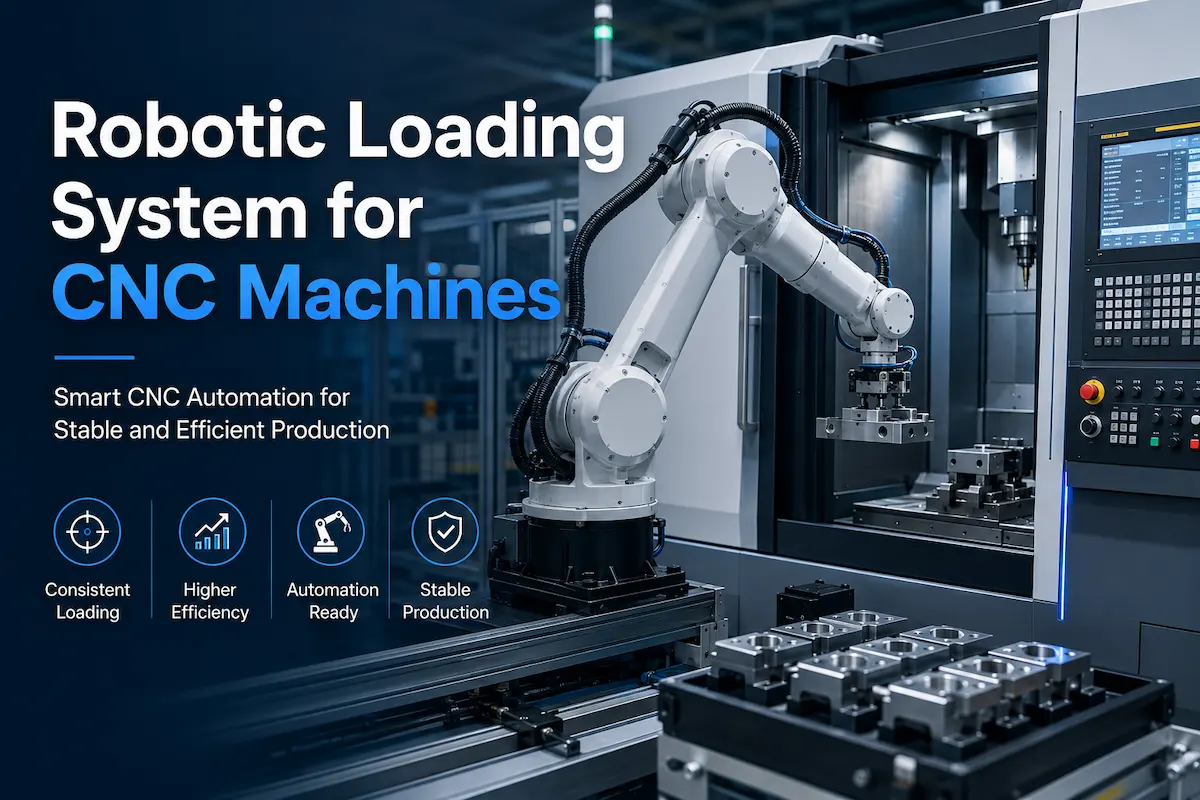
Robotic Loading Systems
Robotic systems improve production automation.
They can:
- Load raw materials
- Remove finished parts
- Transfer products
- Support continuous production
Xinmei provides robot loading and unloading solutions for CNC automation projects.
Inspection Equipment
Quality control should be included in the production line design.
Inspection systems help monitor:
- Dimensional accuracy
- Product consistency
- Process stability
- Production quality
CNC Production Line vs Standalone CNC Machines
| Comparison | Standalone CNC Machines | CNC Production Line |
|---|---|---|
| Initial investment | Lower | Higher |
| Automation level | Limited | Higher |
| Manual handling | More required | Reduced |
| Production flow | Separate processes | Integrated workflow |
| Batch consistency | Operator dependent | More stable |
| Expansion capability | Requires additional planning | Easier system upgrade |
For factories with stable production requirements, a CNC production line often provides better long-term efficiency.
How to Plan a CNC Production Line Step by Step
Step 1: Analyze Current Manufacturing Problems
Identify:
- Production bottlenecks
- Labor-intensive operations
- Quality issues
- Machine utilization problems
Automation should solve real production challenges.
Step 2: Design the Machining Process
Define:
- Machining sequence
- Required equipment
- Fixture requirements
- Tooling plan
- Inspection points
Step 3: Select Suitable Equipment
Choose equipment based on:
- Product requirements
- Production volume
- Accuracy needs
- Automation goals
Step 4: Integrate Automation Systems
Consider:
- Robot loading
- Material transfer
- Automatic fixtures
- Inspection systems
Step 5: Validate Production Performance
Before mass production, confirm:
- Machining accuracy
- Cycle time
- Production stability
- Quality performance
Common Mistakes When Selecting CNC Production Equipment
Choosing Equipment Only by Price
The cheapest equipment may create higher long-term costs through:
- Lower efficiency
- More maintenance
- Higher rejection rates
Ignoring Fixture Design
Fixtures directly affect:
- Position accuracy
- Production consistency
- Automation performance
Over-Automating the Production Line
Not every factory needs a fully automated system.
Automation should match:
- Production volume
- Product stability
- Investment goals
Selecting Equipment Without Process Analysis
The supplier should understand:
- Product drawings
- Machining requirements
- Production targets
before recommending equipment.
How to Choose a CNC Production Line Supplier
When learning how to choose CNC production line equipment, selecting the right supplier is equally important.
Engineering Capability
A reliable supplier should provide:
- Process analysis
- Equipment recommendations
- Fixture planning
- Automation design
Industry Experience
Ask whether the supplier has experience with:
- Similar products
- Similar materials
- Similar production volumes
Integration Capability
The supplier should be able to manage:
- CNC machines
- Robots
- Fixtures
- Inspection systems
- Production testing
After-Sales Support
Important services include:
- Installation
- Commissioning
- Training
- Maintenance
- Technical support
Why Choose Xinmei Intelligent?
Xinmei Intelligent focuses on CNC equipment and intelligent manufacturing solutions for industrial factories.
The company provides:
- CNC machining equipment
- Special-purpose CNC machines
- Robotic loading systems
- Automated production lines
- Process optimization
- Manufacturing solutions
Xinmei supports manufacturers in:
- Automotive parts
- Valve production
- Bathroom hardware
- Door control components
- Precision metal manufacturing
Learn more through the Xinmei About Us page.
Information Needed Before Requesting a CNC Production Line Proposal
Before contacting a supplier, prepare:
- Product drawings
- Material information
- Production volume
- Current machining process
- Quality requirements
- Factory layout
- Automation expectations
Detailed information helps suppliers design a more suitable CNC production solution.
Submit requirements through the Xinmei Contact Us page.
FAQ
How to choose CNC production line equipment?
To choose CNC production line equipment, evaluate product requirements, machining processes, production capacity, automation needs, equipment reliability, and supplier capability.
What equipment is included in a CNC production line?
A CNC production line may include machining centers, drilling and tapping machines, special-purpose CNC machines, robots, fixtures, conveyors, and inspection systems.
Is a CNC production line better than individual CNC machines?
For stable mass production, a CNC production line usually provides better efficiency, automation, and production consistency.
How much does a CNC production line cost?
Cost depends on equipment quantity, automation level, fixture complexity, inspection requirements, production capacity, and customization.
Can CNC production lines be customized?
Yes. Production lines can be designed according to product structure, materials, output requirements, and factory layout.
Why is supplier experience important?
Experienced suppliers can provide better process planning, equipment selection, automation integration, and long-term technical support.
Conclusion
Understanding how to choose CNC production line equipment helps manufacturers build a more efficient, stable, and scalable production system.
The right equipment selection should consider more than machine specifications. It should match the product, production volume, machining process, automation requirements, and future development goals.
For factories producing automotive parts, valves, bathroom hardware, door control products, and precision metal components, a properly designed CNC production line can improve productivity, reduce labor dependency, and strengthen manufacturing competitiveness.
Xinmei Intelligent provides customized CNC production equipment and intelligent manufacturing solutions to help factories achieve stable and efficient production.