+86 13163919000
 info@xinmeiintelligent.com

Learning how to choose a CNC machine manufacturer is an important step for any factory planning to improve machining capacity, reduce labor dependency, or build a more stable production process.
A CNC machine may remain in service for many years. Its real value is therefore not determined only by the quotation, spindle speed, number of axes, or control-system brand. Buyers also need to evaluate machine rigidity, process engineering, fixture design, accuracy retention, testing procedures, automation compatibility, technical documentation, and after-sales service.
A low-priced machine that requires frequent adjustment, produces inconsistent batches, or cannot receive timely service may create a higher total cost than a more carefully engineered solution.
The right manufacturer should understand the part being produced and recommend a machine configuration based on real production requirements rather than simply supplying a standard model.
Quick Answer: How to Choose a CNC Machine Manufacturer
To understand how to choose a CNC machine manufacturer, evaluate the supplier in eight areas:
- Experience with similar workpieces and industries
- Machine structure, rigidity, and long-term stability
- Process-planning and fixture-design capability
- Quality control and factory acceptance testing
- CNC control, spindle, and component configuration
- Automation and production-line integration
- Installation, training, maintenance, and spare parts
- Total ownership cost rather than purchase price alone
A reliable manufacturer should be willing to review your drawings, production volume, material, tolerances, current cycle time, and factory layout before offering a final solution.
Start with Your Production Requirements
Before comparing CNC machine manufacturers, define what the factory actually needs.
Workpiece Information
Prepare:
- 2D and 3D drawings
- Physical samples
- Material and blank condition
- Part dimensions and weight
- Critical tolerances
- Hole and thread specifications
- Required surface finish
- Machining faces and process sequence
Without this information, suppliers can only provide a general recommendation.
Production Targets
The manufacturer should also understand:
- Required output per shift
- Monthly production volume
- Number of product models
- Current cycle time
- Target cycle time
- Planned operating hours
- Available operators
- Future capacity expansion
A machine suitable for flexible, small-batch production may not be the best choice for one standardized component manufactured continuously.
Automation Expectations
Confirm whether the project requires:
- Manual loading
- Semi-automatic clamping
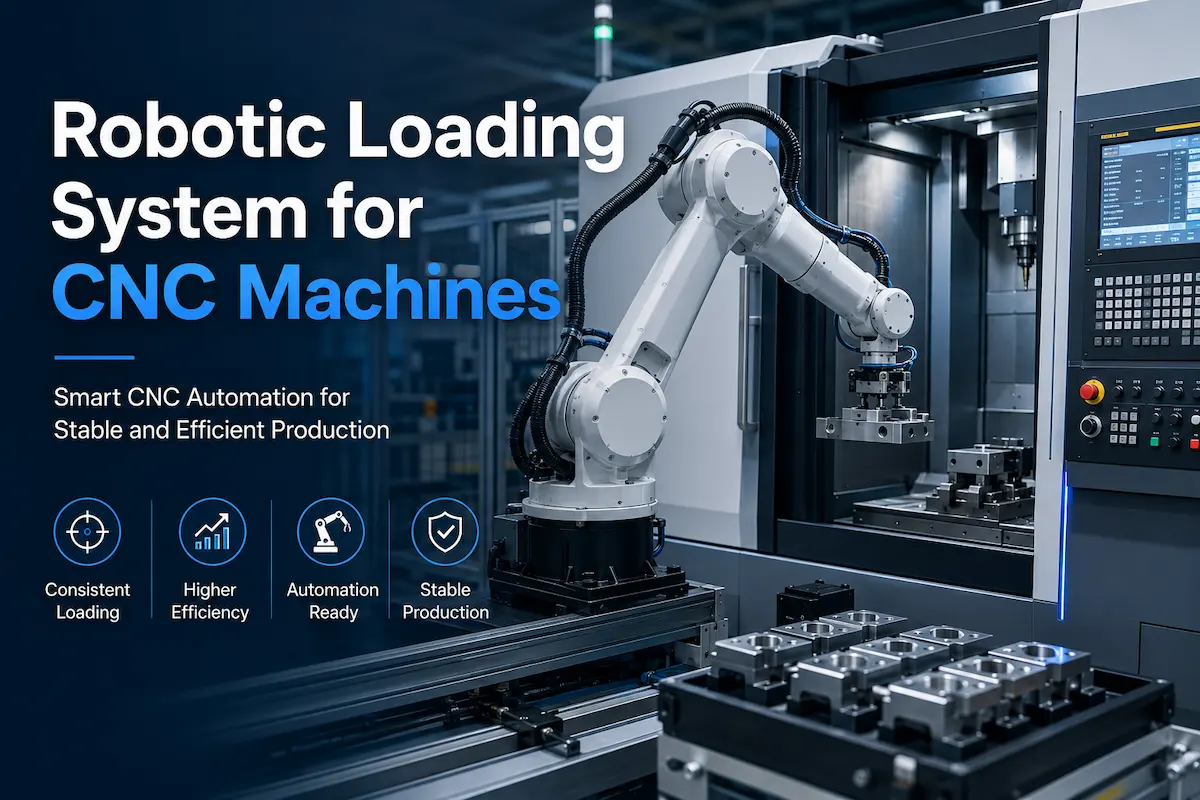
- Robotic loading and unloading
- Multi-machine tending
- Automatic inspection
- A complete CNC production line
Automation should solve a clear production problem rather than simply increase project complexity.
Evaluate Industry and Application Experience
A manufacturer may be capable of building CNC equipment but still lack experience with your specific part.
Ask whether the supplier has worked with:
- Similar materials
- Similar workpiece geometry
- Comparable tolerances
- Related drilling, tapping, milling, boring, or turning processes
- Similar batch-production requirements
- Equivalent automation projects
For example, a faucet body, valve body, door closer housing, brake-pump component, and aerospace connector require different fixtures, tools, spindle characteristics, and process sequences.
A supplier with relevant application experience can identify potential problems before the machine is built.
Questions to Ask
- Have you processed similar parts?
- Can you review our current production process?
- Which operations can be combined?
- What machining risks do you expect?
- Can you provide a sample machining plan?
- How will the proposed machine improve our current output?
The quality of the supplier’s questions often reveals the depth of its engineering capability.
Check Machine Rigidity and Structural Design
Machine rigidity affects vibration, cutting stability, tool life, surface finish, and dimensional consistency.
A strong CNC machine design should consider:
- Machine-bed structure
- Casting or fabricated-frame quality
- Guideway configuration
- Spindle mounting
- Servo-drive arrangement
- Thermal deformation
- Chip and coolant management
- Long-term alignment stability
Buyers should not judge rigidity only from machine weight. The complete structural design, assembly process, component selection, and load distribution matter.
Why Accuracy Retention Matters
A machine may pass an initial accuracy test but lose stability after extended production.
Ask the manufacturer how it controls:
- Structural stress
- Assembly alignment
- Spindle temperature
- Axis movement
- Backlash
- Lubrication
- Vibration
- Thermal growth
For batch manufacturing, maintaining accuracy over long operating periods is usually more important than achieving one impressive sample result.
Review the Proposed CNC Configuration
The manufacturer should explain why each major component has been selected.
| Configuration Area | What Buyers Should Confirm |
|---|---|
| CNC control system | Programming functions, local support, operator familiarity |
| Spindle | Speed, torque, tool interface, cooling, expected duty cycle |
| Servo system | Load capacity, response, positioning stability |
| Guideways | Suitability for speed, rigidity, and cutting load |
| Tool magazine | Tool quantity, change time, tool size limitations |
| Coolant system | Flow, filtration, chip management |
| Electrical components | Brand, replacement availability, documentation |
| Safety system | Guards, interlocks, emergency controls |
A premium component does not automatically create a reliable machine. The components must be properly matched and integrated.
Examine Process Engineering and Fixture Capability
When deciding how to choose a CNC machine manufacturer, process engineering should carry as much weight as the machine specification.
A capable engineering team should help determine:
- Machining sequence
- Number of setups
- Tool selection
- Cutting parameters
- Fixture locations
- Clamping method
- Chip-removal strategy
- Inspection points
- Estimated cycle time
Fixture Design
The fixture controls how consistently the workpiece is positioned.
A suitable fixture should:
- Locate the workpiece repeatably
- Prevent deformation
- Provide stable clamping force
- Allow tool access
- Reduce loading time
- Support chip evacuation
- Work with robotic loading when required
- Make changeover practical
A high-quality machine with an unstable fixture will still produce inconsistent parts.
Cycle-Time Validation
Request a breakdown of the estimated cycle time.
It should distinguish between:
- Cutting time
- Tool-change time
- Rapid movement
- Loading and unloading
- Fixture clamping
- Inspection
- Cleaning
- Robot movement
This prevents unrealistic output claims based only on spindle cutting time.
Verify Quality Control and Testing
A reliable CNC machine manufacturer should have a documented inspection and testing process.
Manufacturing Quality Control
Ask how the supplier checks:
- Incoming components
- Machine-frame dimensions
- Guideway installation
- Spindle assembly
- Axis alignment
- Electrical wiring
- Hydraulic or pneumatic systems
- Safety functions
- Final machine appearance
Factory Acceptance Test
Before shipment, the machine should undergo a factory acceptance test based on agreed project requirements.
The test may include:
- Positioning and repeatability checks
- Spindle operation
- Axis movement
- Tool-change testing
- Safety interlocks
- Trial machining
- Cycle-time validation
- Workpiece measurement
- Continuous running
- Alarm and recovery testing
For customized projects, buyers should agree on acceptance criteria before production begins.
Sample Machining
A sample should represent real production conditions.
Confirm:
- Material matches the production blank
- Tools are suitable for long-term use
- Fixture design is final or close to final
- Tolerances are measured
- Cycle time includes realistic handling
- Surface quality is documented
One successful sample is useful, but repeated sample production provides stronger evidence of process stability.
Evaluate Automation Integration
Modern factories increasingly need CNC machines that can become part of a larger production system.
The manufacturer should be able to support:
- Automatic machine doors
- Robotic loading and unloading
- Hydraulic or pneumatic fixtures
- Part-presence sensors
- Conveyor or tray systems
- Machine-to-robot communication
- Inspection stations
- Production data collection
- Multi-machine cells
Ask whether automation can be added later if it is not included in the first project.
A machine with suitable interfaces, accessible loading space, and automation-ready fixtures gives the factory more flexibility for future expansion.
Compare Standard Machines and Custom Solutions
| Equipment Type | Best Application | Main Advantage | Main Limitation |
| Standard CNC machine | Changing products and smaller batches | Flexibility and shorter delivery | More setup and manual handling |
| Customized CNC machine | Stable product family | Better process matching | Less flexible for unrelated parts |
| Special-purpose CNC machine | High-volume repeated production | High efficiency and shorter cycle | Requires stable demand |
| CNC automation cell | Medium-to-high-volume production | Lower labor dependency | Higher engineering requirement |
| Turnkey production line | Multi-process mass production | Integrated workflow and scalability | Higher initial investment |
A professional manufacturer should explain these trade-offs honestly.
The most complex solution is not always the best one.
Assess Manufacturing and Delivery Capability
Ask whether the manufacturer controls important production activities internally or relies heavily on subcontractors.
Buyers should understand:
- Where machines are assembled
- How critical components are inspected
- Whether fixtures are designed in-house
- How electrical systems are documented
- How quality problems are traced
- Whether project schedules are realistic
- How machines are packed and shipped
For customized equipment, project management is especially important because delays in fixtures, controls, robots, or testing can affect the complete delivery schedule.
Review Installation, Training, and After-Sales Service
After-sales support should be discussed before the purchase order is signed.
Installation and Commissioning
Confirm whether the supplier provides:
- Foundation and utility requirements
- Installation guidance
- Machine leveling
- Accuracy verification
- Trial production
- Automation commissioning
- Final acceptance
Operator Training
Training should cover:
- Machine operation
- CNC programming
- Fixture use
- Tool replacement
- Alarm recovery
- Daily maintenance
- Safety procedures
- Basic troubleshooting
Spare Parts and Service
Ask:
- Which parts should be stocked locally?
- How quickly can technical support respond?
- Is remote diagnosis available?
- Are manuals and electrical drawings included?
- How long are critical components supported?
- Is overseas service available?
Service capability affects long-term machine uptime and should be considered part of the equipment value.
Compare Total Ownership Cost
Purchase price is only one part of the investment.
Total ownership cost may include:
- Machine price
- Fixtures and tools
- Installation
- Training
- Energy consumption
- Operator requirements
- Maintenance
- Spare parts
- Tool consumption
- Downtime
- Scrap and rework
- Product changeover
- Future automation
A cheaper machine may become more expensive when it requires additional operators, frequent repair, slow changeover, or repeated quality correction.
Request a quotation that clearly identifies what is included and excluded.
Red Flags When Evaluating CNC Manufacturers
Be cautious when a supplier:
- Quotes before reviewing the workpiece
- Guarantees accuracy without discussing the fixture
- Provides an unrealistically short cycle time
- Avoids explaining machine structure
- Cannot provide a testing plan
- Uses unclear component brands
- Offers no sample validation
- Has weak technical documentation
- Cannot explain after-sales support
- Promises full automation without studying the factory layout
Good suppliers are usually transparent about technical limitations, project risks, and buyer responsibilities.
Why Consider Xinmei Intelligent?
Xinmei Intelligent focuses on CNC machines and integrated automation solutions for practical industrial production.
Its equipment and solution directions include:
- CNC drilling and tapping machines
- Horizontal machining centers
- Multi-spindle equipment
- Special-purpose CNC machines
- Robotic loading and unloading
- Robotic grinding and polishing
- Intelligent production-line integration
Xinmei supports industries including automotive parts, valves, bathroom hardware, door control, connectors, bearing housings, and other precision metal components.
Buyers can review available equipment through the Xinmei Products page, learn about the company’s engineering direction through the About Us page, or submit project requirements through the Contact Us page.
Information to Include in Your RFQ
When learning how to choose a CNC machine manufacturer, start by sending a complete request for quotation.
Include:
- Product drawings and 3D files
- Workpiece samples
- Material and blank condition
- Critical tolerances
- Surface-finish requirements
- Required processes
- Current cycle time
- Target output
- Product-model quantity
- Preferred CNC control
- Automation requirements
- Factory layout
- Local voltage and utilities
- Expected delivery date
- Required service location
A detailed RFQ helps suppliers prepare a more accurate machine proposal and makes quotations easier to compare.
FAQ
How to choose a CNC machine manufacturer for a new factory?
Start by defining the workpieces, materials, tolerances, output, automation requirements, and available factory space. Compare manufacturers based on engineering support, machine quality, testing, installation, and after-sales service.
Should buyers choose a manufacturer based on price?
No. Purchase price should be compared together with productivity, labor requirements, maintenance, service, scrap risk, and expected machine life.
How can buyers verify CNC machine accuracy?
Request documented positioning, repeatability, sample-machining, dimensional-inspection, and continuous-running tests before shipment.
Why is sample machining important?
Sample machining shows whether the proposed machine, fixture, tooling, CNC program, and process can produce the actual workpiece under realistic conditions.
Is a custom CNC machine better than a standard model?
A custom machine may be better for stable, high-volume products. A standard model is often more suitable for changing products and flexible batch production.
What should be included in a CNC machine quotation?
The quotation should identify the machine configuration, control system, fixtures, tools, automation, testing, installation, training, warranty, spare parts, and exclusions.
Can automation be added to an existing CNC machine?
In many cases, yes. The manufacturer must evaluate the machine interface, door, fixture, signals, loading space, safety system, and cycle time.
What documents should a CNC manufacturer provide?
Important documents include operating manuals, maintenance schedules, electrical diagrams, component lists, accuracy reports, acceptance records, and spare-parts recommendations.
Conclusion
Understanding how to choose a CNC machine manufacturer helps buyers avoid decisions based only on price or headline specifications.
The strongest supplier is one that understands the workpiece, develops a practical machining process, builds a stable machine, validates performance, and supports the factory after installation.
Before placing an order, compare machine rigidity, process engineering, fixture design, quality control, automation readiness, documentation, training, and total ownership cost.
For factories seeking standalone CNC equipment, special-purpose machines, robotic automation, or complete production lines, Xinmei Intelligent can evaluate drawings, output targets, and production conditions to develop a customized solution. Submit your project through the Xinmei Contact Us page.