+86 13163919000
 info@xinmeiintelligent.com

What Is a Smart Manufacturing Equipment Supplier?
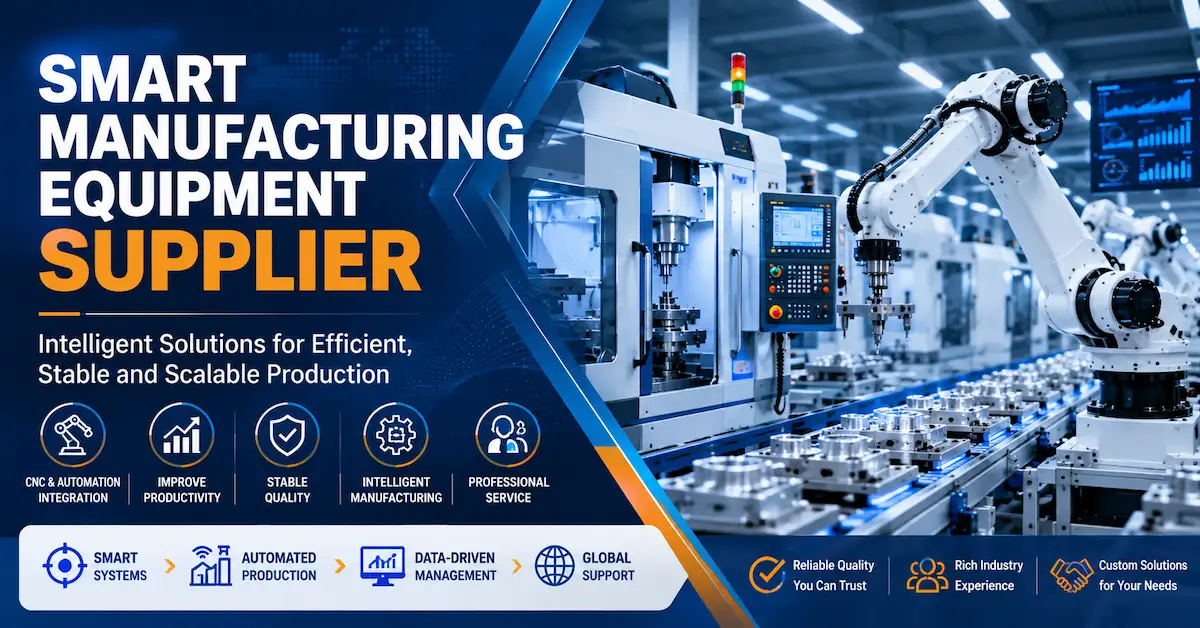
A smart manufacturing equipment supplier provides machinery and integrated production solutions that help factories automate machining, material handling, inspection, assembly, and other repetitive manufacturing operations.
The key difference between a conventional equipment seller and a smart manufacturing equipment supplier is the level of integration.
A conventional purchase may involve:
Machine → Operator → Manual handling → Inspection
A smart manufacturing project can instead connect:
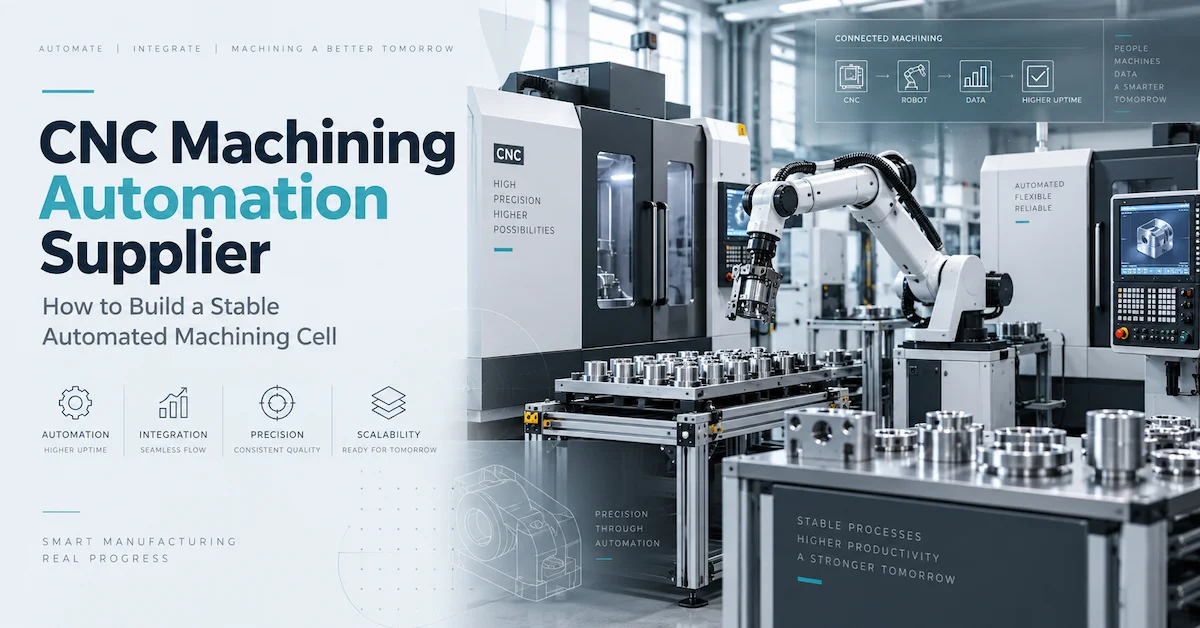
CNC machine → Fixture → Robot → Material handling → Inspection → Production control
This distinction matters when a factory is trying to solve practical problems such as:
- High labor dependency
- Inconsistent machining quality
- Long loading and unloading time
- Multiple manual production steps
- Low equipment utilization
- Difficult process traceability
- Increasing production volumes
For this reason, smart manufacturing should not be evaluated simply by asking whether a machine has a robot.
The more important question is:
Can the supplier build a stable production system around the customer's actual parts, process, output target, and factory conditions?
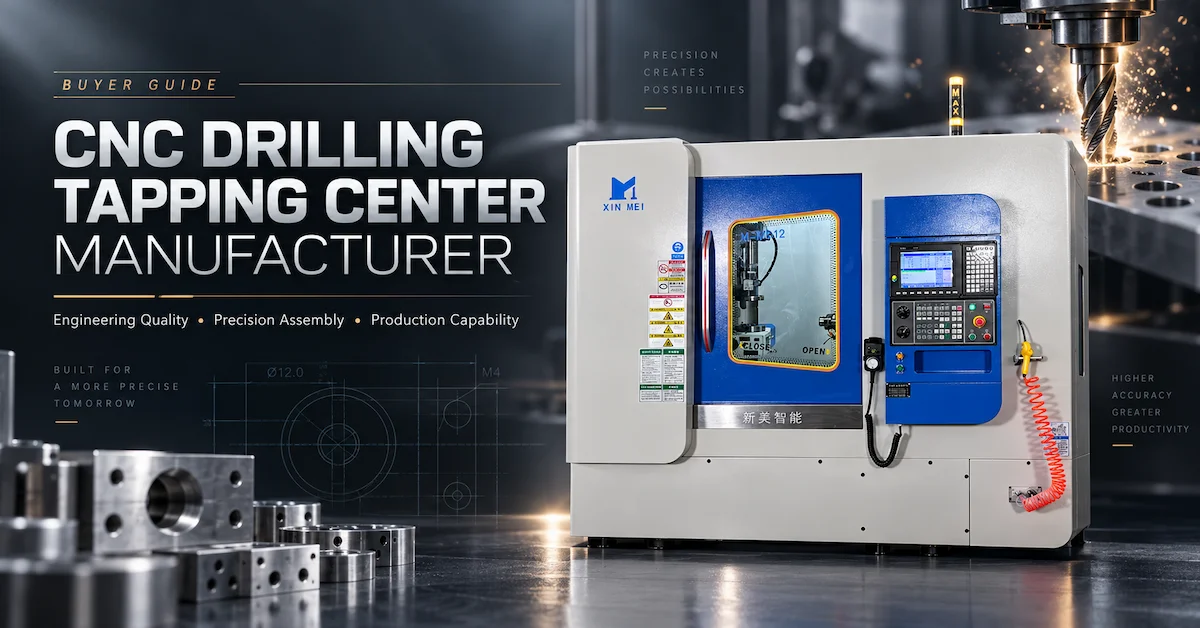
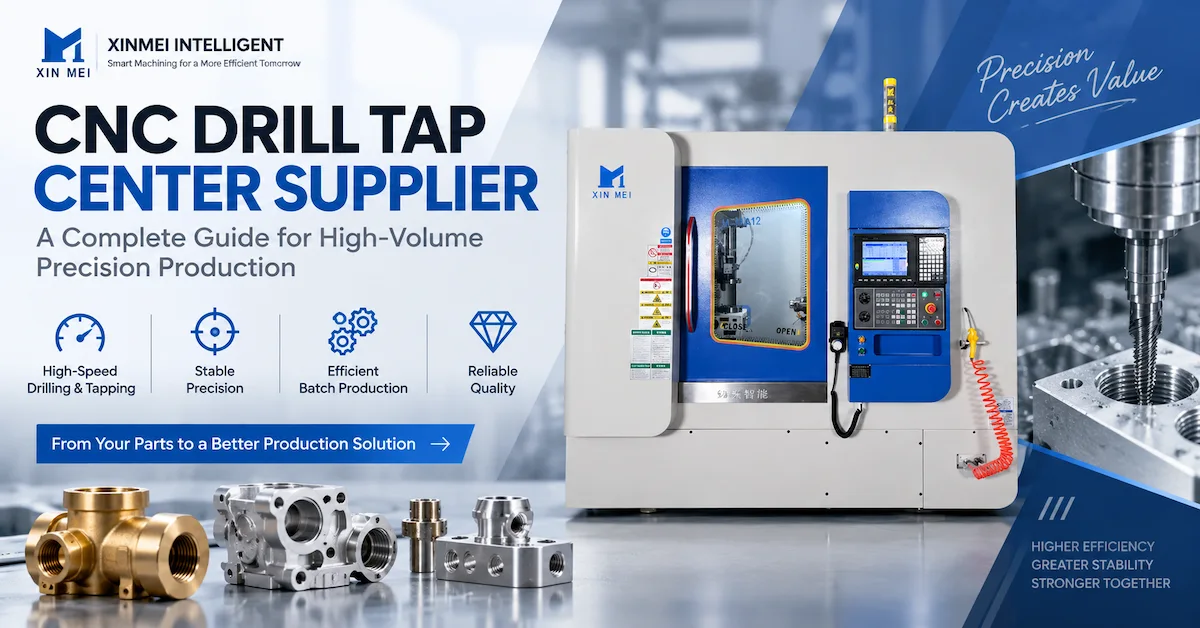
Xinmei Intelligent focuses on CNC machine tools and intelligent manufacturing solutions for real production environments. Its current capabilities include CNC drilling, tapping, milling, boring, special-purpose machines, and integrated automation systems.
Who Should Work With a Smart Manufacturing Equipment Supplier?
Smart manufacturing equipment is most valuable for factories that have repetitive production processes and need higher efficiency, consistency, or automation.
High-Volume Component Manufacturers
Factories producing thousands or millions of similar components may benefit from:
- Dedicated CNC machines
- Multi-spindle systems
- Automated loading
- Automated unloading
- Production cells
- Online inspection
Typical industries include:
- Automotive
- Motorcycle components
- Valves
- Bathroom hardware
- Door-control hardware
- Industrial components
Manufacturers Facing Labor Constraints
Automation becomes particularly valuable when production depends heavily on operators for:
- Machine loading
- Part unloading
- Repetitive inspection
- Material transfer
- Assembly
A properly designed automated cell can reduce repetitive manual operations while making the production process more consistent.
Factories Upgrading From Manual or Semi-Automatic Production
Not every manufacturer needs a completely automated factory from day one.
A practical upgrade may begin with:
Standalone CNC → Robot-assisted CNC → Automated machining cell → Integrated production line
This staged approach allows factories to match investment with actual production requirements.
Manufacturers With Strict Quality Requirements
When critical dimensions need to remain consistent across large production volumes, automation combined with stable CNC processes can help reduce operator-to-operator variation.
Xinmei states that its CNC solutions are designed for medium- to large-batch production, with emphasis on accuracy, stability, efficiency, and automation.
What Does Smart Manufacturing Equipment Include?
A smart manufacturing project can contain multiple types of equipment rather than a single machine.
| Equipment Category | Typical Function | Suitable Production Need |
|---|---|---|
| CNC machining center | Milling, drilling, tapping,boring | Flexible machining |
| CNC drilling & tapping machine | Hole and thread machining | Repetitive components |
| Special-purpose CNC machine | Dedicated machining process | High-volume production |
| Grinding equipment | Surface finishing | Consistent finishing |
| Robot loading system | Automatic machine tending | Labor reduction |
| Automated fixture | Repeatable workholding | Stable positioning |
| Inspection system | Dimensional/visual inspection | Quality control |
| Automated assembly line | Component assembly | End-to-end production |
Xinmei's current product portfolio includes vertical CNC drilling and tapping machines, flexible horizontal machining centers, robotic grinding equipment, special-purpose machines, robot loading and unloading lines, and automatic assembly lines.
How Smart Manufacturing Equipment Works in a Production Line
A smart manufacturing system normally connects several production stages.
Part Loading
A robot or automated handling system positions the workpiece into the machine.
CNC Machining
Depending on the component, the machine may perform:
- Drilling
- Tapping
- Milling
- Boring
- Turning
- Grinding
Part Transfer
After machining,the part can be transferred automatically to:
- Another CNC machine
- Inspection equipment
- Cleaning
- Assembly
- Packaging
Quality Inspection
Inspection can be performed through:
- Measuring systems
- Probing
- Vision systems
- Dimensional inspection
Production Feedback
The resulting production information can support process improvement and equipment monitoring.
The goal is not simply to make each individual machine automatic.
The goal is to create a connected production workflow with fewer unnecessary manual steps.
What Should a Smart Manufacturing Equipment Supplier Analyze Before Quoting?
A high-quality supplier should not immediately recommend a machine based on a product name.
The first step should be engineering evaluation.
Part Geometry
The supplier should review:
- Part dimensions
- Hole locations
- Threads
- Pockets
- Curved surfaces
- Critical features
- Number of machining faces
Material
Material affects:
- Cutting force
- Tool selection
- Spindle requirements
- Coolant strategy
- Tool life
Common industrial materials include:
- Aluminum
- Brass
- Copper alloys
- Stainless steel
- Cast iron
- Zinc alloys
Production Volume
Production volume determines whether the factory needs:
- Flexible CNC equipment
- Multi-machine cells
- Dedicated CNC equipment
- Special-purpose machines
- Full-line automation
Current Process
A supplier should understand how the component is currently produced.
For example:
Manual drilling → manual tapping → inspection
may potentially become:
Automatic loading → CNC drilling & tapping → automatic inspection
The improvement comes from redesigning the workflow, not simply replacing one machine.
Technical Factors to Compare Before Buying
A smart manufacturing equipment supplier should explain how each technical parameter affects the production process.
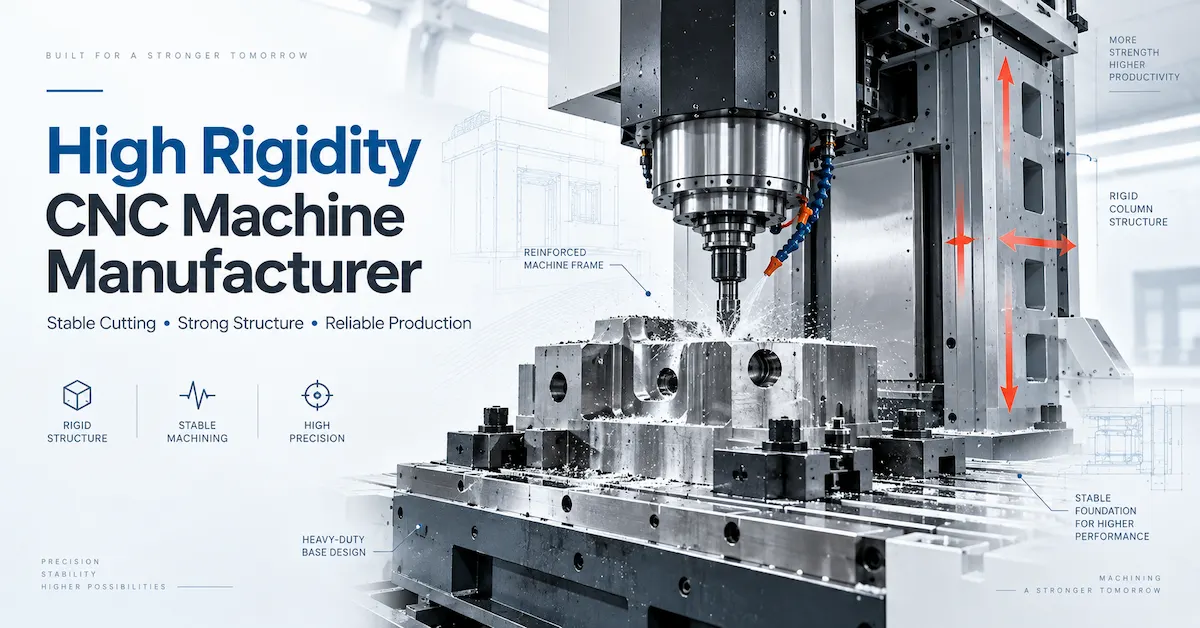
Machine Rigidity
Machine rigidity affects:
- Cutting stability
- Vibration
- Dimensional consistency
- Tool life
This becomes particularly important for high-volume machining.
Spindle Capability
Spindle selection should match:
- Material
- Cutting tools
- Required speed
- Cutting force
- Production requirements
Higher spindle speed does not automatically mean better production.
Axis Configuration
The number of controlled axes should match part complexity.
Simple components may be suitable for three-axis machining.
Complex parts may require:
- Additional rotary axes
- Multi-station systems
- Horizontal machining
- Special-purpose configurations
Fixture Design
Fixture design directly affects:
- Positioning accuracy
- Repeatability
- Loading speed
- Accessibility
- Automation compatibility
Xinmei identifies fixture design, tooling selection, cutting-parameter optimization, and workflow improvement as part of its machining process optimization capability.
Robot Integration
Robot selection should consider:
- Payload
- Reach
- Cycle time
- Part orientation
- Gripper design
- Machine interface
The robot should be selected around the production cycle, not treated as a separate product.
Smart Manufacturing Equipment by Production Scenario
Different production scenarios require different levels of automation.
Scenario 1: Repetitive CNC Machining
A factory has stable production volumes but still relies on manual loading.
A practical solution may be:
CNC machine + automatic loading/unloading
The primary objective is reducing repetitive operator work.
Scenario 2: Multiple Machining Operations
A component requires:
- Drilling
- Milling
- Tapping
- Boring
Moving the part between several machines can create:
- Additional labor
- Longer cycle time
- Repositioning errors
A multi-process machining center or integrated CNC cell may reduce unnecessary handling.
Scenario 3: High-Volume Production
For stable, repetitive components, dedicated equipment can provide advantages over general-purpose machines.
Possible solutions include:
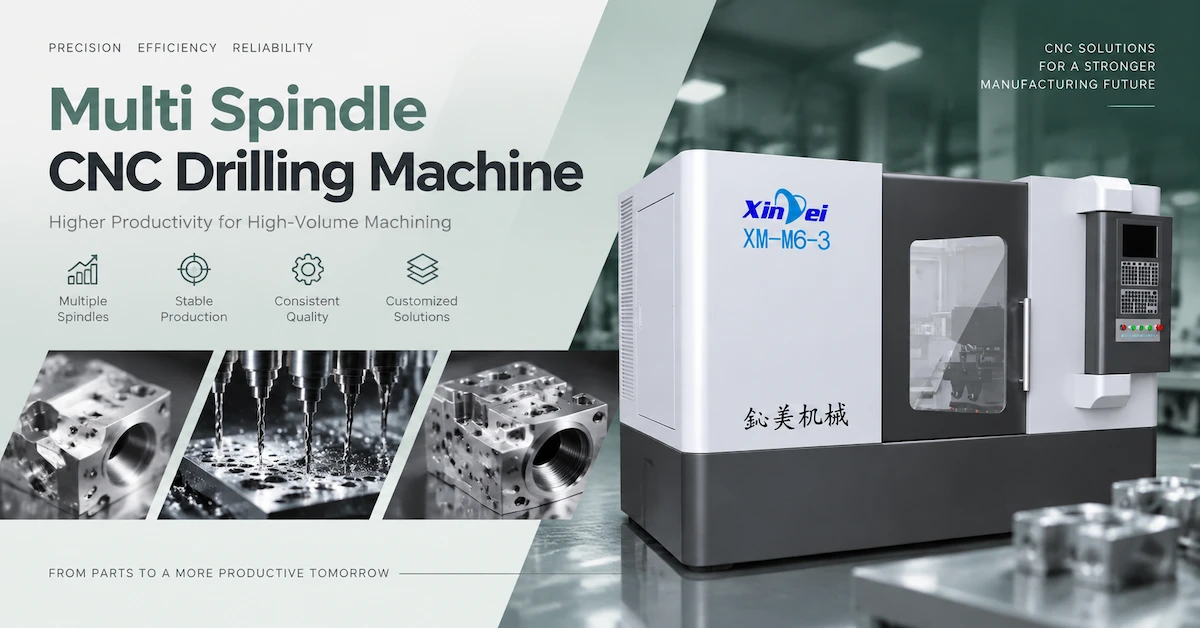
- Multi-spindle machining
- Special-purpose CNC machines
- Automatic fixtures
- Robot loading
- Automated inspection
Scenario 4: Complete Production Line Automation
For larger projects, multiple processes can be connected into a turnkey system.
Xinmei currently presents solutions combining CNC machining centers, industrial robots, automated fixtures, precision tooling, and inspection systems. Its case-study materials describe automated production units for machining, loading/unloading, assembly, and inspection.
Smart Manufacturing Applications
Xinmei's current industrial application portfolio provides several useful examples of where intelligent CNC production can be applied.
Automotive and Motorcycle Components
Applications include:
- Steering gears
- Brake pumps
- Cylinder heads
- Shock absorber components
- Ball joints
- Shift forks
The focus is usually:
- Repeatability
- Production efficiency
- Dimensional consistency
- Automation
Bathroom and Sanitary Ware
Typical components include:
- Faucet bodies
- Main bodies
- Angle valves
- Handwheels
- Water meters
These products often require combinations of drilling, milling, tapping, and other machining operations.
Valve Manufacturing
Applications include:
- Ball valves
- Filter valves
- Water manifolds
- Air-conditioning valves
- Globe valves
These components may require accurate holes, threads, passages, and sealing surfaces.
Door-Control Components
Applications include:
- Door closer bodies
- Floor spring bodies
- Copper gears
- Gear shafts
- Lock cylinders
- Lock cores
Xinmei specifically presents door-control automation as an industrial application and describes CNC machining combined with robotic loading, unloading, assembly, and inspection.
Aerospace Connectors
Applications include:
- Male pins
- Female pins
- Connector bodies
These components can require repeatable machining and controlled production processes.
Quality Control for Smart Manufacturing Equipment
Automation does not compensate for poor machine quality.
A reliable supplier should control quality from component manufacturing through final system validation.
Component Inspection
Important components should be inspected for:
- Dimensions
- Material characteristics
- Manufacturing quality
Machine Assembly
The supplier should control:
- Mechanical assembly
- Electrical integration
- Motion-system installation
- Spindle installation
Accuracy Calibration
Machine accuracy should be validated before shipment.
Functional Testing
Testing should confirm:
- Axis movement
- CNC operation
- Spindle performance
- Automation communication
- Safety functions
Production Validation
For customized projects, the most valuable test is whether the complete system can achieve the customer's actual production requirements.
Xinmei states that its CNC machines are assembled, tested, and validated in its own manufacturing facilities. Its quality system includes precision inspection equipment such as CMM, Renishaw measurement systems, and hardness testing equipment.
Smart Manufacturing Equipment Supplier Comparison
| Evaluation Factor | Standard Equipment Seller | Smart Manufacturing Equipment Supplier |
|---|---|---|
| Machine supply | Standard equipment | Equipment + integrated solution |
| Process analysis | Limited or product-focused | Application-focused |
| Fixture design | May be separate | Can be integrated |
| Automation | Often additional | Designed as part of system |
| Production-line planning | Limited | Included when required |
| Quality validation | Machine testing | Machine + system validation |
| Customization | Usually limited | Special-purpose and customized options |
| Future expansion | May require redesign | Can be planned during initial project |
This does not mean every factory needs a fully automated system.
For low-volume production, a flexible standalone CNC machine may provide better economics.
For stable high-volume production, integrated automation can become more attractive.
The correct choice depends on the production economics and process requirements.
How Much Does Smart Manufacturing Equipment Cost?
There is no meaningful universal price for a smart manufacturing system.
The total investment depends on:
- CNC machine configuration
- Number of machines
- Spindle configuration
- Fixtures
- Tooling
- Robot quantity
- Inspection systems
- Material handling
- Assembly requirements
- Control integration
- Special-purpose engineering
Instead of comparing only machine purchase prices, buyers should calculate the total production cost.
Key Cost Factors
Equipment investment
The initial machine and automation investment.
Labor cost
How many operators are required before and after automation?
Cycle time
How many finished parts can the system produce per shift?
Scrap rate
Does better process stability reduce defective products?
Tooling cost
How frequently do tools need replacement?
Downtime
How much production is lost when the equipment stops?
Maintenance
What are the expected maintenance requirements?
For B2B buyers,the more useful metric is often:
Cost per qualified finished component
rather than simply:
Machine purchase price
How to Choose the Right Smart Manufacturing Equipment Supplier
Before selecting a supplier, evaluate the following seven areas.
1. Can the Supplier Understand Your Part?
The supplier should review drawings, materials, tolerances, and production requirements before recommending equipment.
2.Can the Supplier Optimize the Process?
Ask whether the engineering team can support:
- Machining sequence
- Tool selection
- Fixture design
- Cutting parameters
- Cycle-time optimization
3. Can the Supplier Customize Equipment?
Check whether the supplier can provide:
- Special-purpose machines
- Dedicated fixtures
- Multi-spindle solutions
- Automated loading
- Integrated inspection
4.Can the Supplier Integrate Automation?
Ask how CNC equipment connects with:
- Robots
- Fixtures
- Inspection
- Assembly
- Material handling
5. How Is Machine Quality Validated?
Ask for details about:
- Component inspection
- Assembly control
- Accuracy testing
- Functional testing
- Final validation
6.Can the Supplier Support Installation?
For international projects, clarify:
- Installation
- Commissioning
- Training
- Troubleshooting
- Technical support
7. Can the Supplier Support Future Expansion?
The best solution should not only solve today's production problem.
It should also leave room for:
- Additional machines
- Higher production volume
- More automation
- Additional inspection
- Production-line expansion
Xinmei's stated engineering services include installation and commissioning, after-sales support, customized solutions, process optimization, and new technology introduction.
What Should You Send a Smart Manufacturing Equipment Supplier?
A detailed RFQ allows engineers to provide a much more useful proposal.
Product Information
Provide:
- 2D drawings
- 3D models
- Material
- Part dimensions
- Critical tolerances
- Surface finish requirements
Production Information
Include:
- Current production volume
- Target production volume
- Working shifts
- Current cycle time
- Target cycle time
Process Information
Explain:
- Current machining process
- Existing machines
- Manual operations
- Quality problems
- Production bottlenecks
Automation Requirements
Specify whether you need:
- Automatic loading
- Automatic unloading
- Robot tending
- Automatic inspection
- Automatic assembly
- Complete production-line integration
This information allows the supplier to recommend a production system rather than simply send a standard machine quotation.
Why Choose Xinmei as Your Smart Manufacturing Equipment Supplier?
Xinmei Intelligent combines CNC equipment manufacturing with application engineering and automation development.
Its current portfolio covers:
- CNC drilling
- CNC tapping
- CNC milling
- CNC boring
- CNC machining centers
- Grinding and peeling machines
- Special-purpose CNC equipment
- Robot loading and unloading
- Automated assembly lines
The company states that its engineering team includes mechanical engineers, automation specialists, and application engineers, working with customers from early concept design through equipment commissioning.
Its manufacturing approach emphasizes:
Application analysis → Process optimization → Machine configuration → Manufacturing → Testing → Automation integration → Commissioning
For factories with stable batch production, this approach can be more valuable than purchasing independent machines from unrelated suppliers.
Xinmei also provides a dedicated smart manufacturing equipment and CNC solutions portfolio, where buyers can review current equipment categories and industrial applications.
Smart Manufacturing Equipment Project Checklist
| Project Stage | Key Question |
|---|---|
| Part analysis | Has the supplier reviewed the actual component? |
| Material | Is the machine configuration suitable for the material? |
| Process | Can machining steps be optimized? |
| Fixture | Is workholding stable and automation-ready? |
| Tooling | Are tools selected for production stability? |
| Machine | Does the CNC configuration fit the application? |
| Automation | Can loading and unloading be automated? |
| Inspection | How will critical dimensions be verified? |
| Production | Can the target cycle time be achieved? |
| Quality | How is system performance validated? |
| Installation | Who handles commissioning? |
| Service | What technical support is available? |
| Expansion | Can the system scale with future demand? |
FAQ
1. What is a smart manufacturing equipment supplier?
A smart manufacturing equipment supplier provides CNC machinery, automation equipment, production-line integration, engineering support, and related manufacturing solutions designed to improve production efficiency, consistency, and automation.
2. What is the difference between a smart manufacturing supplier and a CNC machine supplier?
A conventional CNC machine supplier may primarily provide individual machines. A smart manufacturing supplier can also integrate CNC equipment with fixtures, robots, inspection systems, material handling, and production-line automation.
3. What industries use smart manufacturing equipment?
Common applications include automotive and motorcycle components, valves, bathroom and sanitary ware, door-control hardware, aerospace connectors, electronics, medical devices, and other repetitive industrial manufacturing processes.
4. What CNC equipment can be integrated into a smart manufacturing line?
Depending on the application, a production system can include drilling machines, tapping machines, milling machines, boring equipment, machining centers, grinding equipment, special-purpose machines, robots, fixtures, and inspection systems.
5. Is smart manufacturing equipment suitable for small factories?
It can be, but the automation level should match production volume and expected return on investment. A small factory may begin with a CNC machine and automated loading rather than investing immediately in a complete production line.
6. Can smart manufacturing equipment be customized?
Yes. Depending on the project, customization can include machine configuration, fixtures, special-purpose CNC equipment, multi-spindle systems, robot loading, inspection, and integrated production lines.
7. How does automation improve CNC production?
Automation can reduce repetitive manual operations, stabilize loading and unloading, improve production flow, increase machine utilization, and support more consistent production.
8.What should I consider when selecting a smart manufacturing equipment supplier?
Evaluate engineering capability, CNC manufacturing experience, process optimization, fixture design, automation integration, quality control, customization, installation, after-sales support, and future scalability.
9. How do I request a smart manufacturing equipment quotation?
Send the supplier your part drawings, material, dimensions, tolerances, production volume, current machining process, target cycle time, and automation requirements.
10. Can Xinmei develop a complete automated production line?
Xinmei's current capabilities include CNC equipment, special-purpose machines, robot loading and unloading, automated assembly lines, and integrated CNC automation solutions. The appropriate configuration depends on the customer's specific production requirements.
Conclusion
Choosing a smart manufacturing equipment supplier should be approached as a production-system decision rather than a simple machine purchase.
The right supplier should be able to connect:
CNC equipment + process engineering + fixtures + tooling + automation + inspection + commissioning + technical support
into one practical manufacturing solution.
For flexible or low-volume production, standalone CNC equipment may be sufficient.
For repetitive medium- and high-volume production, automated loading, special-purpose CNC machines, multi-process machining, inspection systems, and integrated production lines can provide greater long-term value.
Xinmei Intelligent focuses on application-driven CNC equipment and intelligent manufacturing solutions, covering drilling, tapping, milling, boring, special-purpose equipment, robotic automation, and production-line integration.
If you are planning a new CNC automation project, replacing manual machining, or upgrading an existing production line, you can use the Xinmei Contact / Inquiry page to provide your drawings, materials, production volume, and automation requirements for an engineering evaluation.