+86 13163919000
 info@xinmeiintelligent.com

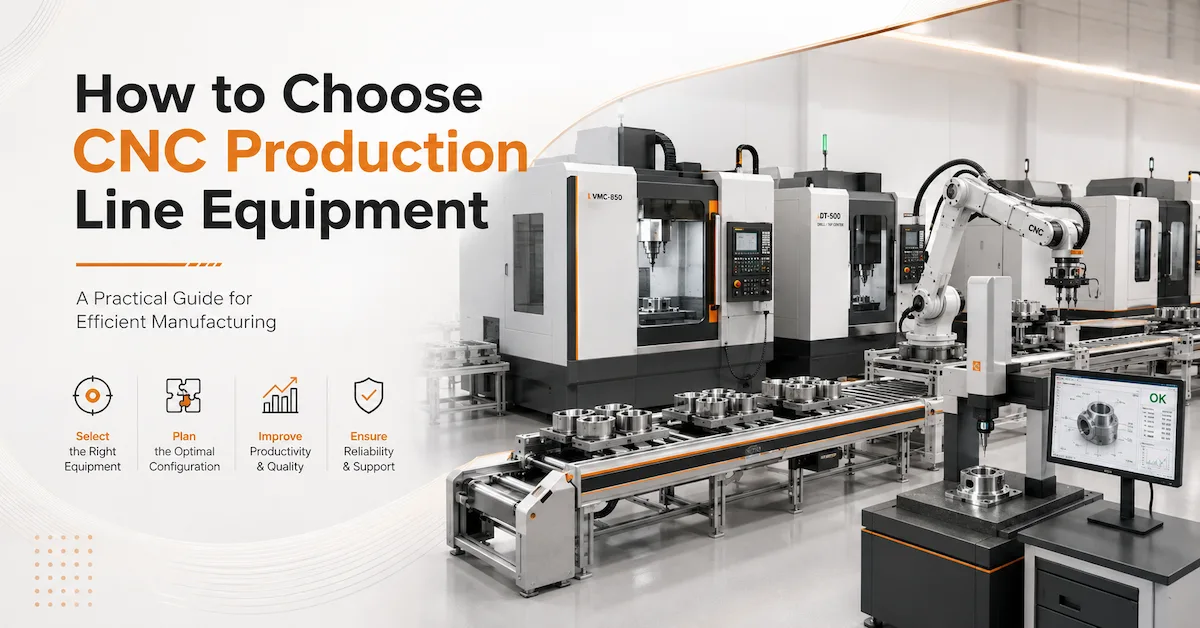
Choosing the right robotic loading and unloading line supplier is an important step for manufacturers that want to improve CNC machining efficiency, reduce manual operation, and build a more stable production system. In many factories, machines are not the only bottleneck. Operators spend too much time loading workpieces, removing finished parts, checking positions, and moving materials between processes.
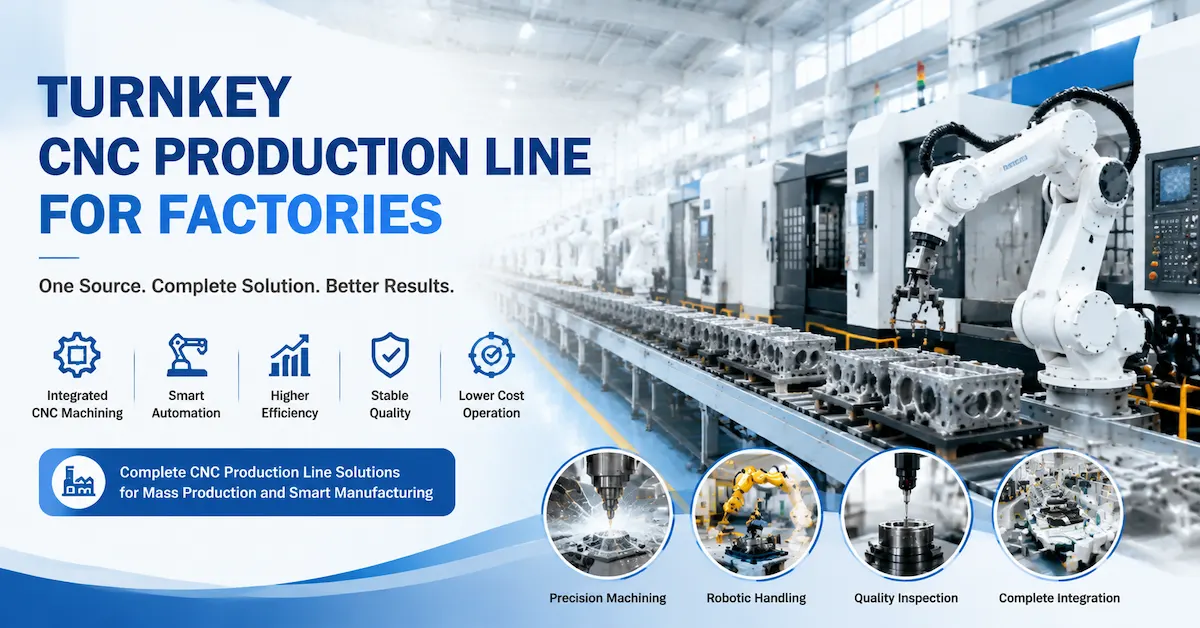
When production volume increases, manual loading and unloading can create unstable cycle times, inconsistent positioning, labor pressure, and higher downtime risk. A robotic loading and unloading line helps solve these problems by connecting machines, fixtures, robots, workpiece trays, conveyors, and process flow into one automated production solution.
Xinmei Intelligent provides CNC equipment and intelligent automation solutions for manufacturers that need stable batch production in industries such as automotive parts, bathroom hardware, valves, door control components, bearing housings, gas appliances, and precision metal parts. You can explore related equipment and automation solutions on the Xinmei products page.
What Is a Robotic Loading and Unloading Line?
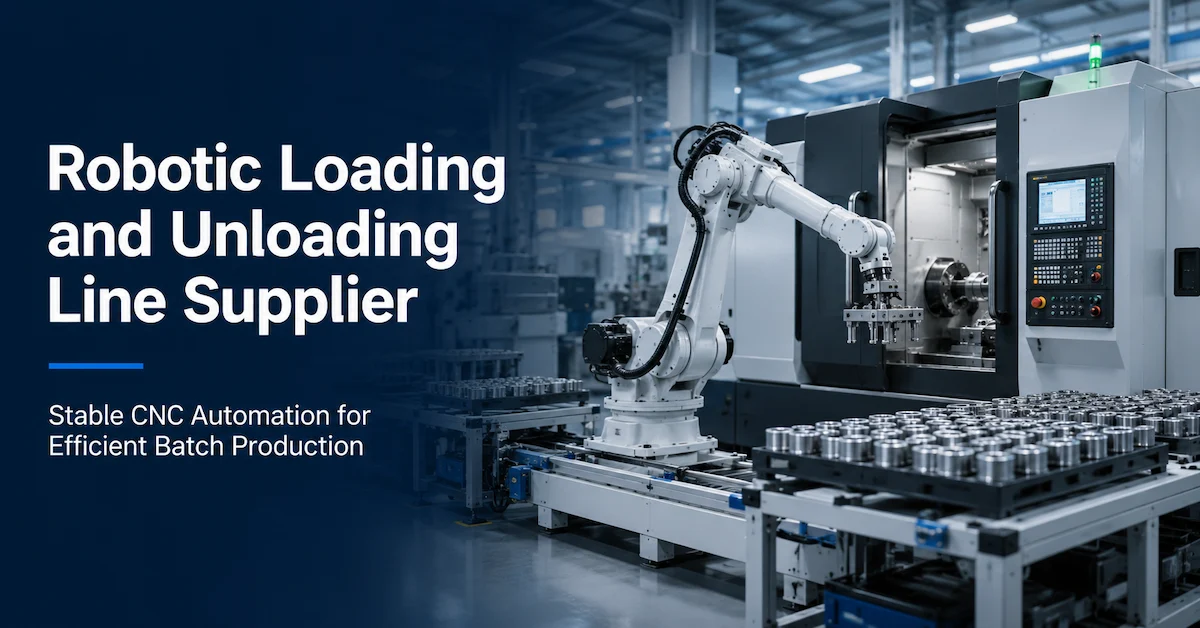
A robotic loading and unloading line is an automated system that uses industrial robots or automated handling units to load raw workpieces into CNC machines and unload finished parts after machining. It can work with CNC drilling machines, tapping machines, milling machines, machining centers, grinding machines, polishing systems, and special-purpose machine tools.
The system usually includes:
- Industrial robot or robotic arm
- Workpiece tray or storage rack
- Automatic feeding system
- CNC machine connection
- Fixture positioning system
- Finished part collection area
- Safety protection system
- Control system and production logic
- Optional inspection or marking stations
A professional robotic loading and unloading line supplier should not only provide the robot. The supplier should understand how the robot works with the machine, fixture, production rhythm, operator workflow, and final quality requirements.
Why Factories Need Robotic Loading and Unloading
Many factories already own CNC machines, but production is still limited by manual handling. Operators may need to open and close machine doors, place workpieces, confirm positioning, remove finished parts, and prepare the next batch. These actions look simple, but they can consume a large part of the total production cycle.
Common problems include:
- High labor dependency
- Inconsistent loading speed between operators
- Higher risk of positioning errors
- Difficult night-shift production
- Increased worker fatigue
- Longer machine idle time
- Unstable output during batch orders
- Safety risks during repetitive handling
A robotic loading and unloading line helps manufacturers make machine tending more consistent. Instead of relying only on operator speed, the factory can build a repeatable production rhythm.
For factories producing repeat parts every day, this can directly improve output stability and reduce hidden production waste.
Typical Applications of Robotic Machine Tending
Robotic loading and unloading lines are suitable for metal parts that require repeat machining, stable positioning, and continuous batch production.
| Industry | Typical Workpieces | Automation Value |
|---|---|---|
| Automotive parts | Brake pump parts, steering components, cylinder heads, shock absorber parts | Reduce manual handling and improve batch consistency |
| Bathroom hardware | Faucet bodies, angle valves, water meter parts | Improve loading accuracy and protect product surfaces |
| Valve manufacturing | Ball valves, filter valves, globe valves, manifolds | Support repeat machining and stable fixture positioning |
| Door control hardware | Door closer bodies, floor spring bodies, lock cores | Improve efficiency for repeated hole and surface processing |
| Bearing housings | Bearing block bases and mechanical housings | Support stable clamping and continuous production |
| Precision connectors | Connector bodies and related components | Improve repeatability for small or high-precision parts |
For these industries, the main benefit is not only saving labor. The bigger value is creating a stable production process that can support long-term batch manufacturing.
What Buyers Should Check Before Choosing a Supplier
A robotic loading and unloading project should be evaluated carefully before investment. The system must match the workpiece, machine type, production rhythm, and available factory space.
| Evaluation Factor | Why It Matters | What to Ask the Supplier |
| Workpiece shape | Affects gripper design and positioning | Can the robot handle our part safely and accurately? |
| Workpiece weight | Determines robot payload and arm reach | What robot model is suitable for our parts? |
| Machine type | Affects interface and loading method | Can the system work with our CNC machine or machining center? |
| Fixture design | Controls repeatable positioning | Can customized fixtures be designed for our product? |
| Cycle time | Determines production efficiency | Can the robot match our machining takt time? |
| Safety layout | Protects operators and equipment | What safety fencing, sensors, or interlocks are needed? |
| Factory space | Affects line layout | Can the system fit our current workshop? |
| Future expansion | Supports long-term upgrades | Can the line be expanded to more machines later? |
A reliable robotic loading and unloading line supplier should ask for drawings, samples, machine information, required output, factory layout, and current production problems before making a proposal.
Key Components of a Robotic Loading and Unloading Line
1. Robot Selection
The robot must match the workpiece size, weight, reach distance, cycle time, and loading angle. A robot with too little payload may be unstable, while an oversized robot may increase unnecessary investment.
2. Gripper Design
The gripper is one of the most important parts of the system. It must hold the workpiece firmly without damaging the surface. For metal parts such as valve bodies, faucet bodies, brake pump parts, or door closer bodies, gripper design should consider part shape, surface finish, orientation, and machining allowance.
3. Fixture Compatibility
The robot and fixture must work together. If the fixture is difficult to access or the positioning method is not stable, automation may fail to deliver real efficiency.
4. Machine Interface
The robotic line should communicate with the CNC machine. This may include door opening, clamping confirmation, machining start, completion signal, alarm response, and safety interlock.
5. Material Storage and Transfer
The supplier should design how raw parts enter the system and how finished parts leave the system. Options may include trays, conveyors, rotary tables, pallets, or customized racks.
6. Safety System
A robotic loading and unloading line must include safety protection such as fencing, sensors, light curtains, emergency stop systems, and machine interlock logic.
Robotic Loading and Unloading Line vs Manual Operation
| Comparison Item | Manual Loading and Unloading | Robotic Loading and Unloading Line |
| Labor dependency | High | Lower |
| Cycle time stability | Varies by operator | More consistent |
| Night-shift production | More difficult | Easier to maintain |
| Positioning repeatability | Operator-dependent | Controlled by robot and fixture |
| Safety risk | Higher for repetitive handling | Better with proper safety system |
| Production scalability | Limited | Better for batch manufacturing |
| Long-term cost | Labor cost increases over time | Higher initial investment but better automation value |
If a factory only produces small batches with frequent part changes, manual operation may still be suitable. But for repeat parts, large orders, and stable production demand, robotic loading and unloading can create stronger long-term value.
When Should a Factory Invest in Robotic Loading and Unloading?
A factory should consider a robotic loading and unloading line when it faces one or more of the following problems:
- CNC machines wait too long between cycles
- Operators cannot keep up with machine capacity
- Labor cost keeps increasing
- Loading quality varies between workers
- The factory needs night-shift or continuous production
- Workpieces are heavy, repetitive, or difficult to handle
- Batch orders require stable output
- The factory plans to upgrade to intelligent manufacturing
The right automation solution should improve real production efficiency, not just add a robot beside the machine.
How Xinmei Intelligent Supports CNC Automation Projects
Xinmei Intelligent provides CNC equipment and intelligent production line solutions for factories that need practical automation upgrades. For robotic loading and unloading projects, the key is not only robot installation. The key is matching the robot with CNC machines, fixtures, process flow, and production targets.
Xinmei can support buyers with:
- Workpiece evaluation
- CNC machine selection
- Robotic loading and unloading system planning
- Fixture and gripper design suggestions
- Production line layout support
- Automation process planning
- Installation and commissioning support
- Production improvement from samples to mass production
For buyers who need both CNC machining equipment and automation systems, this integrated approach can reduce communication cost and improve project success.
You can learn more about the company’s manufacturing direction and intelligent production solutions on the Xinmei About Us page.
How to Prepare Before Requesting a Quotation
To get a useful proposal from a robotic loading and unloading line supplier, buyers should prepare practical production information.
You should provide:
- Product drawings or samples
- Workpiece material
- Workpiece size and weight
- Current CNC machine model
- Current loading and unloading method
- Required daily or monthly output
- Cycle time target
- Available workshop space
- Need for single-machine or multi-machine tending
- Safety requirements
- Future expansion plan
With this information, the supplier can design a solution that fits your factory instead of offering a standard robot package.
FAQ
1. What is a robotic loading and unloading line?
A robotic loading and unloading line is an automated system that uses robots to load raw parts into machines and unload finished parts after machining, helping factories improve efficiency and reduce manual work.
2. What machines can work with robotic loading and unloading?
It can work with CNC drilling machines, tapping machines, milling machines, machining centers, grinding machines, polishing equipment, and customized special-purpose machine tools.
3. Is robotic loading and unloading suitable for small batches?
It depends on product variety and changeover frequency. For stable repeat parts and medium-to-large batch production, robotic loading and unloading usually provides stronger value.
4. Can the system be customized for different workpieces?
Yes. The robot, gripper, fixture, tray, conveyor, safety system, and production layout can be customized based on workpiece shape, weight, material, and output requirement.
5. What information is needed before quotation?
You should provide drawings, samples, workpiece size and weight, machine type, current process, expected output, cycle time target, and factory layout.
Final Recommendation
Choosing the right robotic loading and unloading line supplier can help manufacturers reduce labor dependency, improve CNC machine utilization, stabilize production rhythm, and support long-term batch manufacturing.
The best supplier should understand your parts, your CNC process, your fixture requirements, your factory layout, and your automation goals. A good robotic system is not only about replacing manual labor. It is about building a more stable, measurable, and scalable production process.
If your factory wants to upgrade from manual loading to CNC automation, Xinmei Intelligent can help evaluate your workpieces, production targets, and machine layout. Contact Xinmei Intelligent through the contact page to discuss a robotic loading and unloading line solution for your factory.