+86 13163919000
 info@xinmeiintelligent.com

Choosing an intelligent CNC production line supplier is not only about buying machines. For many factories, the real goal is to solve production bottlenecks: unstable output, rising labor cost, inconsistent machining quality, difficult fixture changeover, and low efficiency during batch production.
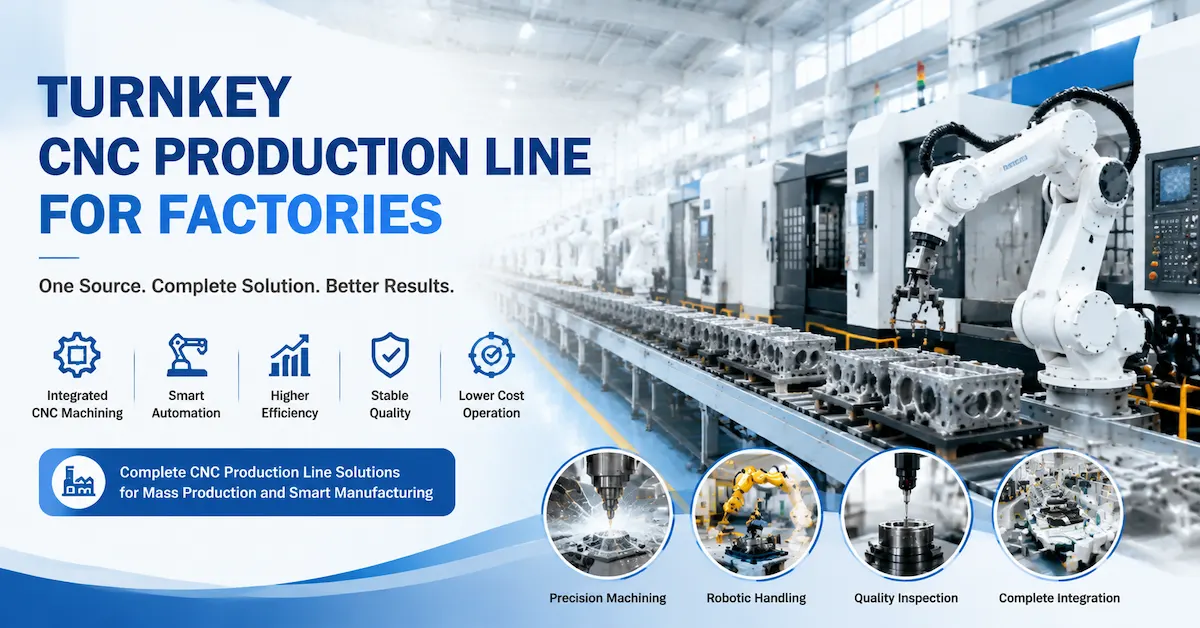
A good CNC production line should connect equipment, fixtures, loading systems, machining processes, inspection points, and operator workflow into one practical manufacturing solution.
For factories producing auto parts, door control components, sanitary hardware, valve parts, bearing housings, gas appliance parts, or precision connectors, the right supplier can help turn separate machining steps into a more stable and efficient production system.
Xinmei Intelligent provides CNC equipment and intelligent production line solutions for manufacturers that need reliable batch machining, higher automation, and better process control. You can explore the company’s CNC equipment and production solutions on the Xinmei products page.
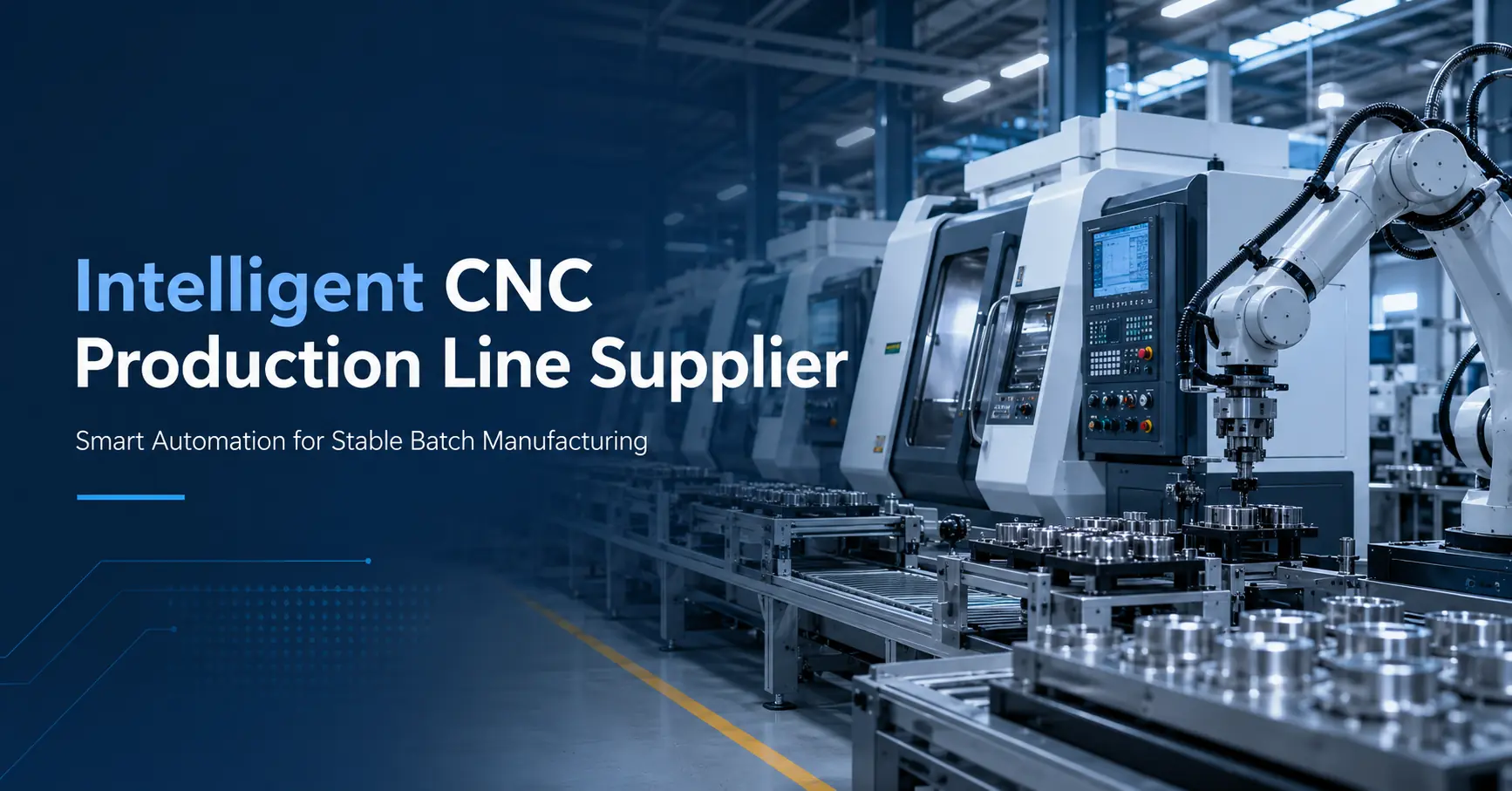
Quick Answer: What Does an Intelligent CNC Production Line Supplier Do?
An intelligent CNC production line supplier helps factories design, configure, and implement automated CNC machining systems. This may include CNC drilling and tapping machines, horizontal machining centers, robot loading and unloading systems, special-purpose machine tools, grinding or polishing automation, fixtures, tooling, and process planning.
The supplier should not only sell equipment. They should also understand the customer’s workpiece, production volume, material, tolerance requirement, machining sequence, loading method, and quality inspection process.
In simple terms, the supplier should answer three questions:
- How can this part be produced more efficiently?
- How can machining accuracy remain stable during batch production?
- How can labor dependency and production downtime be reduced?
Why Factories Need Intelligent CNC Production Lines
Many factories start with single CNC machines. This works well for small batches or flexible machining. But when order volume increases, problems often appear.
Operators may spend too much time loading and unloading parts. Different workers may create different machining results. Manual handling may increase scratches, positioning errors, or cycle time variation. If each process is separated, production managers may also struggle to track real capacity.
An automated CNC production line helps solve these problems by improving workflow continuity.
For example, a factory producing valve bodies or automotive steering parts may need drilling, tapping, milling, deburring, cleaning, and inspection. If these steps are not planned together, the factory may lose time between processes. With a smarter production line, machines, fixtures, robots, and inspection points can be arranged around the real production rhythm.
This is why choosing the right intelligent CNC production line supplier matters. The supplier’s engineering experience directly affects line efficiency, stability, and long-term return on investment.
What Buyers Should Check Before Choosing a Supplier
A high-conversion CNC production line project usually starts with detailed technical communication. Before asking for a quotation, buyers should prepare basic information such as product drawings, material, annual output, tolerance requirements, current process problems, and available factory space.
A professional supplier should evaluate these factors before recommending a solution.
| Buying Factor | Why It Matters | What to Ask the Supplier |
|---|---|---|
| Workpiece type | Determines machine structure, fixture design, and cutting strategy | Have you handled similar parts before? |
| Material | Affects spindle speed, cutting tools, rigidity, and cooling | Can the line support aluminum, brass, steel, or stainless steel? |
| Production volume | Determines whether automation is necessary | What cycle time can the line realistically achieve? |
| Accuracy requirement | Affects machine selection and inspection design | How do you control repeatability during batch production? |
| Loading method | Affects labor cost and line efficiency | Can robot loading and unloading be integrated? |
| Process sequence | Determines line layout | Can drilling, tapping, milling, and inspection be connected? |
| After-sales support | Affects long-term uptime | Do you provide installation, training, and remote support? |
A reliable supplier should not rush to quote before understanding these details. If the supplier only provides a machine model without process analysis, the solution may not match real factory conditions.
Key Features of a Strong Intelligent CNC Production Line
1. Stable Machine Rigidity
Machine rigidity affects machining accuracy, tool life, vibration control, and surface quality. In batch production, stability is more important than short-term speed.
A production line should use machines with strong structure, stable spindle performance, and reliable axis movement. This is especially important for parts that require drilling, tapping, milling, or repeated positioning.
2. Flexible Fixture Design
Fixtures are often the hidden key to production efficiency. A good fixture reduces loading time, improves positioning accuracy, and keeps every part consistent.
For products such as door closer bodies, faucet bodies, valve bodies, lock cores, or automotive parts, fixture design must match the shape and machining sequence of the workpiece.
3. Robot Loading and Unloading
Robot loading and unloading can reduce manual handling, improve safety, and make production rhythm more predictable.
This is valuable for factories facing labor shortages or unstable manual operation. It also helps production managers build more consistent output during long shifts.
4. Process Integration
An intelligent CNC line should not treat every machine as an isolated unit. The supplier should consider how each process connects with the next.
For example, drilling and tapping may need to be linked with cleaning, inspection, or automatic transfer. If the layout is poorly designed, automation may not deliver real efficiency.
5. Quality Control Points
Batch production requires repeatable quality. A strong CNC automation solution should include quality control logic, such as inspection points, surface checks, dimensional verification, or process monitoring.
This helps factories reduce defective parts before they reach the final assembly stage.
Which Industries Benefit Most from CNC Production Line Automation?
An intelligent CNC production line is suitable for factories that produce repeatable metal parts in medium to large volumes.
Common applications include:
- Auto and motorcycle parts: steering components, brake pump parts, cylinder heads, shock absorber parts, connectors
- Door control hardware: door closer bodies, lock cylinders, lock cores, gears, gear shafts
- Bathroom and sanitary hardware: faucets, angle valves, water meter parts, stainless steel components
- Valve manufacturing: ball valves, filter valves, globe valves, water manifolds
- Aerospace and electrical connectors: male pins, female pins, connector bodies, high-voltage connectors
- Bearing housings and fire protection parts: bearing block bases, fire protection valves
For these industries, the challenge is not only machining one part correctly. The challenge is producing thousands of parts with stable accuracy, controlled cycle time, and lower labor dependency.
Intelligent CNC Production Line vs Single CNC Machine
Some buyers are unsure whether they need a single CNC machine or a full production line. The answer depends on production volume, product stability, and labor cost.
| Option | Best For | Main Advantage | Limitation |
| Single CNC Machine | Small batches, flexible production, prototype work | Lower initial investment | More manual handling and process separation |
| Multiple Standalone Machines | Medium production with separate operators | Flexible arrangement | Higher labor dependency |
| Intelligent CNC Production Line | Stable batch production, repeat orders, automation needs | Higher efficiency, better consistency, lower labor cost | Requires process planning before investment |
If your factory produces repeat parts every day, an automated CNC production line may create stronger long-term value than adding more standalone machines.
Why Xinmei Intelligent Is Suitable for CNC Automation Projects
As an intelligent CNC production line supplier, Xinmei Intelligent focuses on practical manufacturing solutions for real factory environments.
The company provides CNC drilling, tapping, milling, robot loading and unloading, intelligent grinding, horizontal machining centers, and customized special-purpose machine tools. This allows buyers to discuss both single equipment needs and full production line planning.
Xinmei’s strength is especially relevant when buyers need:
- CNC equipment for stable mass production
- Automated loading and unloading solutions
- Custom machine configuration based on workpiece features
- Fixture and process planning support
- Production line solutions for hardware, sanitary ware, valves, automotive parts, and connectors
- Engineering support from sample evaluation to mass production
To understand the company background and manufacturing direction, buyers can visit the Xinmei about us page.
How to Start a CNC Production Line Project
A successful project usually follows a clear process.
First, the buyer provides product drawings, samples, materials, tolerance requirements, and current production problems. Then the supplier reviews the workpiece and confirms whether the project needs single-machine machining, semi-automation, or a full intelligent production line.
Next, the supplier designs the machine configuration, fixture concept, loading method, and process flow. After technical confirmation, both sides discuss cycle time, line layout, quality control, delivery, installation, and training.
Before placing an order, buyers should ask for a clear explanation of:
- Recommended machine types
- Automation layout
- Fixture design logic
- Estimated cycle time
- Required operator number
- Quality inspection method
- Installation and commissioning support
- After-sales response method
This helps avoid wrong investment decisions and makes the final quotation more meaningful.
What to Ask Before Requesting a Quotation
Before contacting an intelligent CNC production line supplier, prepare these questions:
- Can this solution support my part size, material, and tolerance?
- Can the line be adjusted if my product model changes?
- How many operators are required for one shift?
- What is the expected cycle time per part?
- Can robot loading and unloading be added later?
- What fixture design is recommended for this workpiece?
- How will the supplier support installation and training?
- What spare parts and maintenance support are available?
These questions help buyers compare suppliers based on engineering ability instead of price alone.
FAQ
1. What is an intelligent CNC production line?
An intelligent CNC production line is an automated machining system that connects CNC machines, fixtures, loading systems, process flow, and quality control to improve production efficiency and batch consistency.
2. When should a factory choose a CNC production line instead of a single machine?
A factory should consider a CNC production line when it has stable repeat orders, high labor cost, large batch production, or frequent quality variation caused by manual handling.
3. Can Xinmei customize a CNC production line for different parts?
Yes. Xinmei Intelligent can provide customized CNC equipment and automation solutions based on product drawings, samples, material, tolerance, and production capacity requirements.
4. What industries use intelligent CNC production lines?
Common industries include auto parts, motorcycle parts, door control hardware, bathroom hardware, valves, aerospace connectors, gas appliance parts, bearing housings, and fire protection equipment.
5. What information should I provide before getting a quotation?
You should provide drawings, samples, material, tolerance requirements, current production process, expected output, factory space, and automation goals.
Final Recommendation
If your factory is facing unstable output, high labor dependency, machining inconsistency, or pressure to scale production, choosing the right intelligent CNC production line supplier can make a direct difference.
A strong supplier should understand your product, production rhythm, quality target, and future expansion plan. The best solution is not always the most complex one. It is the one that fits your workpiece, reduces unnecessary labor, improves repeatability, and supports long-term batch manufacturing.
Xinmei Intelligent provides CNC equipment and intelligent automation solutions for factories that need more stable, efficient, and scalable production. To discuss your part drawings, production capacity, or automation requirements, contact the Xinmei engineering team through the contact page.