+86 13163919000
 info@xinmeiintelligent.com


What Should Buyers Expect From a CNC Machine Factory in China?
A CNC machine factory China buyer should expect more than an assembled machine with a controller and a specification sheet. For industrial procurement, the supplier should be able to explain how the machine structure, spindle arrangement, tooling, fixture, control system, process sequence, quality checks, and service scope relate to the buyer’s actual workpiece and production target. Xinmei Intelligent develops CNC equipment for drilling, tapping, milling, boring, dedicated component machining, and automated production. Buyers can first review Xinmei’s company background and then compare the equipment category against the intended application rather than selecting a machine from headline specifications alone.
The purchasing challenge is that two CNC machines with similar travel, spindle speed, or controller brands can still differ significantly in process suitability. A valve-body factory may prioritize multi-directional access and stable workholding, while a door-control manufacturer may care more about combining drilling, boring, milling, and tapping into fewer setups. An automotive component supplier may place greater emphasis on repeatability, automation interfaces, and continuous production. The supplier therefore needs to understand the production problem before proposing equipment.
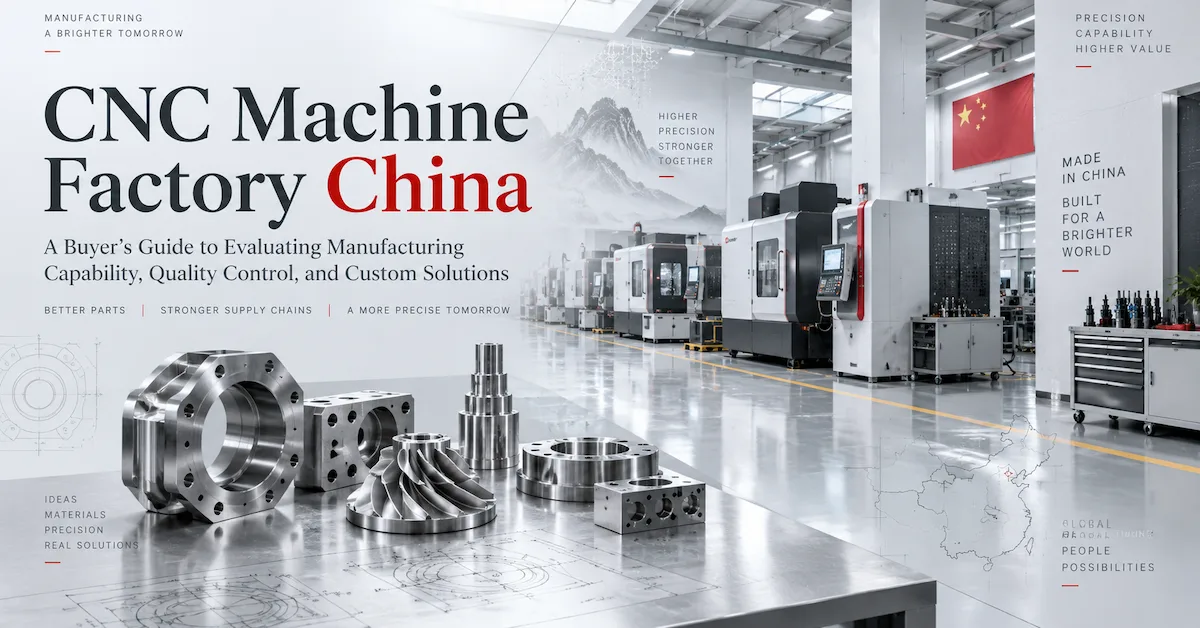
Who Should Source Directly From a CNC Machine Factory China Supplier?
Direct factory sourcing is most useful for manufacturers that need technical evaluation rather than a purely catalog-based purchase. This includes door closer and floor spring manufacturers, valve and sanitary hardware factories, automotive and motorcycle component suppliers, industrial component machining companies, OEM factories expanding production capacity, automation integrators, and distributors that need long-term technical support.
A factory-direct route is especially valuable when the buyer needs a special-purpose machine, multiple machining units, dedicated fixtures, robot loading, or an integrated production line. Xinmei’s equipment structure includes CNC machining centers, special purpose machines, and automation solutions intended for different production requirements.
Factory-direct purchasing may be less attractive when the buyer only needs a basic standard machine, requires immediate stock from a local warehouse, or does not have personnel who can prepare drawings, utility requirements, acceptance conditions, and installation plans. In those cases, local distribution support may be important. The correct sourcing model depends on project complexity, not simply on whether the machine is manufactured in China.
Start the Factory Audit With the Machine Portfolio
A serious factory audit should begin by checking whether the manufacturer actually builds equipment relevant to your workpiece. A supplier may describe itself broadly as a CNC machine manufacturer while its real experience is concentrated in one machine architecture or one industry.
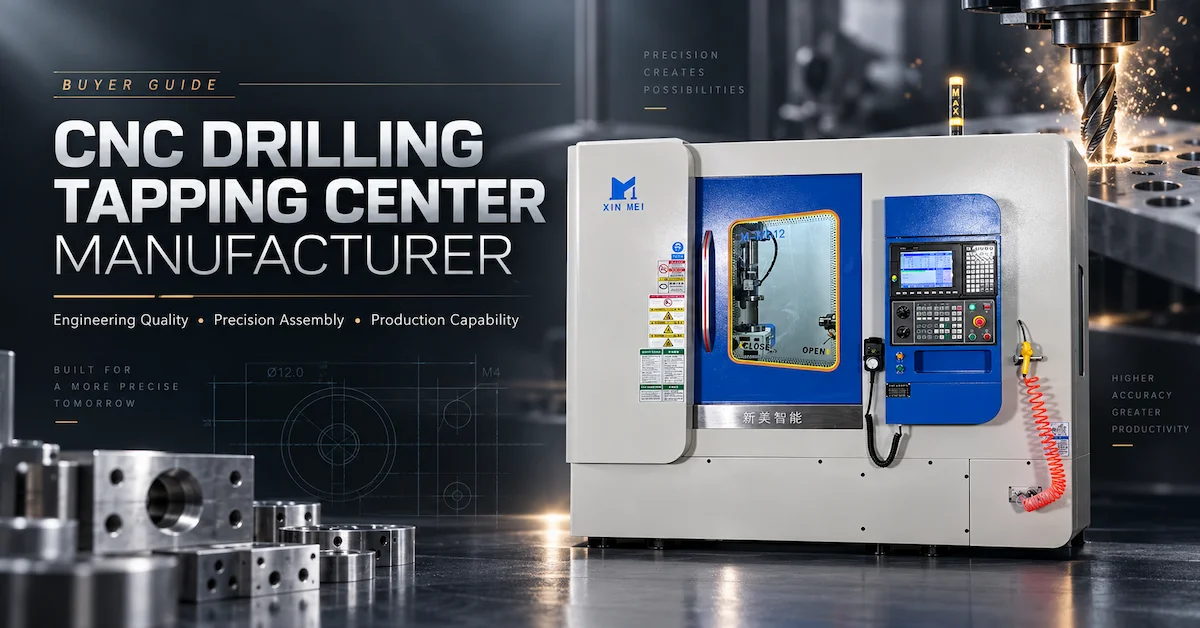
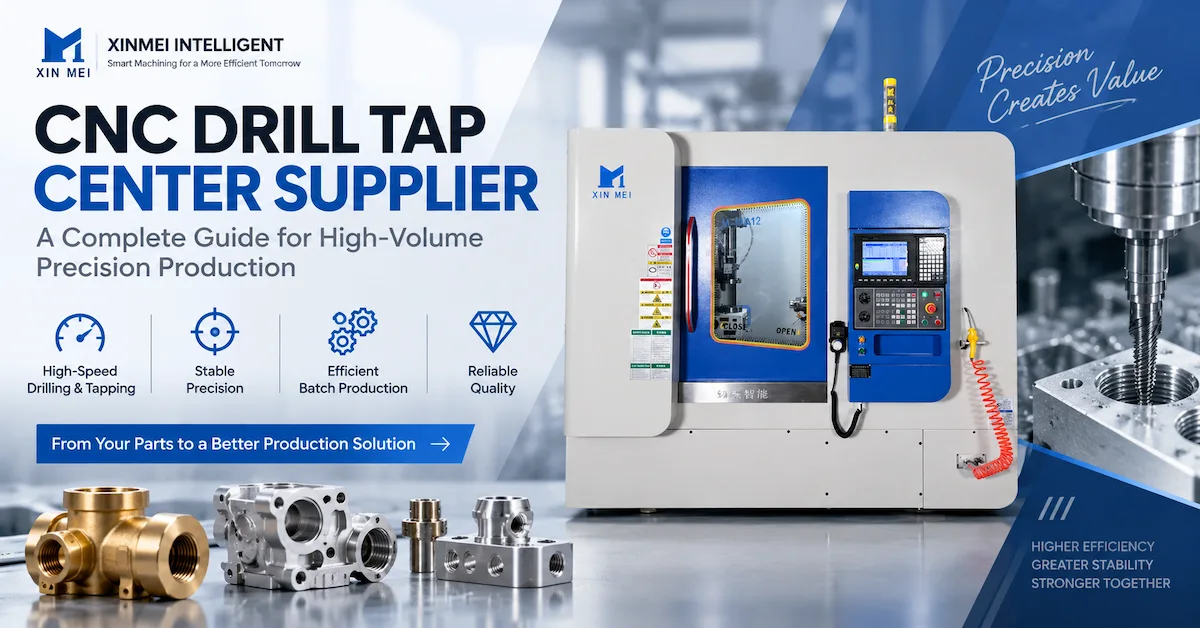
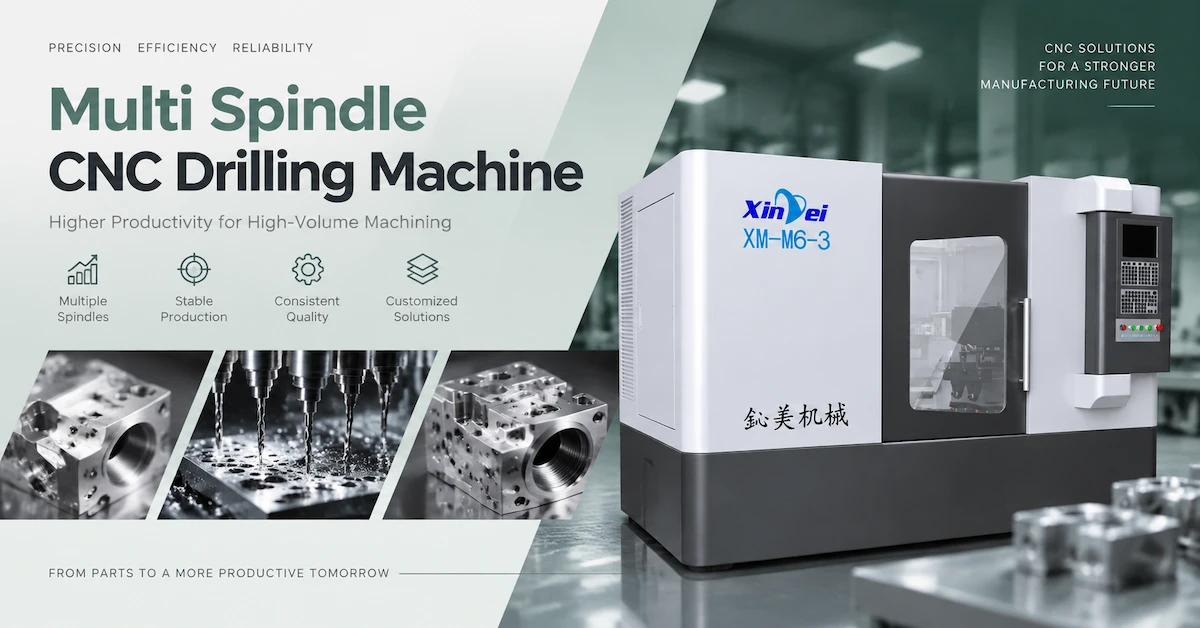
Xinmei’s current portfolio covers several equipment directions. Its CNC machining center range includes drilling and tapping machines, multi-spindle configurations, dual-spindle machining systems, and horizontal machining platforms. The special purpose machine range includes equipment developed around specific component families and multi-station processes. Its automation category extends machine capability into robot loading, multi-machine coordination, and production-line integration.
For purchasing teams, the first question should therefore be: Does this factory already build a machine architecture close to the process we need? A manufacturer that understands the operation sequence, workholding, and machining direction of your part is generally better positioned to discuss a practical solution than one that only matches a specification table.
Match the Machine Type to the Production Problem
The following table is a buyer-side comparison framework rather than a universal specification for all Xinmei machines.
| Equipment Direction | Main Production Need | Buyer Should Evaluate | Typical Risk if Selected Incorrectly |
|---|---|---|---|
| Vertical drilling and tapping machine | Repetitive drilling and threading | Hole pattern, tool access, fixture, cycle requirement | Buying excessive capacity for a simple process |
| Multi-spindle CNC machine | Parallel or distributed machining | Spindle task allocation and cycle balance | Assuming spindle count equals output multiplier |
| Dual-spindle machining center | Higher equipment utilization or parallel machining | Part size, simultaneous operations, tool requirements | Complex setup without enough production benefit |
| Special purpose CNC machine | Stable high-volume component family | Product lifecycle, fixture design, changeover | Low flexibility if products change frequently |
| Multi-station rotary machine | Sequential repetitive operations | Station balance and transfer logic | One slow station limiting complete line output |
| CNC + robot automation line | Reduced manual transfer between processes | Robot occupancy, interfaces, buffers and recovery | Automating an unstable machining process |
A reliable supplier should be willing to explain when a simpler configuration is sufficient. If every inquiry leads to the largest or most complex machine, buyers should investigate whether the proposal is driven by the process or only by selling price.
Check Whether the Factory Understands Your Workpiece
When buyers search for a CNC machine factory China, many start by asking for a catalog and price list. For custom or high-volume applications, the more useful first documents are the part drawing and existing production information.
Prepare the following:
- 2D or 3D drawing
- Material grade
- Casting, forging, extrusion, or other blank condition
- Critical dimensions and datums
- Required holes, threads, bores, and machined surfaces
- Current machining sequence
- Current number of setups
- Target production volume
- Number of shifts
- Existing cycle time
- Planned product variants
- Required automation level
- Available factory space
The supplier should be able to convert these inputs into a proposed machining sequence. If a machine is presented as a “one-setup solution,” ask exactly which features are completed in that setup and which operations remain outside the machine. This prevents marketing language from being mistaken for a process guarantee.
Why Workholding Should Be Reviewed Before the Purchase Order
Fixtures directly affect loading, positioning, cutting stability, repeatability, and changeover time. They are particularly important in special-purpose CNC equipment because the production concept often depends on machining several features while the part remains located against the same reference surfaces.
Xinmei’s technical resources discuss the relationship between fixtures, cutting tools, machining stability, and process planning through its How Xinmei Work section. Before approving a machine, buyers should request the proposed fixture concept and identify the locating points, clamping direction, support surfaces, chip-clearance areas, tool access, wear components, and changeover method.
For automation projects, the fixture must also cooperate with the robot or loading system. A fixture that works well with manual loading may create access problems when a gripper must insert the workpiece at a controlled angle. This is why workholding should be reviewed as part of the entire machine system rather than as an accessory added near the end of the project.
Review Machine Components by Actual Configuration
Component-brand recognition can be useful, but it should not replace configuration review. Xinmei’s Supply Chain page shows brands used within its broader manufacturing ecosystem, including suppliers for control systems, motion components, bearings, electrical equipment, and pneumatic elements.
Buyers should still request the configuration for the specific quoted machine. Important items may include:
- CNC controller
- Servo system
- Spindle configuration
- Linear guides or motion components
- Bearings
- Pneumatic or hydraulic components
- Electrical components
- Lubrication system
- Chip-removal system
- Cooling system
- Robot and gripper components where applicable
If the supplier allows equivalent substitutions, the technical agreement should define which changes require buyer approval. This is important for maintenance, spare-parts planning, and repeat orders.
How Should Buyers Audit CNC Machine Manufacturing Quality?
A factory audit should evaluate the process used to build and validate the machine, not only the appearance of the workshop. Xinmei outlines its inspection and verification approach on the Quality Assurance page. Buyers should use this information as a starting point and then request project-specific inspection requirements.
The inspection process should distinguish among incoming component checks, mechanical assembly, alignment, electrical installation, machine-function testing, trial machining, and final verification. If dimensional performance is important, clarify what is measured on the machine and what is measured on the finished workpiece.
Machine accuracy and part accuracy should not be treated as identical. Final component results can also depend on fixture rigidity, tool condition, cutting parameters, workpiece material, thermal behavior, and measurement method. For this reason, a purchase agreement should identify the dimensions or functions that will be verified using the buyer’s actual workpiece.
Use FAT to Verify the Machine Before Shipment
Factory Acceptance Testing, or FAT, is one of the most important stages when sourcing production equipment internationally. It allows the buyer and supplier to compare the completed machine against the agreed technical specification before shipment.
A useful FAT should define:
| FAT Item | What Should Be Agreed |
|---|---|
| Test workpiece | Drawing revision, material, and blank condition |
| Machine configuration | Final approved component and fixture configuration |
| Sample quantity | Number of parts or agreed production duration |
| Dimensional checks | Critical characteristics and measurement method |
| Cycle time | Clear start/end definition and included operations |
| Tooling | Tools used during the acceptance test |
| Machine functions | Loading, tool change, clamping, alarms and other agreed features |
| Automation | Robot loading, transfer, sensors and recovery where included |
| Documentation | Test records, configuration and unresolved-item list |
| Final approval | Acceptance, conditional acceptance, or corrective actions |
A short demonstration of one successful part is not the same as a production acceptance test. Buyers should agree beforehand how repeated output, stoppages, adjustments, and nonconforming parts are recorded.
Check Production Capability Without Confusing It With Delivery Lead Time
Production capability can refer to several different things, so buyers should define the term clearly. A machine’s production capability refers to the parts it can process under defined conditions. A factory’s manufacturing capacity refers to its ability to build machines. Project lead time refers to the engineering, procurement, assembly, testing, shipment, and commissioning schedule.
These three concepts should not be combined into a vague claim such as “high capacity and fast delivery.”
When requesting a quotation from a CNC machine factory China supplier, ask for a milestone schedule covering requirement confirmation, engineering approval, major component procurement, machine assembly, fixture completion, programming, trial machining, FAT, packing, shipment, installation, and commissioning where applicable. This approach makes potential delays easier to identify.
Evaluate Customization by Engineering Scope, Not by the Word OEM
Industrial CNC equipment is different from consumer products, so buyers should not interpret “OEM/ODM” as simply changing a logo or packaging. For CNC machinery, useful customization may involve machine layout, spindle arrangement, fixtures, tooling, workstations, robot interfaces, material handling, control logic, and production-line layout.
Xinmei’s special purpose machine solutions and automation solutions illustrate these project-oriented directions. The exact customization scope should still be confirmed for each project.
Before ordering, define who is responsible for:
- Machine design
- Fixture design
- Fixture manufacturing
- Cutting-tool selection
- CNC programming
- Robot programming
- Production-line controls
- Safety-related engineering
- Installation
- Operator training
- Maintenance training
- Future product changes
The term “turnkey” should not replace a detailed responsibility list.
How Should Buyers Compare CNC Factory Quotations?
Machine price alone is not enough. Two quotations that appear similar may include completely different project boundaries.
A proper comparison should normalize:
- Machine configuration
- Fixtures
- Initial tooling
- CNC controller
- Automation equipment
- Robot grippers
- Conveyors or feeding systems
- Inspection equipment
- Programming
- FAT
- Installation
- Training
- Documentation
- Spare parts
- Warranty scope
- On-site service
- Packaging and shipping responsibility
A low quotation may simply exclude expensive engineering or integration work. Conversely, a higher quotation is not automatically better. Buyers should compare the complete delivered scope against the production requirement.
Consider Automation Only After the Machining Process Is Stable
Xinmei supplies robot loading and unloading systems and CNC + robot integrated automation lines. These systems can reduce manual handling and coordinate multiple machining steps, but automation should solve an identified bottleneck.
If the machining process itself is unstable, automating loading will not solve tool-life problems, poor workholding, inconsistent blanks, or unbalanced stations. Buyers should first determine whether the main constraint is machining, handling, inspection, changeover, or production scheduling.
For an integrated line, ask what happens when one station stops. A practical design should define buffer strategy, part status, robot recovery, rejected-part handling, and manual intervention procedures. These details have a major influence on production stability.
Review Documentation and After-Sales Preparation Before Shipment
International machine sourcing becomes difficult when technical documentation is discussed only after the equipment arrives. Confirm the document package before the purchase order.
Depending on the machine and contract, buyers may need operating instructions, maintenance information, electrical documentation, parts lists, program backups, fixture information, lubrication schedules, acceptance records, and recommended spare parts. Xinmei maintains a User Manual resource area, but the actual documents included with a particular machine should be confirmed in the project agreement.
Also clarify remote-support procedures, service contacts, spare-parts ordering, warranty boundaries, and the responsibilities of the buyer’s maintenance team. For overseas equipment, clear documentation can be as important as the initial commissioning support.
What Should You Send Before Requesting a CNC Machine Quote?
A strong inquiry helps the supplier respond with engineering information instead of a generic catalog. If you are evaluating a CNC machine factory China supplier, send the following information where available:
- Part drawing
- Material
- Raw blank description
- Critical tolerances
- Required machining operations
- Current production method
- Current cycle time
- Target output
- Number of product variants
- Factory layout limitations
- Preferred CNC control if required
- Automation requirement
- Destination country
- Required delivery schedule
- Installation expectations
Buyers can review Xinmei’s equipment categories and then submit their application requirements through Contact Us. A technical inquiry based on real production information gives the manufacturer a much better basis for proposing equipment than a request for “your best CNC machine price.”
Frequently Asked Questions
1. What should I check first when choosing a CNC machine factory in China?
Start with process fit. Confirm whether the factory manufactures equipment relevant to your workpiece, material, machining operations, production volume, and automation requirements. Then review engineering capability, fixture knowledge, machine configuration, quality verification, FAT procedures, and service scope.
2. Is a CNC machine factory better than a trading company?
Not always. A direct factory relationship can be useful for custom engineering, special-purpose machinery, fixture development, and automation integration. A trading or distribution company may offer advantages in local service or multi-brand sourcing. The better option depends on project complexity and support requirements.
3. Can a China CNC machine factory customize a machine for my part?
Customization can be evaluated when the manufacturer receives sufficient application information. Provide the drawing, material, process, target output, and product variants. The supplier should identify whether the requirement can be met through a standard machine, modified platform, dedicated machine, or automated production system.
4. How do I verify CNC machine quality before shipment?
Use an agreed FAT. Define the test part, machine configuration, critical dimensions, measurement method, cycle definition, sample quantity or test duration, and pass/fail conditions before the machine is completed.
5. Should I focus on spindle speed when comparing CNC machines?
No. Spindle speed is only one parameter. Evaluate torque requirements, spindle configuration, structure, tooling, machine travel, fixture access, workpiece material, machining operations, and the required production cycle.
6. Are more spindles always better for mass production?
No. Multi-spindle systems can improve production when the operations are correctly distributed, but output depends on station balance, workpiece loading, machining time, and process design. Request a cycle analysis rather than using spindle count as a direct productivity multiplier.
7. Can I automate CNC machines after installation?
Potentially. Future automation is easier when loading access, control interfaces, fixture actuation, machine doors, part presentation, and safety-related requirements are considered during the original machine selection. If automation is likely, discuss it before ordering.
8. How should I compare prices from different CNC machine factories?
Compare the same technical scope. Check machine configuration, fixtures, tooling, automation, programming, FAT, training, documentation, spare parts, installation, and service. Do not compare only the base machine price.
9. What information affects CNC machine lead time?
Machine complexity, customization, major components, fixture development, automation, sample availability, engineering approval, testing requirements, and buyer feedback can all affect the project schedule. Request milestone-based planning instead of relying only on one delivery date.
10. What should I prepare before contacting Xinmei?
Prepare the workpiece drawing, material, blank condition, machining operations, critical dimensions, current process, target output, part variants, factory layout, and automation requirements. Submit these through Xinmei Contact Us so the engineering team can evaluate the appropriate machine configuration and project scope.
Conclusion
Selecting a CNC machine factory China supplier should be treated as an engineering and production decision rather than a simple price comparison. Global buyers should evaluate whether the factory understands the workpiece, can match the correct CNC architecture to the process, provides transparent component configuration, designs suitable fixtures, verifies machine quality, supports realistic FAT conditions, and clearly defines delivery, documentation, and after-sales responsibilities. Xinmei Intelligent offers CNC machining centers, special purpose machines, and automation solutions for different industrial production requirements. To evaluate a specific project, send your drawings, material information, machining requirements, target output, product variants, and automation expectations through Xinmei Contact Us so the equipment configuration and acceptance scope can be discussed before purchasing.