+86 13163919000
 info@xinmeiintelligent.com


Quick Answer: A CNC router machine is generally suitable for large-format sheet cutting, panel processing, engraving, and selected nonferrous metal machining applications. A CNC machining center is typically more appropriate for industrial metal components requiring controlled material removal, precision bores, threaded holes, deep pockets, and multiple machining orientations. The correct choice depends on workpiece geometry, material, workholding, dimensional requirements, and production volume.
Both machine types use computer-controlled cutting tools, but they are commonly designed for different manufacturing priorities.
For industrial buyers, understanding these differences before purchasing equipment can help avoid insufficient machining capability, unstable workholding, unnecessary investment, and production bottlenecks.
Key Engineering Takeaways
-
CNC routers are commonly designed around large working areas, high spindle speeds, and sheet-based processing.
-
Industrial machining centers generally prioritize controlled metal removal, structural rigidity, and multi-operation machining.
-
Aluminum machining is possible on suitable routers, but material compatibility does not guarantee finished-part accuracy.
-
Vacuum workholding is useful for flat sheets but may become less effective as individual components are separated.
-
Thick metal blanks, precision bores, and repeated drilling and tapping often justify evaluating dedicated machining equipment.
-
Equipment selection should consider complete manufacturing costs rather than purchase price alone.
Table of Contents
-
What Is a CNC Router Machine?
-
CNC Router vs. CNC Machining Center
-
Material Compatibility
-
Aluminum Sheet vs. Solid Aluminum Machining
-
Vacuum Workholding and Mechanical Fixtures
-
Technical Specifications to Compare
-
Common Machining Problems
-
Production Capacity and Manufacturing Costs
-
Quality Inspection and Machine Safety
-
Industrial CNC Equipment Selection
-
Equipment RFQ Checklist
-
Frequently Asked Questions
-
Conclusion
1. What Is a CNC Router Machine?
A CNC router machine is a computer-controlled cutting machine that uses a rotating tool to remove material along programmed paths.
Many industrial routers use a gantry-style structure, allowing the spindle to move across a relatively large working table.
This configuration is particularly useful for processing flat materials and arranging multiple components within a single sheet.
Common CNC Router Applications
Typical applications include:
-
Furniture panels and wood-based materials.
-
Acrylic and plastic components.
-
Advertising signs and decorative panels.
-
Aluminum sheets and selected nonferrous metal components.
-
Composite panels.
-
Engraving and shallow pocket machining.
Industrial routers may include automatic tool changing, vacuum tables, material-loading systems, and additional machining axes.
However, these features vary significantly between machine models.
Is a CNC Router a CNC Milling Machine?
A CNC router performs milling-type material removal using rotating cutting tools. However, the term generally describes a machine architecture and application category rather than every CNC milling machine.
Industrial CNC machining centers are commonly designed around different structural, tooling, and workholding requirements.
Understanding this distinction is essential when selecting equipment for production metal components.
2. CNC Router vs. CNC Machining Center: What Are the Main Differences?
The main differences involve machine construction, working area, spindle characteristics, workholding, and intended production applications.
A router may be highly efficient for processing large aluminum panels, while a machining center may provide a more suitable platform for machining a compact valve housing with several precision features.
CNC Equipment Comparison
| Selection factor | CNC router machine | Industrial CNC machining center |
|---|---|---|
| Typical structure | Gantry-style configuration | Vertical, horizontal, or other rigid machine architecture |
| Primary application | Sheet and panel processing | Precision industrial components |
| Workpiece geometry | Mainly flat or relatively shallow parts | Blocks, housings, castings, complex components |
| Spindle characteristics | Often optimized for higher speeds | Speed and torque selected for metal-cutting requirements |
| Workholding | Vacuum tables or mechanical clamps | Vises, dedicated fixtures, pallets |
| Cutting operations | Profiling, engraving, pockets, drilling | Milling, drilling, tapping, boring |
| Material removal | Often lighter cutting engagement | Suitable for broader metal-removal requirements |
| Working area | Commonly large relative to part thickness | Defined by machine travel and workpiece envelope |
| Multi-face machining | Depends on machine axes and configuration | Multiple configurations available |
| Production focus | Sheet utilization and nesting efficiency | Component consistency and integrated operations |
These differences are general engineering tendencies, not universal specifications. Heavy-duty metal-cutting routers and large-format gantry machining centers may have overlapping capabilities.
Which Machine Offers Better Accuracy?
Neither machine category guarantees better accuracy in every application.
Finished-part accuracy depends on machine geometry, cutting forces, workholding, tooling, thermal behavior, and inspection methods.
The correct comparison should use actual workpieces rather than catalogue positioning figures alone.
3. What Materials Can a CNC Router Machine Process?
Material compatibility is an important starting point, but buyers must also evaluate the machining operation and expected production conditions.
CNC Material Compatibility Matrix
| Material | Typical router applications | Equipment consideration |
|---|---|---|
| MDF and plywood | Panel cutting and nesting | Conventional industrial woodworking router |
| Acrylic | Profiles, signage, decorative parts | Suitable router with controlled cutting conditions |
| Engineering plastics | Profiles, slots, shallow pockets | Router or machining center depending on geometry |
| Aluminum sheet | Panel profiles and cutouts | Metal-capable industrial router |
| Aluminum billet | Deep pockets and precision components | Evaluate an industrial machining center |
| Brass | Selected engraving and light machining | Evaluate cutting load and required features |
| Carbon steel | Industrial precision components | Generally requires suitable metal-cutting equipment |
| Stainless steel | Valve bodies, fittings, mechanical parts | Evaluate machine rigidity and sustained cutting capability |
A machine advertised as capable of processing aluminum should not automatically be assumed capable of every aluminum machining operation.
Cutting a thin aluminum panel creates very different requirements from removing substantial material from an aluminum casting.
Similarly, engraving a brass plate is not equivalent to machining a brass valve body with intersecting holes and internal threads.
4. Aluminum Sheet Cutting vs. Solid Aluminum Machining
Aluminum is one of the materials that creates the greatest overlap between CNC routers and industrial machining centers.
However, the form of the material often determines which equipment is more appropriate.
When Is a CNC Router Suitable for Aluminum?
An appropriately configured router may be a practical choice for:
-
Flat aluminum panels.
-
Equipment covers.
-
Decorative metal plates.
-
Large-format sheet profiles.
-
Shallow recesses.
-
Selected thin-walled sheet components.
The main manufacturing objective is frequently to produce several parts from one sheet while minimizing material waste and handling.
When Should Buyers Consider a Machining Center?
Industrial machining centers become more relevant when aluminum components require:
-
Deep pockets.
-
Precision bearing bores.
-
Threaded mounting holes.
-
Multiple machined faces.
-
Substantial stock removal.
-
Accurate relationships between intersecting features.
-
Repeatable production from cast or forged blanks.
For example, an aluminum equipment enclosure with a simple rectangular outline may suit a router.
A cast aluminum automotive housing with precision bores and side-facing mounting features may require a substantially different machine configuration.
Workpiece-Based Selection Guide
| Component | Main machining requirement | Equipment direction |
|---|---|---|
| Flat aluminum cover | Profile cutting and cutouts | Industrial CNC router |
| Aluminum mounting plate | Flat profiling and precision holes | Router or machining center |
| Aluminum valve housing | Bores, pockets, multiple holes | CNC machining center |
| Automotive steering component | Multi-directional precision machining | Dedicated machining center |
| Brass faucet body | Drilling, tapping, internal features | Multi-spindle CNC equipment |
| Door closer housing | Repeated precision operations | Special-purpose CNC machine |
The final decision must consider the component drawing, tolerances, material grade, and required output.
5. Vacuum Workholding vs. Mechanical Fixtures
Workholding is one of the most important practical differences between sheet-based routing and industrial component machining.
How Does CNC Router Vacuum Workholding Work?
Vacuum tables create a pressure difference that presses a workpiece against the supporting surface.
For large, relatively flat sheets, this arrangement can reduce the need for individual mechanical clamps.
However, effective holding force depends on the sealed area, available pressure difference, leakage, and workpiece condition.
A simplified relationship is:
Theoretical holding force = Pressure difference × Effective sealed area
Actual resistance to sliding and lifting also depends on friction, cutting loads, sealing conditions, and the position of the cutting tool.
Why Can Small Routed Parts Become Unstable?
As a sheet is divided into smaller components, the effective holding area of each part decreases.
Through-cutting can also create additional leakage paths.
This means a sheet may be securely held at the beginning of machining while individual finished components become less stable near the end.
The supplier should demonstrate a suitable workholding and cutting strategy throughout the complete machining cycle.
Why Are Dedicated Fixtures Used for Industrial Metal Parts?
Components such as valve bodies, industrial connectors, and cast housings often have irregular surfaces and several machining directions.
Dedicated fixtures establish defined locating references, provide mechanical support, and maintain access to required features.
For repeated production, fixture design also influences loading time and dimensional consistency.
Learn more about these principles in XINMEI's CNC Fixtures and Workholding Guide.
6. Which CNC Router Machine Specifications Should Buyers Compare?
Spindle speed, working-table dimensions, and purchase price are important, but they do not provide a complete picture of machining capability.
Technical Specification Checklist
| Technical specification | What buyers should evaluate |
|---|---|
| X, Y, and Z travel | Actual workpiece size and tool accessibility |
| Working-table dimensions | Sheet size, fixtures, and usable machining area |
| Gantry clearance | Maximum workpiece and fixture height |
| Spindle speed range | Compatibility with material and cutting tools |
| Spindle torque and power | Capability under actual cutting loads |
| Machine rigidity | Stability during required machining operations |
| Workholding system | Vacuum performance or mechanical fixture compatibility |
| Tool-changing system | Required number of machining operations |
| Chip and dust management | Suitability for the material and process |
| Positioning and repeatability | Verified performance under agreed test conditions |
| CNC control system | Programming, operation, and integration requirements |
| Safety configuration | Guarding, protective functions, and installation conditions |
Why Is Maximum Spindle Speed Insufficient?
Two machines may have similar maximum spindle speeds while offering very different torque characteristics.
High rotational speed can be useful when machining with small-diameter tools, but larger tools and more demanding cutting operations may require greater available torque.
Buyers should request the spindle's relevant operating characteristics and evaluate them against the intended process.
Why Does Z-Axis Clearance Matter?
A router may have a large working area but limited usable height when a workpiece, fixture, tool holder, and cutting tool are installed.
For deep housings or bulky castings, advertised table dimensions alone can therefore be misleading.
Always review the complete machining envelope.
7. Common CNC Router Machining Problems and Their Causes
When a machine is poorly matched to the application, quality problems can appear even with accurate programming.
Troubleshooting Matrix
| Machining problem | Possible cause | Evaluation direction |
|---|---|---|
| Aluminum burrs | Unsuitable tooling or cutting conditions | Review cutter and process selection |
| Workpiece movement | Insufficient effective holding force | Verify workholding throughout the cycle |
| Uneven pocket depth | Sheet distortion or locating errors | Inspect support and reference surfaces |
| Poor edge quality | Tool wear, vibration, or chip recutting | Review tool condition and chip management |
| Inaccurate holes | Part movement or machining-system variation | Verify fixture and dimensional performance |
| Tool breakage | Excessive engagement or chip accumulation | Assess cutting load and evacuation |
| Inconsistent batch results | Uncontrolled material or setup variation | Review production and inspection procedures |
When Is a Machine Upgrade Necessary?
Not every machining problem requires new equipment.
Tooling improvements, better fixtures, suitable programming, or maintenance may resolve the issue.
However, equipment replacement becomes worth evaluating when the existing machine repeatedly fails to meet structural, spindle-load, tool-access, or process-integration requirements.
8. How Do CNC Routers and Machining Centers Affect Production Costs?
CNC routers and machining centers often create economic value in different ways.
A router may improve sheet utilization through nesting, while a machining center may reduce the number of separate operations required to produce a finished component.
Sheet Utilization and Nesting Efficiency
Nesting arranges multiple components within available sheet material.
The objective is not simply to fit the greatest number of parts on one sheet. The layout must also maintain suitable spacing, workholding, cutting access, and finished-part quality.
Consider two hypothetical aluminum sheet-processing plans.
| Production factor | Layout A | Layout B |
|---|---|---|
| Sheet material cost | $90 | $90 |
| Planned components | 24 | 26 |
| Accepted components | 23 | 23 |
| Processing time | 25 minutes | 30 minutes |
| Assumed processing cost | $25 | $30 |
| Total stated cost | $115 | $120 |
| Cost per accepted component | $5.00 | $5.22 |
These illustrative figures assume a processing cost of $60 per hour and exclude other expenses.
Although Layout B contains more planned components, it does not produce more accepted parts under these assumptions.
The example demonstrates why manufacturing decisions should consider usable output rather than theoretical sheet utilization alone.
Cost Factors for Industrial Metal Components
For complex components, buyers should evaluate:
-
Machine investment.
-
Fixtures and cutting tools.
-
Loading and unloading time.
-
Number of machining setups.
-
Secondary drilling and tapping operations.
-
Inspection and rework.
-
Material waste.
-
Maintenance and consumables.
The most useful comparison is the total relevant manufacturing cost divided by the number of accepted finished components.
What About Equipment Delivery Times?
Machine delivery schedules depend on the selected configuration, fixture engineering, component availability, manufacturing workload, and acceptance testing.
For customized CNC equipment, request a quotation that identifies design approval, machine assembly, sample machining, factory acceptance, and shipment milestones.
Do not assume that a standard machine and a customized production system have equivalent delivery schedules.
9. How to Verify Machine Accuracy, Quality and Safety
A CNC router machine should be evaluated using representative sheets and components.
An industrial machining center should also be tested against the actual features and machining loads required for production.
Recommended Equipment Acceptance Checklist
| Inspection item | Buyer verification |
|---|---|
| Working area | Required sheet or component fits safely |
| Workholding | Stable location and support throughout machining |
| Machine positioning | Agreed positioning and repeatability measurements |
| Test component | Representative production geometry |
| Finished dimensions | Results against approved drawings |
| Surface quality | Applicable texture and visual requirements |
| Hole and thread quality | Drawing-based inspection |
| Complete cycle time | Actual production timing |
| Batch consistency | Repeated machining under agreed conditions |
| Safety functions | Relevant protective measures and operating controls |
For machining centers within its scope, ISO 10791-7:2020 provides standardized methods for assessing cutting accuracy using finished test pieces.
Such testing should complement, rather than replace, trials involving the customer's actual production components.
Why Does Material-Specific Safety Matter?
Woodworking and metal machining can generate different types of dust, chips, and residues.
According to OSHA's combustible dust guidance, fine aluminum particles and wood dust can present fire or explosion hazards under certain conditions.
Factories should therefore evaluate material-specific extraction and collection systems, machine guarding, cleaning procedures, and applicable safety requirements.
A conventional woodworking dust collection system should not be assumed suitable for metal dust without an appropriate engineering and safety assessment.
Supplier Quality Verification
XINMEI's published Quality Assurance information describes its approach to component inspection, assembly control, and equipment verification.
Buyers should request machine-specific inspection records, applicable conformity documentation, and agreed acceptance procedures rather than relying on general promotional statements.
10. Which Industrial CNC Equipment Should Manufacturers Consider?
When production requirements extend beyond conventional sheet routing, specialized machining equipment may offer a better technical fit.
XINMEI Intelligent manufactures industrial CNC machining equipment and automated production systems for applicable metal-component manufacturing requirements.
Its published portfolio focuses on industrial machining centers, drilling and tapping equipment, special-purpose machines, and production automation.
XINMEI Industrial Equipment Comparison
| Equipment | Main application to evaluate | Suitable production requirement |
|---|---|---|
| Vertical drilling and tapping machine | Precision hole and thread machining | Parts with accessible machining features |
| Horizontal six-spindle drilling and tapping machine | Coordinated multi-spindle processing | Repeat components requiring multiple drilling and tapping operations |
| Flexible high-speed horizontal machining center | Integrated machining operations | Complex metal components and batch production |
| Special-purpose CNC machines | Application-specific machining | Stable component families with repeated operations |
Horizontal Six-Spindle Drilling and Tapping Machine
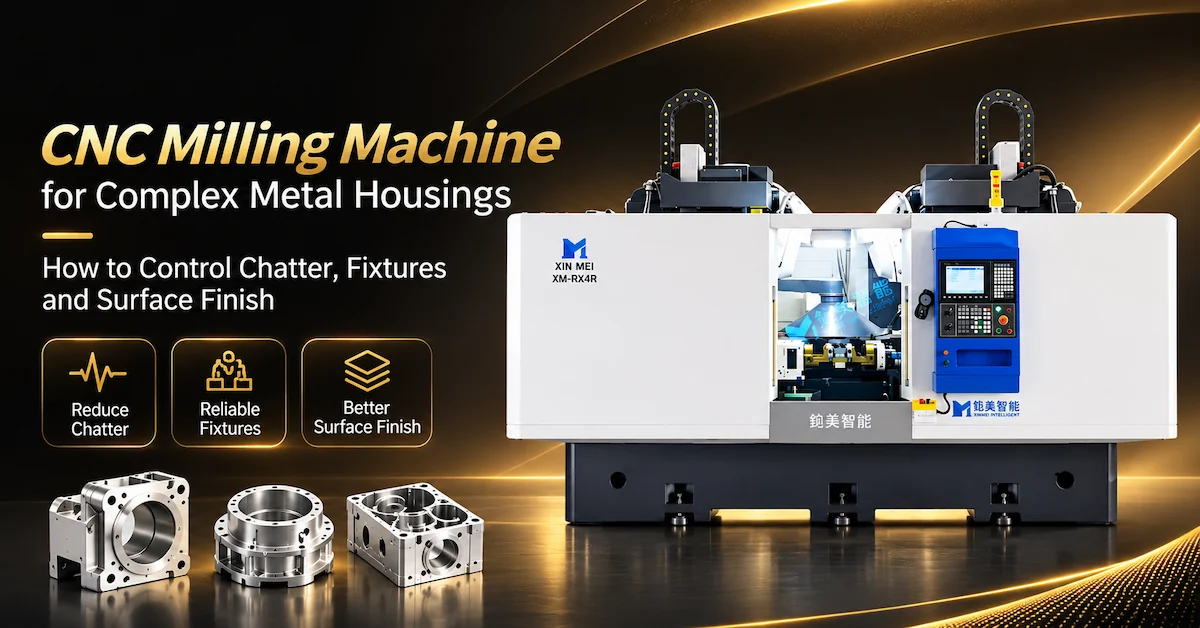
XINMEI's CNC Horizontal Lifting Six-Spindle Drilling and Tapping Machine Tool is relevant for manufacturing applications involving repeated drilling and threading requirements.
For manufacturers producing industrial fittings, valve-related components, and other suitable metal parts, this equipment is worth evaluating when machining sequence and repetitive operations become important production considerations.
Flexible High-Speed Horizontal Machining Center
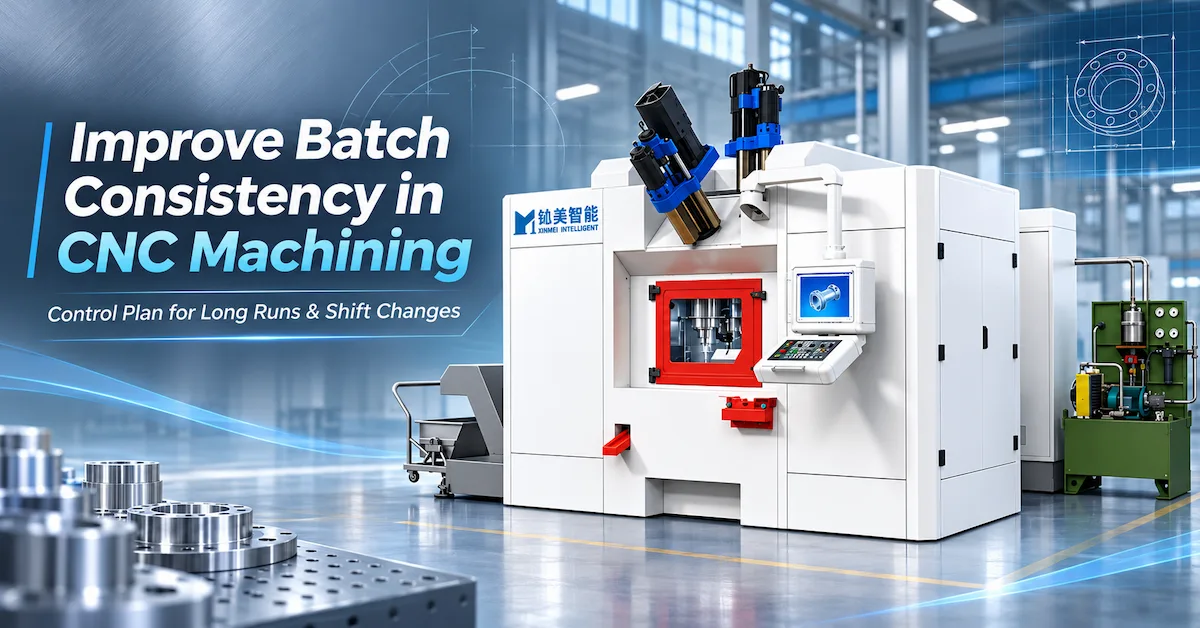
XINMEI's Flexible High-Speed Horizontal Machining Center combines multiple coordinated CNC machining units within an integrated system.
It is relevant to factories evaluating complex component machining and scalable batch production.
The proposed configuration should be established according to the actual workpiece, machining directions, tooling, fixture design, and production targets.
Who Should Choose XINMEI Equipment?
XINMEI equipment is relevant to manufacturers producing industrial metal components, including:
-
Automotive and motorcycle components.
-
Valve bodies and fluid-control components.
-
Bathroom hardware and brass fittings.
-
Door closer and floor spring components.
-
Industrial connectors and bearing housings.
For buyers focused exclusively on woodworking, decorative engraving, signage, or conventional sheet nesting, a dedicated router supplier may be more appropriate.
Explore XINMEI CNC Machining Centers and Special Purpose Machines for industrial equipment alternatives.
11. How to Prepare an RFQ for CNC Equipment Selection
A detailed request for quotation helps determine whether a CNC router, conventional machining center, or customized production machine is appropriate.
CNC Equipment RFQ Checklist
| Required information | Details to provide |
|---|---|
| Workpiece drawing | 2D drawings and available 3D models |
| Material | Exact grade, alloy, and blank condition |
| Workpiece dimensions | Length, width, height, and weight |
| Machining features | Profiles, pockets, bores, holes, threads |
| Tolerance requirements | Critical dimensions and datum relationships |
| Surface requirements | Drawing-defined finish and appearance |
| Production volume | Monthly and annual quantities |
| Current process | Existing machines and manufacturing sequence |
| Production problems | Scrap, rework, manual handling, or capacity |
| Automation requirements | Loading, unloading, and integration |
| Acceptance criteria | Sample machining and inspection requirements |
| Destination market | Installation conditions and applicable compliance needs |
For industrial metal components, providing complete drawings is particularly important.
The machine manufacturer can then evaluate whether a standard configuration or application-specific fixture, spindle arrangement, and machining sequence should be considered.
Unsure whether a conventional CNC router can meet your metal-component production requirements?
Contact XINMEI for an Application-Specific CNC Equipment Review
Frequently Asked Questions About CNC Router Machines
1. What is a CNC router machine used for?
A CNC router is commonly used for cutting, profiling, engraving, and pocket machining in wood, plastics, composites, aluminum sheets, and other suitable materials.
2. Can a CNC router machine cut aluminum?
Yes. Appropriately configured industrial routers can machine aluminum. Suitability depends on material grade, cutting requirements, spindle capability, machine rigidity, and workholding.
3. Can a CNC router cut steel?
Some specially engineered machines can perform selected steel-machining operations. Conventional routers designed for wood and light nonferrous materials should not be assumed suitable for steel production.
4. What is the difference between a CNC router and a CNC mill?
Routers commonly emphasize large-format and sheet-based machining, while industrial CNC mills and machining centers generally support broader metal-cutting and precision component requirements.
5. Is a CNC router less expensive than a machining center?
Not necessarily. Purchase price varies with machine size, structural design, spindle configuration, tooling, automation, and required machining capability.
6. Can a CNC router produce precision metal parts?
A suitable router can produce metal parts meeting defined tolerances under appropriate machining conditions. More demanding geometries, cutting loads, or multi-face operations may require an industrial machining center.
7. Why do CNC routers use vacuum tables?
Vacuum tables provide distributed workholding for relatively flat sheets. Their effectiveness depends on pressure difference, sealed area, leakage, and machining loads.
8. Can a CNC router replace a drilling and tapping machine?
Some routers support drilling and threading operations when properly configured. Dedicated drilling and tapping equipment may be more suitable for repetitive industrial components requiring controlled hole and thread quality.
9. Which machine is better for high-volume aluminum production?
For flat sheet components, an industrial router may offer suitable nesting efficiency. For complex aluminum housings, castings, and multi-operation components, machining centers or dedicated CNC equipment may be more appropriate.
10. Does XINMEI manufacture conventional CNC routers?
XINMEI's published equipment portfolio focuses on industrial CNC machining centers, multi-spindle equipment, special-purpose machines, and automation systems. Buyers requiring industrial metal-component machining can contact XINMEI to evaluate suitable equipment alternatives.
Conclusion
Choosing a CNC router machine or an industrial CNC machining center requires a clear understanding of the workpiece and manufacturing process.
Routers are often suitable for sheet-based production, profiling, engraving, and selected aluminum applications. Machining centers and dedicated industrial CNC equipment become increasingly relevant when components require substantial material removal, precision holes, threaded features, multiple machining faces, and stable repeat production.
Machine selection should therefore begin with material, geometry, tolerances, workholding, and required production output rather than equipment terminology or maximum spindle speed.
XINMEI Intelligent provides industrial CNC machining centers, special-purpose machines, and automated manufacturing solutions for applicable metal-component production.
If your factory is evaluating equipment for aluminum housings, valve bodies, automotive components, or other precision metal parts, contact XINMEI with your drawings and production requirements to discuss an appropriate CNC machining solution.