+86 13163919000
 info@xinmeiintelligent.com

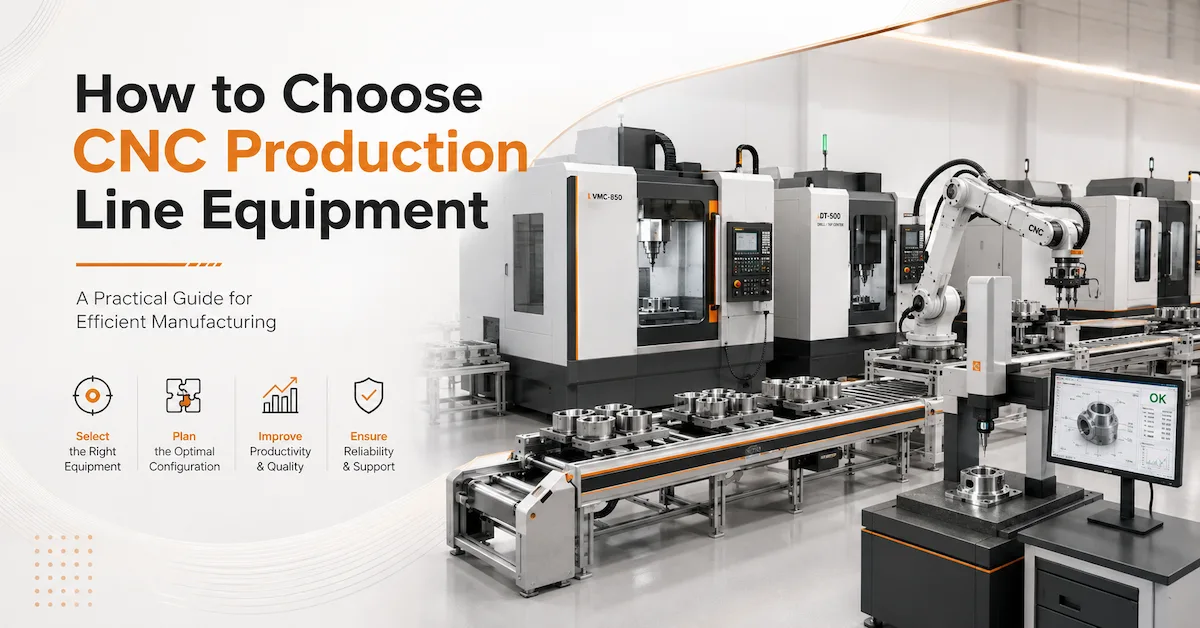
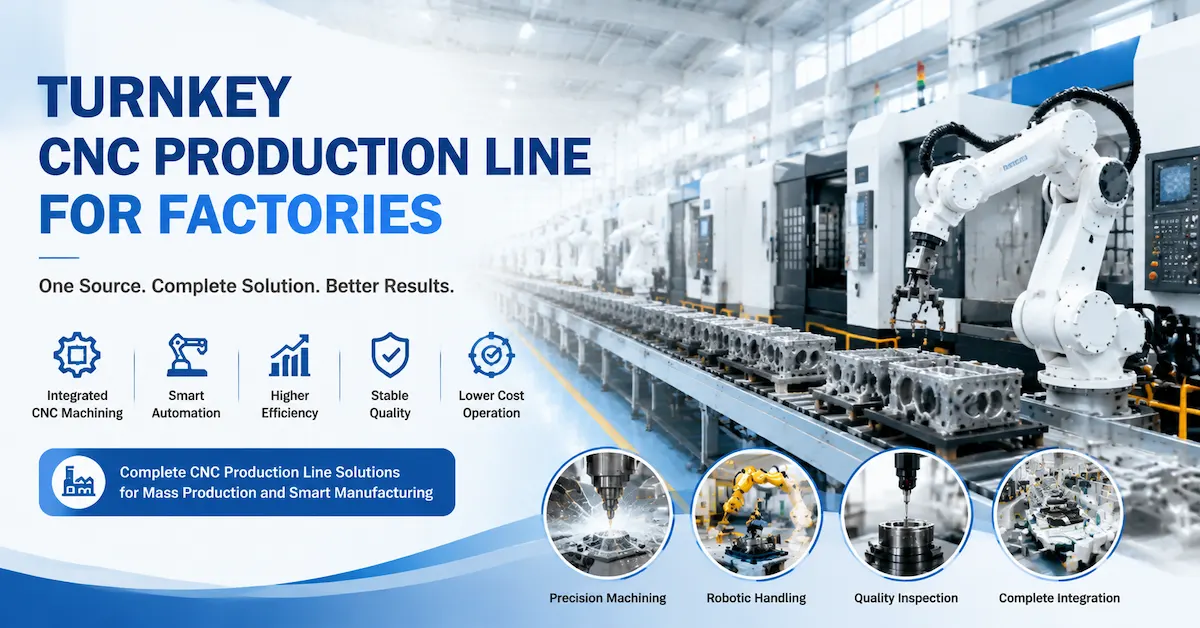
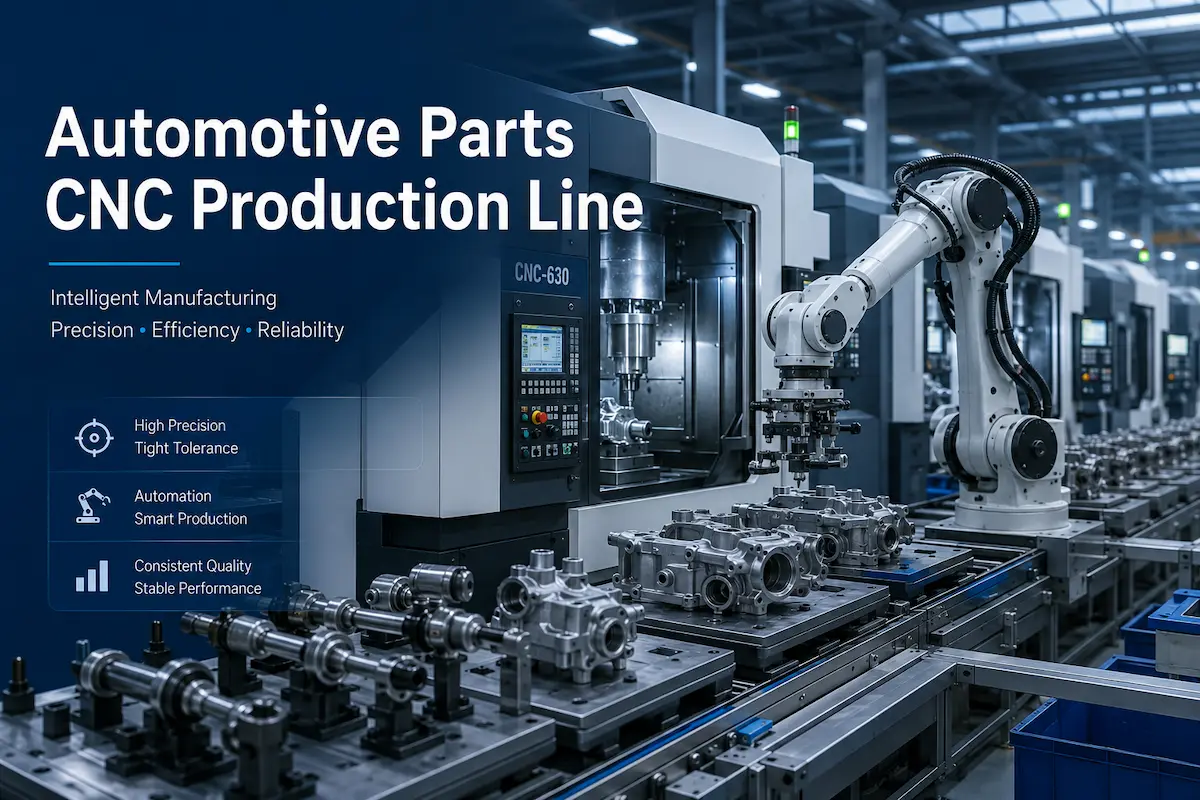
An automotive parts CNC production line is designed for factories that need more than individual CNC machines. It connects machining equipment, fixtures, robotic handling, inspection, material transfer, and production control into one coordinated manufacturing system.
This matters because automotive components are rarely judged by one successful sample. Manufacturers need every production batch to maintain consistent dimensions, hole positions, surface quality, thread accuracy, and assembly performance.
When production volume rises, disconnected machines and manual handling can create bottlenecks. Parts wait between processes, operators load components differently, cycle times vary, and quality problems may not be discovered until later stages.
A properly planned automotive CNC production line helps manufacturers create a more stable production rhythm while reducing unnecessary handling and labor dependency.
Xinmei Intelligent provides CNC equipment and intelligent production line solutions for manufacturers that need stable, high-efficiency metal parts production. Buyers can review relevant machines and automation equipment through the Xinmei products page.
Quick Answer: What Is an Automotive Parts CNC Production Line?
An automotive parts CNC production line is an integrated machining system used to manufacture repeatable automotive and motorcycle components.
Depending on the workpiece, the line may include:
- CNC drilling and tapping machines
- Horizontal or vertical machining centers
- Special-purpose CNC machines
- Multi-spindle machining equipment
- Robotic loading and unloading
- Automatic fixtures and clamping systems
- Conveyors, trays, or pallet transfer
- Cleaning and deburring stations
- Dimensional inspection
- Marking or traceability systems
The goal is not simply to add more machines. The goal is to connect each operation so that workpieces move through production with fewer delays, fewer positioning changes, and better process control.
Why Automotive Parts Manufacturing Needs an Integrated CNC Line
Automotive parts are often produced in medium or large quantities, and many components require several machining operations before assembly.
A steering component, brake pump housing, cylinder head, connector, ball joint, or shift fork may require a combination of:
- Drilling
- Tapping
- Milling
- Boring
- Turning
- Chamfering
- Deburring
- Surface preparation
- Dimensional inspection
If each process is completed separately, the factory may need repeated loading, clamping, transportation, and inspection. Every additional transfer creates another opportunity for delay or positioning variation.
An automotive parts CNC production line can reduce these interruptions by integrating compatible processes and arranging machines around the actual production sequence.
The result is a manufacturing system that is easier to measure, manage, and scale.
Common Problems the Production Line Should Solve
Factories should not invest in automation only because it appears advanced. The project should target measurable production problems.
Typical problems include:
- CNC machines waiting for operators
- Inconsistent loading and clamping
- Too many workpiece transfers
- Long cycle time between processes
- Dimensional variation between batches
- High labor demand during night shifts
- Production bottlenecks at drilling or tapping stations
- Delayed detection of defective parts
- Difficulty increasing output without adding workers
- Poor traceability between machining stages
A capable supplier should identify which problems come from the machine, fixture, process sequence, material handling, or quality control system.
This analysis should happen before the final production line layout is confirmed.
Automotive Components Suitable for CNC Production Lines
Automotive CNC production lines can be designed for many repeatable metal components.
| Component Type | Common CNC Processes | Main Production Priority |
|---|---|---|
| Steering components | Milling, drilling, boring, tapping | Dimensional consistency and bore alignment |
| Brake pump housings | Drilling, tapping, internal hole machining | Accurate fluid passages and thread quality |
| Cylinder heads | Milling, drilling, boring | Multi-surface accuracy and stable clamping |
| Shock absorber components | Turning, drilling, milling | Repeatability and surface consistency |
| Air-conditioning connectors | Drilling, turning, tapping | Sealing-related dimensions and clean threads |
| Ball joints | Turning, drilling, finishing | Controlled geometry and batch consistency |
| Transmission shift forks | Milling, drilling, boring | Position accuracy and stable fixture support |
| Automotive valve bodies | Drilling, milling, boring, tapping | Internal passages and multi-face machining |
The machine configuration should be based on the exact workpiece rather than a general automotive label.
Two parts from the same vehicle system may require completely different fixtures, spindle configurations, and automation methods.
How to Plan the Right Production Line
Start with the Workpiece and Output Target
The supplier should first review:
- Product drawings
- Physical samples
- Material
- Critical tolerances
- Machining surfaces
- Hole and thread specifications
- Current production volume
- Target cycle time
- Expected future capacity
- Existing quality problems
Without this information, it is difficult to determine whether the project needs one automated CNC cell or a complete multi-machine production line.
Map the Complete Machining Process
The full process should be divided into logical stages.
For example:
- Raw part loading
- Initial locating and clamping
- Rough machining
- Drilling and tapping
- Precision milling or boring
- Deburring or cleaning
- Dimensional inspection
- Finished part unloading
This process map reveals where the current bottlenecks occur and which operations can be combined.
Match Automation to Machining Time
Robot speed alone does not determine production efficiency.
If machining takes several minutes but robotic loading takes only a few seconds, the robot may be able to serve more than one machine. If the cycle is short, a dedicated loading system may be more appropriate.
The supplier should balance:
- Machine cycle time
- Robot movement time
- Fixture clamping time
- Inspection time
- Material replenishment
- Operator intervention
A well-balanced line avoids both machine waiting and unnecessary automation investment.
Key Equipment in an Automotive CNC Production Line
CNC Machining Centers
Machining centers perform drilling, milling, tapping, boring, and multi-face processing. Horizontal machining centers are particularly useful for components requiring several side operations, while vertical equipment may suit top-face processing and smaller workpieces.
Special-Purpose CNC Machines
A special-purpose machine is designed around a specific component and production process. It can reduce unnecessary machine functions and improve efficiency for stable, repeatable products.
Robotic Loading and Unloading
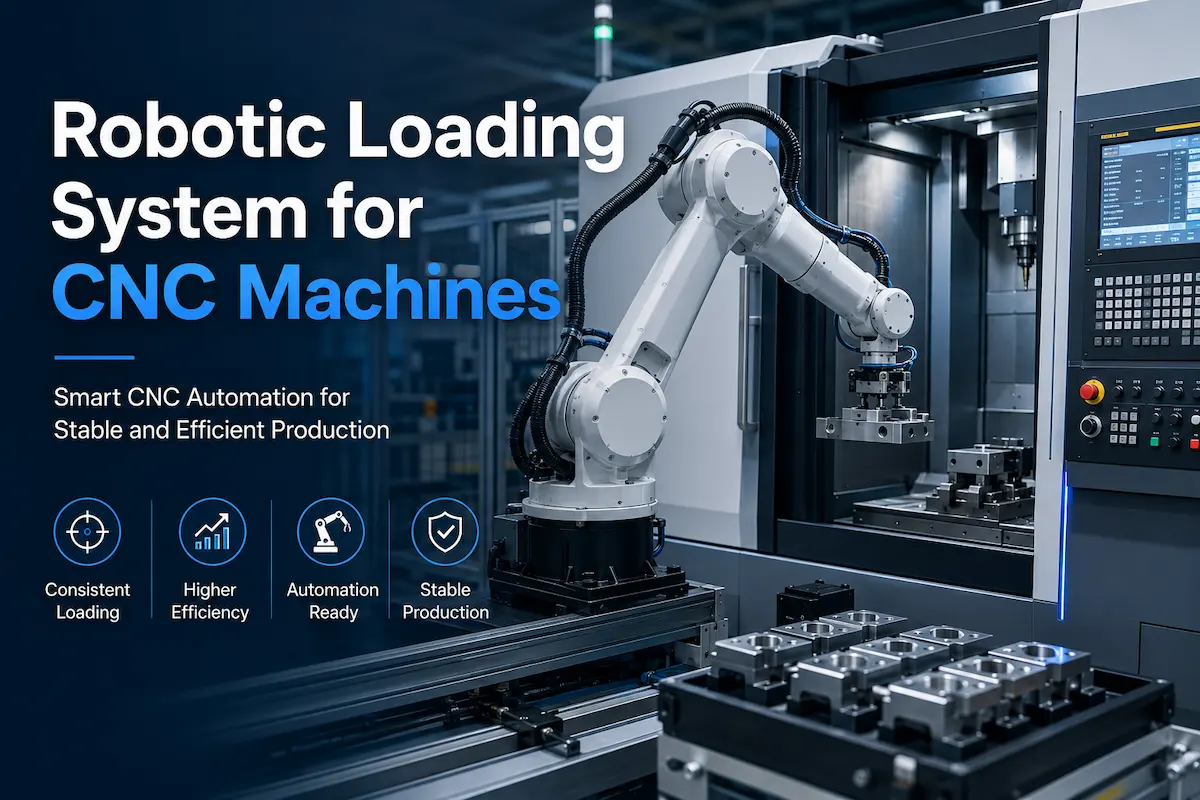
Robotic machine tending helps standardize part transfer and reduce manual loading differences. It is especially useful for long production shifts and repeatable automotive components.
Fixtures and Workholding
Fixtures determine whether the workpiece returns to the correct position during every cycle. A rigid and well-designed fixture can improve repeatability, shorten loading time, and reduce deformation.
Inspection Stations
Inspection may be completed offline, between machining stages, or inside the production line. The correct approach depends on the critical dimensions and risk of producing additional defective parts.
Single CNC Cell vs Complete Production Line
Not every automotive factory needs a full production line immediately.
| Production Option | Best Application | Main Advantage | Main Limitation |
| Standalone CNC machine | Small batches and changing products | Flexible and lower initial investment | Higher manual handling |
| Automated CNC cell | Stable part with one or two key processes | Reduced labor and consistent loading | Limited process integration |
| Multi-machine CNC line | Repeatable medium-to-high-volume parts | Better flow and process coordination | Requires detailed engineering |
| Complete intelligent line | Long-term mass production | Strong automation, traceability, and scalability | Higher planning and investment requirements |
A phased approach may be more suitable for some factories. The manufacturer can begin with an automated machining cell and add inspection, transfer, or additional equipment as volume grows.
What Buyers Should Check When Comparing Suppliers
The quality of an automotive production line depends heavily on the supplier’s system integration ability.
| Supplier Evaluation Point | Why It Matters | Buyer Question |
| Automotive part experience | Helps identify real process risks | Have you handled similar components? |
| Process engineering | Determines line efficiency | How will you arrange the machining sequence? |
| Fixture capability | Affects repeatability and loading | Will fixtures be designed around our workpiece? |
| Machine integration | Prevents disconnected equipment | How will machines and robots communicate? |
| Cycle time analysis | Supports realistic output planning | What is the estimated takt time? |
| Quality control plan | Reduces batch defect risk | Where will critical dimensions be checked? |
| Changeover strategy | Supports multiple models | How long does product changeover take? |
| Installation support | Affects project startup | Do you provide commissioning and training? |
| After-sales service | Protects long-term uptime | How are faults and spare parts handled? |
A supplier who provides only machine specifications may not be enough for a complete production line project.
The buyer needs an engineering partner who can explain how every part of the system works together.
Quality Control in Automotive CNC Production
Automotive machining quality should be controlled throughout the production process, not only after the batch is complete.
Important control points may include:
- Incoming blank inspection
- Fixture positioning confirmation
- Tool condition monitoring
- First-piece inspection
- In-process dimensional checks
- Thread and hole verification
- Surface and burr inspection
- Final dimensional inspection
- Part identification and traceability
The appropriate inspection method depends on the component and customer requirement.
The main objective is to detect process drift early before it affects a large batch.
How Automation Improves Production Consistency
Automation does not automatically create accuracy. Accuracy still depends on machine condition, tooling, fixtures, programming, and process control.
However, automation can reduce several common sources of variation:
- Different loading methods between operators
- Inconsistent workpiece orientation
- Uncontrolled waiting time
- Manual transfer errors
- Uneven production rhythm
- Late detection of equipment interruption
When these sources are controlled, production becomes more predictable.
This allows production managers to compare expected output with actual performance and identify problems faster.
Why Xinmei Intelligent Is Suitable for Automotive CNC Projects
Xinmei Intelligent focuses on CNC machines and intelligent production line solutions for stable industrial manufacturing.
For automotive parts projects, Xinmei can support:
- Drawing and sample evaluation
- Machining process planning
- CNC equipment selection
- Special-purpose machine development
- Fixture and tooling discussion
- Robotic loading and unloading
- Production line layout
- Inspection process planning
- Installation and commissioning
- Operator and maintenance training
The company’s product direction includes CNC drilling, tapping, milling, horizontal machining, robotic handling, and intelligent production line integration.
Buyers can learn more about Xinmei’s manufacturing capability through the About Us page.
Information to Prepare Before Requesting a Quotation
To receive a useful technical proposal, prepare:
- 2D or 3D part drawings
- Product samples
- Workpiece material
- Blank condition
- Critical dimensions and tolerances
- Required machining operations
- Current cycle time
- Target output per shift
- Product model quantity
- Current defect problems
- Available workshop space
- Preferred automation level
- Local power and factory conditions
This information allows the engineering team to evaluate the project more accurately.
A quotation without sufficient production data may not reflect the real equipment, fixture, and automation requirements.
FAQ
What is an automotive parts CNC production line?
It is an integrated manufacturing system that connects CNC machines, fixtures, robotic loading, material transfer, inspection, and production control for repeatable automotive parts machining.
Which automotive parts are suitable for CNC production lines?
Common applications include steering components, brake pump housings, cylinder heads, shock absorber parts, connectors, ball joints, shift forks, and automotive valve bodies.
Does every factory need a fully automated line?
No. Small-batch factories may use standalone machines, while stable medium-volume production may benefit from an automated CNC cell. Full production lines are more suitable for repeatable high-volume manufacturing.
Can an existing CNC machine be integrated with robotic loading?
In many cases, yes. The supplier needs to evaluate the machine interface, door operation, fixture, available space, cycle time, and safety requirements.
How is the production line customized?
Customization is based on workpiece drawings, material, machining steps, tolerance, output, fixture needs, factory layout, and automation goals.
What affects the cost of an automotive CNC production line?
Major factors include the number of machines, machining complexity, robot configuration, fixture quantity, inspection equipment, material transfer, safety systems, and installation requirements.
What should buyers provide before requesting a proposal?
Buyers should provide drawings, samples, material details, tolerances, current process, target output, factory layout, and expected automation level.
Conclusion
An automotive parts CNC production line can help manufacturers improve production flow, machining consistency, labor efficiency, and scalable output.
The best solution is not necessarily the line with the most robots or machines. It is the line that matches the workpiece, process sequence, takt time, quality requirements, and future capacity plan.
For automotive parts factories, careful process planning before equipment selection can reduce repeated investment and improve long-term production stability.
Xinmei Intelligent provides CNC equipment, robotic handling, special-purpose machines, and integrated production line solutions for automotive component manufacturers. Explore related equipment on the Products page, review more manufacturing guidance through the Xinmei blog, or submit drawings and production targets through the Contact Us page to request a customized solution.