+86 13163919000
 info@xinmeiintelligent.com

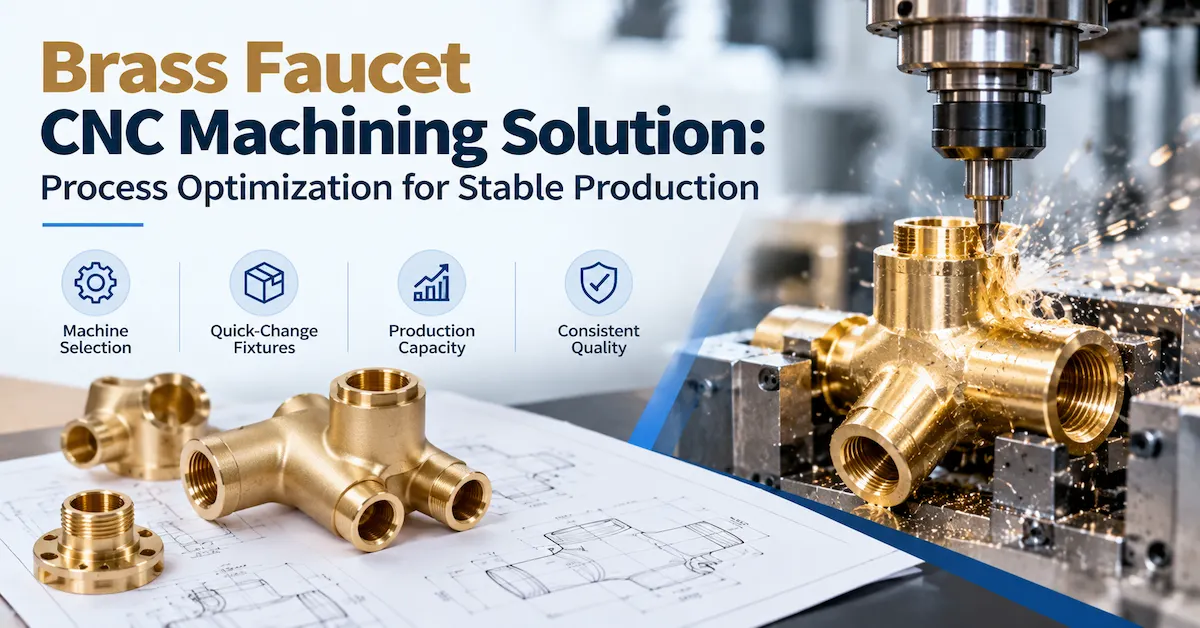
A faucet body CNC machining solution is important for bathroom hardware manufacturers that need stable accuracy, clean internal channels, reliable threaded connections, and consistent batch quality. Faucet bodies may look simple from the outside, but their internal machining requirements are often complex. A small error in hole position, sealing surface, thread quality, or valve connection area can affect water flow, leakage performance, assembly reliability, and final product quality.
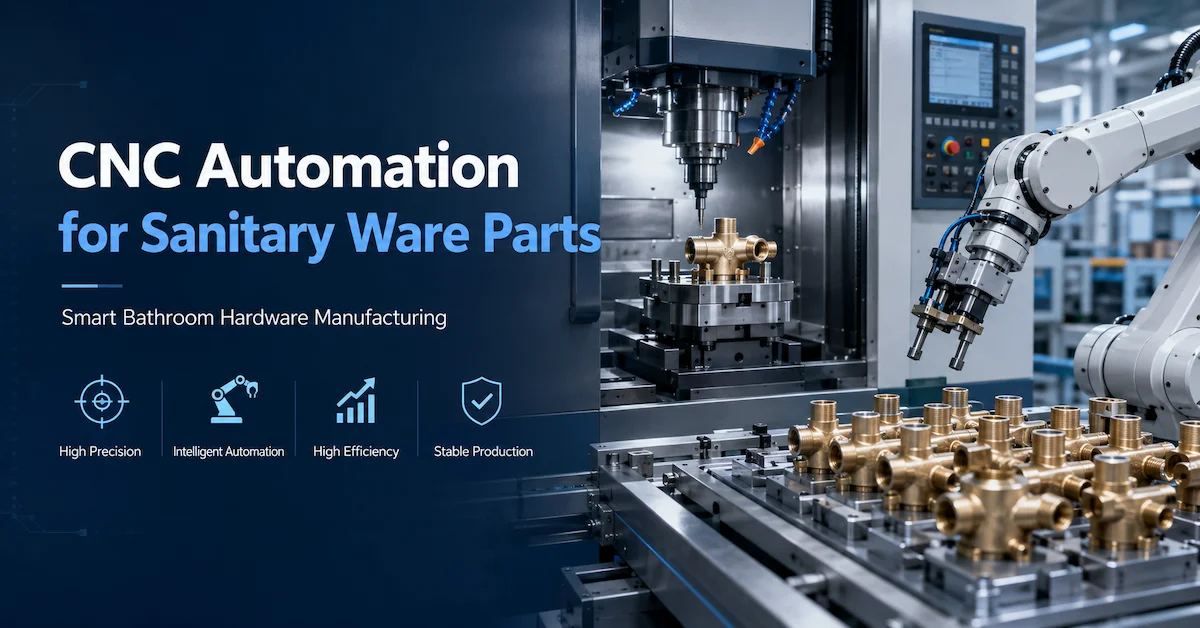
For factories producing faucet bodies, angle valves, water meter components, plumbing fittings, and sanitary hardware parts, traditional manual or semi-manual machining may not be enough when production volume increases. A professional CNC machining solution can help reduce repeated clamping, improve process stability, and make batch production more predictable.
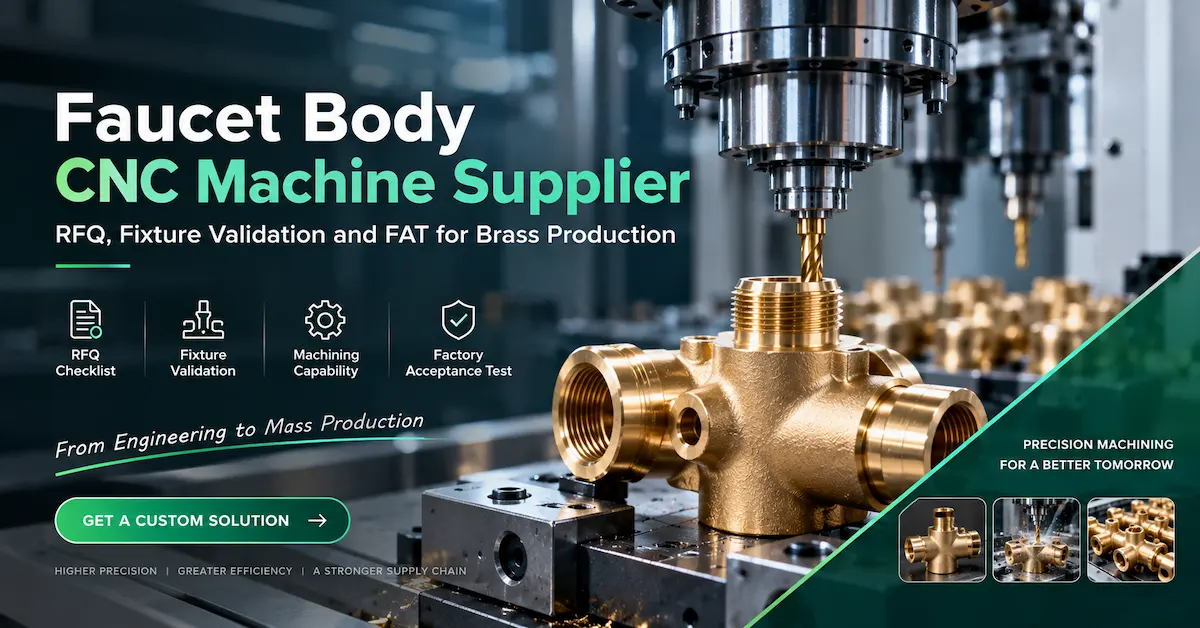
Xinmei Intelligent provides CNC equipment and intelligent production solutions for factories that need high-precision and high-efficiency metal parts manufacturing. You can view related machines and automation solutions on the Xinmei products page.
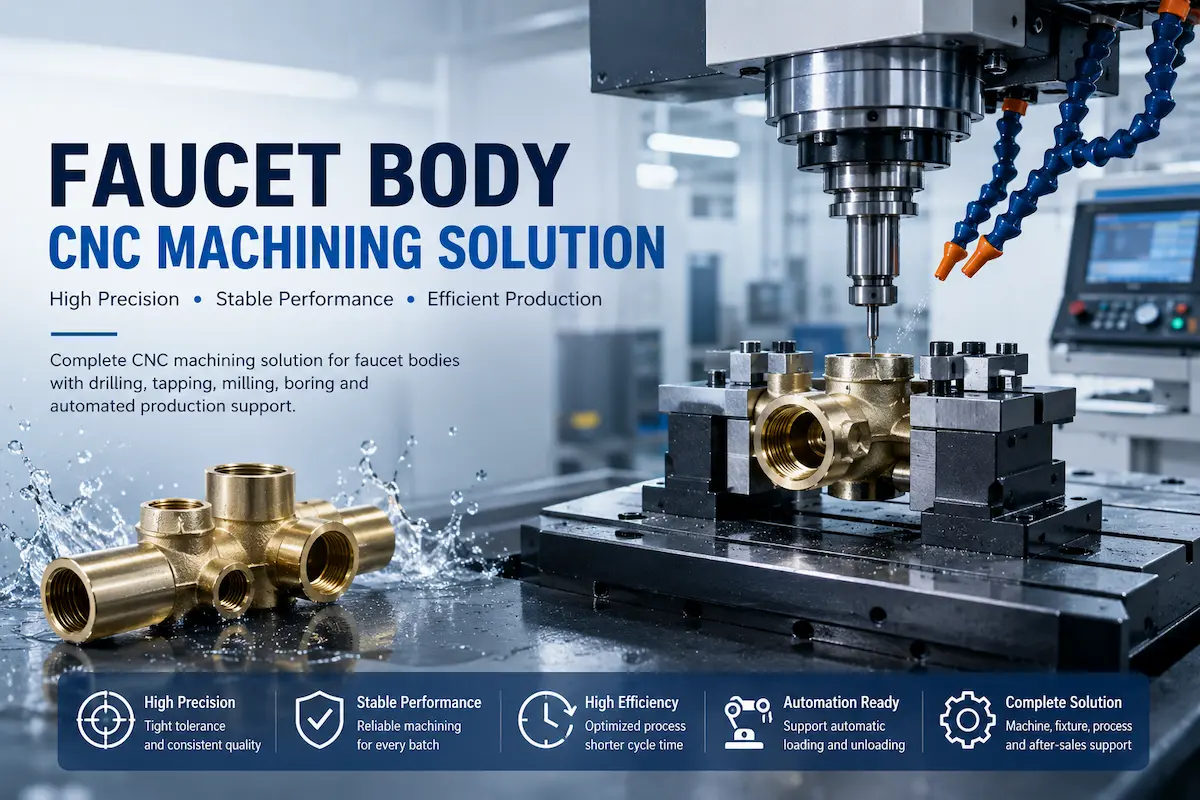
What Is a Faucet Body CNC Machining Solution?
A faucet body CNC machining solution is a complete machining plan for faucet body components. It usually includes machine selection, fixture design, drilling, tapping, milling, boring, chamfering, process planning, inspection logic, and optional automation.
Unlike buying a single CNC machine, a machining solution focuses on the full production process. It answers practical factory questions such as:
- How should the faucet body be clamped?
- Which surfaces need to be machined first?
- How can threaded holes stay consistent?
- How can sealing-related dimensions be controlled?
- How can the cycle time be reduced?
- Should the factory use a single CNC machine, special-purpose machine, or automated line?
A reliable solution should be designed around the real faucet body structure, material, tolerance, production volume, and quality target.
Why Faucet Body Machining Requires Stable CNC Control
Faucet bodies are functional bathroom hardware components. They usually involve internal water channels, threaded connections, valve installation areas, assembly holes, and sealing surfaces. These features require stable machining accuracy because they directly affect product performance.
Common production problems include:
- Water leakage caused by poor sealing surface machining
- Thread mismatch during assembly
- Unstable hole position between batches
- Burrs inside water channels
- Surface damage during clamping
- Poor consistency between operators
- Long cycle time caused by repeated setups
- High rework rate before final assembly
A professional faucet body CNC machining solution helps reduce these risks by standardizing the process from workholding to final machining.
Typical Faucet Body Machining Processes
Different faucet body designs require different machining processes. However, most bathroom hardware factories need a combination of drilling, tapping, milling, boring, and finishing.
| Machining Process | Purpose | Why It Matters |
|---|---|---|
| Drilling | Creates holes for assembly, water channels, and threaded positions | Affects flow path, assembly accuracy, and part function |
| Tapping | Produces internal threads for connection and installation | Affects sealing, torque, and assembly reliability |
| Milling | Processes flat surfaces and installation areas | Helps control sealing and assembly surfaces |
| Boring | Improves hole accuracy and inner diameter consistency | Important for valve and cartridge fitting areas |
| Chamfering | Removes sharp edges and improves assembly | Reduces burrs and protects sealing components |
| Deburring | Cleans edges and internal areas | Reduces leakage risk and improves final quality |
The right CNC solution should arrange these processes in a logical sequence to reduce unnecessary handling and improve batch efficiency.
Suitable Materials for Faucet Body CNC Machining
Faucet bodies are commonly made from brass, copper alloy, stainless steel, aluminum alloy, or other metal materials depending on product positioning and market requirements.
Each material creates different machining challenges.
| Material | Typical Advantage | Machining Focus |
| Brass / Copper alloy | Good machinability and corrosion resistance | Control burrs, thread quality, and surface finish |
| Stainless steel | Strong corrosion resistance and premium appearance | Requires stable cutting force and tool selection |
| Aluminum alloy | Lightweight and easy to machine | Requires surface protection and chip control |
| Zinc alloy | Cost-effective for some hardware parts | Needs good clamping and finishing control |
A good supplier should recommend machine structure, spindle configuration, cutting tools, and fixture design based on the material, not only the part shape.
Key Factors Buyers Should Check Before Choosing a Solution
Before choosing a faucet body CNC machining solution, buyers should evaluate whether the supplier understands bathroom hardware production, not only general CNC machining.
| Evaluation Factor | Why It Matters | What to Ask the Supplier |
| Faucet body experience | Reduces process trial-and-error | Have you handled faucet or sanitary hardware parts? |
| Fixture design ability | Controls positioning and surface protection | Can fixtures be customized for our faucet body shape? |
| Multi-process integration | Reduces repeated clamping | Can drilling, tapping, milling, and boring be combined? |
| Accuracy control | Affects sealing and assembly | How do you maintain repeatability in batch production? |
| Tooling plan | Affects thread quality and burr control | What tools are recommended for our material? |
| Cycle time planning | Determines output efficiency | What production capacity can the solution support? |
| Automation option | Supports future capacity growth | Can robotic loading or automatic transfer be added? |
| After-sales support | Affects long-term operation | Do you provide installation, training, and technical service? |
A reliable supplier should ask for drawings, samples, material, tolerance, required output, and current production problems before making a recommendation.
Why Fixture Design Is Critical for Faucet Bodies
Fixture design is one of the most important parts of faucet body machining. Faucet bodies often have curved shapes, irregular surfaces, internal channels, and multiple machining directions. Poor clamping can cause deformation, surface scratches, unstable positioning, and machining errors.
A good fixture should:
- Hold the faucet body firmly
- Avoid damaging visible surfaces
- Keep threaded holes and sealing areas aligned
- Support repeatable loading
- Allow tool access to key machining areas
- Reduce setup time
- Improve batch consistency
For factories producing different faucet body models, fixture flexibility is also important. A practical faucet body CNC machining solution should consider whether the factory needs dedicated fixtures, quick-change fixtures, or semi-automated loading.
CNC Machine Options for Faucet Body Production
Different production goals require different equipment choices.
| Equipment Option | Best For | Advantage | Limitation |
| CNC drilling and tapping machine | Repeated hole and thread processing | Efficient for standard threaded holes | Limited for complex multi-face machining |
| Vertical CNC machining equipment | General milling, drilling, and tapping | Flexible and easy to operate | May need more setups for complex parts |
| Horizontal machining center | Multi-face machining and better chip removal | Strong for complex faucet bodies | Higher investment |
| Special-purpose CNC machine | Stable repeat faucet body production | High efficiency and process matching | Less flexible for unrelated parts |
| Automated CNC production line | Large batch manufacturing | Lower labor dependency and stable output | Requires layout and process planning |
If your factory produces faucet bodies in stable batches, a special-purpose CNC machine or integrated production solution may provide stronger long-term value than adding more general machines.
Common Applications in Bathroom Hardware Manufacturing
A faucet body CNC machining solution can support more than one product type. It is suitable for many bathroom and sanitary hardware components, including:
- Faucet bodies
- Valve housings
- Angle valves
- Water meter parts
- Plumbing connectors
- Stainless steel bathroom fittings
- Handwheel parts
- Brass sanitary hardware components
For these products, the machining process should focus on sealing reliability, thread consistency, clean water channels, and stable assembly dimensions.
Xinmei Intelligent supports CNC solutions for bathroom hardware and other metal parts industries. You can learn more about the company’s manufacturing capability through the Xinmei About Us page.
When Should a Factory Upgrade Its Faucet Body Machining Process?
A factory should consider upgrading when it faces one or more of these problems:
- Thread quality is unstable
- Leakage-related defects increase
- Manual clamping causes inconsistent dimensions
- Cycle time cannot meet delivery demand
- Too many machines are needed for one part
- Rework rate is too high
- Skilled operators are difficult to hire
- Customers require more stable batch quality
- The factory plans to scale production
In these cases, a dedicated faucet body CNC machining solution can help build a more reliable and efficient production process.
How Xinmei Intelligent Supports Faucet Body CNC Machining
Xinmei Intelligent focuses on CNC equipment and intelligent manufacturing solutions for factories that need stable precision, high productivity, and automation-ready production.
For faucet body manufacturers, Xinmei can support:
- Workpiece drawing and sample evaluation
- CNC machine configuration recommendation
- Fixture and tooling discussion
- Drilling, tapping, milling, boring, and chamfering process planning
- Batch production efficiency improvement
- Automation upgrade evaluation
- Installation, commissioning, and operator training
The goal is to help factories move from unstable manual or separated processing to a more controlled CNC production process.
How to Prepare Before Requesting a Quotation
To receive a practical proposal, buyers should prepare the following information:
- Faucet body drawings
- Product samples
- Material type
- Thread specifications
- Hole diameter and depth
- Sealing surface requirements
- Required tolerance
- Current machining process
- Current defect or rework problems
- Expected daily or monthly output
- Automation requirements
- Workshop layout and available machine space
With this information, the supplier can recommend a more suitable machine structure, fixture concept, tool configuration, and automation level.
You can send project details through the Xinmei contact page.
FAQ
1. What is a faucet body CNC machining solution?
A faucet body CNC machining solution is a complete machining plan for faucet body components, including machine selection, fixture design, drilling, tapping, milling, boring, tooling, and process planning.
2. What CNC processes are used for faucet bodies?
Common processes include drilling, tapping, milling, boring, chamfering, and deburring. The exact process depends on the faucet body design and material.
3. Why is fixture design important for faucet body machining?
Fixture design controls positioning, surface protection, clamping stability, and repeatability. Poor fixtures can cause dimensional errors, scratches, and unstable batch quality.
4. Can faucet body CNC machining be automated?
Yes. Depending on production volume and product stability, faucet body CNC machining can be upgraded with robotic loading, automatic transfer, custom fixtures, and intelligent production line planning.
5. What information should I provide before requesting a quotation?
You should provide drawings, samples, material, hole and thread specifications, tolerance, current process, output target, defect problems, and automation requirements.
Conclusion
A faucet body CNC machining solution can help bathroom hardware manufacturers improve thread quality, sealing reliability, machining consistency, and production efficiency. For factories producing faucet bodies, angle valves, water meter parts, and sanitary hardware components, CNC process planning is not only about cutting metal. It is about building a stable production system that supports long-term quality and scalable output.
The right solution should match your product structure, material, tolerance, production volume, fixture needs, and automation goals.
Xinmei Intelligent provides CNC machines and intelligent manufacturing solutions for factories that need reliable bathroom hardware machining. Visit the Xinmei blog page for more CNC machining insights, or contact Xinmei Intelligent to discuss your faucet body CNC machining project.