+86 13163919000
 info@xinmeiintelligent.com


A valve body CNC machining cost comes down to six blocks: material, machine time, fixture and tooling amortization, scrap and rework, inspection, and setup and changeover. Brass or stainless, one-off or 50,000 a year, every quote is those six added up and priced. Ask a shop which block dominates your part and you'll learn more than arguing about the hourly rate ever tells you.
No hourly rate explains a quotation on its own. Two suppliers cutting the same brass gate valve body can land far apart on price and both be honest. One amortizes a six-spindle fixture over 50,000 parts; the other charges it upfront and runs single-spindle. Ask either of them to show which of the six blocks dominates your part, with a number attached: material cost per part, cycle time in minutes, fixture cost divided by order quantity, scrap percentage, inspection minutes, setup hours.
Then compare the valve body machiningquotes block by block. Total price alone hides which supplier is cheaper at 500 parts and which at 50,000. A shop that can't name its dominant block is guessing, and you'll usually see it in the fixture and setup lines.
What Drives Valve Body CNC Machining Cost per Part?
What drives valve body machining cost per part is six blocks, added together, then divided by good parts. That's the whole calculation, and it explains why a list price on a machine says almost nothing. Xinmei's horizontal turret machining centerpage tells you what the iron costs. It cannot tell you what your valve body costs to machine — that number comes off a stopwatch and out of the scrap bin.
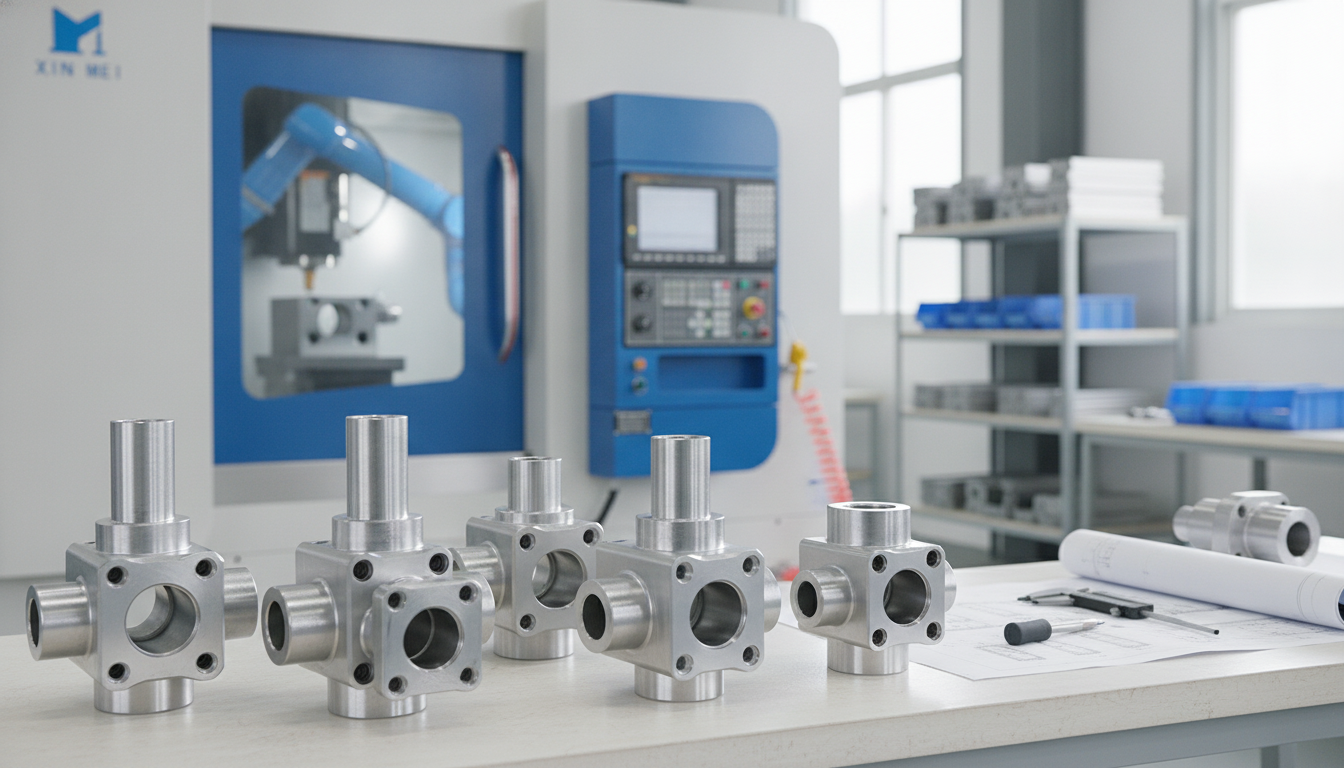
Volume moves the number more than anything else. Run 300 valve bodies and the fixture build can be the largest line on the sheet. Run 30,000 and it nearly disappears while cycle seconds take over.
Diagram (ALT text: cost blocks that build a machined valve body's price):material → machine time → fixture and tooling amortization → scrap and rework → inspection → setup/changeover.
Shop-floor note:pick one part family — a two-inch gate valve body will do — fix a batch of 200 and log ten consecutive cycle times with a stopwatch. Stop timing at the tenth part, not the first, or you'll record the warm-up.
Pull the scrap rate from the last 500 starts, divide the fixture invoice by its planned life, then recalculate cost per good part before and after the fixture change. The difference is the per-part cost of that change, and it's the only figure worth arguing about in the next quote review.
Worksheet: your number, your unit, your source
Fill the right-hand columns yourself, in pencil, before you compare two quotes. A figure you cannot trace back to an invoice, a spec sheet or a stopwatch is a guess with a decimal point on it.
| Input | Your number | Unit | Source / assumption |
|---|---|---|---|
| 1 · Material and blank.Weigh ten blanks and divide by ten; the saw kerf belongs in the blank mass, not on its own line. | |||
| Blank mass per piece | kg | Ten blanks on a scale | |
| Material price | currency/kg | Supplier invoice, same alloy and temper | |
| Saw or cut charge | currency/blank | Cutting house quote | |
| Blank cost per part | currency | Mass × price + cut charge | |
| 2 · Machine time.Time ten parts back to back at steady state, not the first article, and divide the total by ten. | |||
| Maximum spindle speed | rpm | Spec sheet for the machine you're pricing, plus the spindle load at your cut | |
| Tools in the turret or magazine | count | Same sheet — a valve body usually needs rough and finish boring, facing, drilling, tapping | |
| Tool-change time | s | Builder figure, or chip-to-chip on the clock | |
| Cycle time per part | s | Stopwatch, ten consecutive parts | |
| Load and unload per part | s | Stopwatch, operator in place | |
| Machine-hour rate | currency/h | Your own accounting figure for that asset | |
| Machine cost per part | currency | (Cycle + load/unload) ÷ 3600 × rate | |
| 3 · Fixture and tooling.Fixture invoice, jaws, rework and maintenance, divided by the parts you expect to run on it before you retire it. | |||
| Fixture build cost | currency | Toolroom invoice or internal job card | |
| Fixture life | parts | Planned volume on that valve size | |
| Tooling cost per part | currency | Insert and drill spend per 100 parts ÷ 100 | |
| Amortized cost per part | currency | Fixture ÷ life + tooling | |
| 4 · Scrap and rework.Scrap and rework cost different amounts, so count them on separate lines over the last three months. | |||
| Scrap rate | % | Three months of production records, by part number | |
| Rework rate | % | Same period | |
| Value already in a scrapped part | currency | Blank + machine time + tooling at the point it failed | |
| Scrap cost per good part | currency | Scrap % × value in the part, grossed up by 1 ÷ (1 − scrap rate) | |
| 5 · Inspection.Time the inspection you actually perform on the lot, not the worst case written into the control plan. | |||
| Inspection minutes per lot | min | Stopwatch on a real first-off and patrol check | |
| Parts per lot | parts | Batch size or shipping lot | |
| Inspection rate | currency/h | Metrology or QA charge-out | |
| Inspection cost per part | currency | Minutes ÷ 60 × rate ÷ parts per lot | |
| 6 · Setup, changeover and volume.Setup hours come from the job log; divide by the batch you really run, then check the result against lead time and annual capacity. | |||
| Setup hours per changeover | h | Job log, including first-off approval | |
| Changeovers per year | count | Production plan | |
| Batch size | parts | Typical order, not the best one | |
| Setup cost per part | currency | Setup hours × rate ÷ batch size | |
| Lead time, order to first good part | days | Quote, or the last three jobs of the same size | |
| Annual capacity | parts/year | Available hours × 3600 ÷ seconds per good part, after setup and scrap | |
Worked example — illustrative numbers, not a real job
Nothing below came off a customer job or a specific builder's machine. The figures are invented to show how the rows combine, so swap in your own stopwatch readings before you use any of the output.
| Line | Illustrative value | Working |
|---|---|---|
| Batch, good parts | 2,000 | One setup |
| Cycle time | 95 s | Timed across ten steady-state parts |
| Load and unload | 20 s | Operator in place |
| Machine occupancy | 115 s | 95 + 20 |
| Scrap rate | 4% | Last three months |
| Starts required | 2,084 | 2,000 ÷ 0.96 |
| Runtime | 66.6 h | 2,084 × 115 s ÷ 3,600 |
| Setup | 6.5 h | 6 h changeover + 0.5 h first-off |
| Machine hours for the batch | 73.1 h | 66.6 + 6.5 |
| Setup time per part | 11.7 s | 23,400 s ÷ 2,000 |
| Annual output | 8,000 | Four batches of 2,000 |
| Annual machine hours | 292 h | 8,333 starts × 115 s + 4 setups |
Read the setup line twice. At 2,000 parts it adds 11.7 seconds to each one, roughly a tenth of the cycle. Cut the batch to 500 and the same 6.5 hours costs 46.8 seconds a part, which is exactly where small orders lose ground to a multi-spindle machine or a dedicated line.
Capacity runs off the same arithmetic. 8,000 good bodies a year at 4% scrap needs 8,333 starts: about 266 hours of spindle time plus 26 hours of setup, 292 hours in total. One machine on two shifts across 250 days offers 4,000 hours, so the job takes about 7% of it. That spare room is your bargaining position on price, and it is also the argument for quoting a second valve size on the same machine.
Settle the setup hours and the scrap rate before you argue about the machine rate. Those two lines decide which machine class wins for your part.
So which class? Compare the work, not the brochure. A three-axis vertical machining center with a fourth axis needs two or three fixtures per valve size and a pair of setups, so it soaks up operator hours but carries the lowest hourly rate and redeploys easily when the order book turns.
A horizontal machining center with a pallet pool runs unattended through a second shift and holds a bore position across a long batch; you pay for that in fixture cost per face and in the programming hours before the first chip.
A dedicated transfer or dial machine cuts cycle seconds hard, then sits idle the moment the valve family changes — sensible only above the volume where the setup line has already vanished from the arithmetic. For a two-inch gate body at 8,000 a year, the pallet changer usually pays. At 800 a year, the vertical usually does.
Why Is the Price per Valve Body Different Between Suppliers?
Machine hour rate is the easy number to compare. And the least useful. Two shops quoting the same rate per hour can land far apart on the per-part price, because the assumptions underneath the number do the real work. Get the quotation broken down, then put these questions to every supplier on your list.
- Batch size:How many pieces is this price built around, 20 or 200? One setup spread across ten times the parts pulls the per-part figure down hard, so ask what happens to the price at your real annual volume.
- Fixture treatment:Is the fixture quoted once as NRE, or is the build cost folded into every part? And who owns the fixture if the job moves?
- Scrap allowance:What reject rate sits inside the price, and is the scrap value of the brass or stainless credited back to me?
- Inspection scope:Does the price cover first-off approval with in-process gauging, or a final check at the bench? Will the lot ship with a dimensional report?
- Material source:Are you quoting the blanks, or machining what I supply? If you buy the metal, what markup and stock risk ride on that line?
- Machine and changeover:Which machine type will the job actually run on, and how does that choice handle changeover when the work is mixed? A multi-spindle transfer machine and a single-spindle mill pay for a part change in very different ways. Ask how many hours a switch between two valve body sizes costs on their setup, and who absorbs it.
- Packaging and freight:Crated and VCI-wrapped, or a carton on a pallet? Who pays the freight, and is it in the total or added later?
Ten minutes on the phone with each shop beats a week of comparing bottom lines.
Brass Valve Body CNC Machining Cost Factors: What Changes vs Stainless?
The brass valve body CNC machining cost factors that shift when you swap the blank to 316 stainless show up before a single chip is cut. C36000 sits at 100 on the Copper Development Association's machinability scale, the yardstick alloy every other copper metal gets measured against (Copper Development Association, "Properties of Copper and Copper Alloys"). No stainless grade comes close.
Cutting speed tells the same story. Sandvik Coromant's speed and feed recommendations for austenitic stainless sit well below brass values, so cycle time per body stretches and tool wear climbs (Sandvik Coromant, "Material groups"). Stainless work-hardens under the tool. That pushes you to lighter feeds, more coolant, and a heavier machine.
You'll see it on the spindle load meter. Brass runs near-dry, and its chips resell at a real price. Stainless scrap recovery is weaker. Add the extra roughing passes and spindle time, and the valve body CNC machining cost on stainless pulls clear of brass.
Fixtures and changeovers are a separate line on the quote. The changeover guidecovers that side.
At the same feature set, brass usually costs less per part. On stainless, tool life and cutting speed set the price.
Multi-Spindle vs Single-Spindle CNC: What Changes Valve Body CNC Machining Cost per Part?
Three machine types cover most valve body work. How many holes sit on one face decides most of the per-part cost; the sticker on the machine decides less. Compare them on holes per cycle, how much of the body an operator touches, and how often you re-fixture for a new valve size.
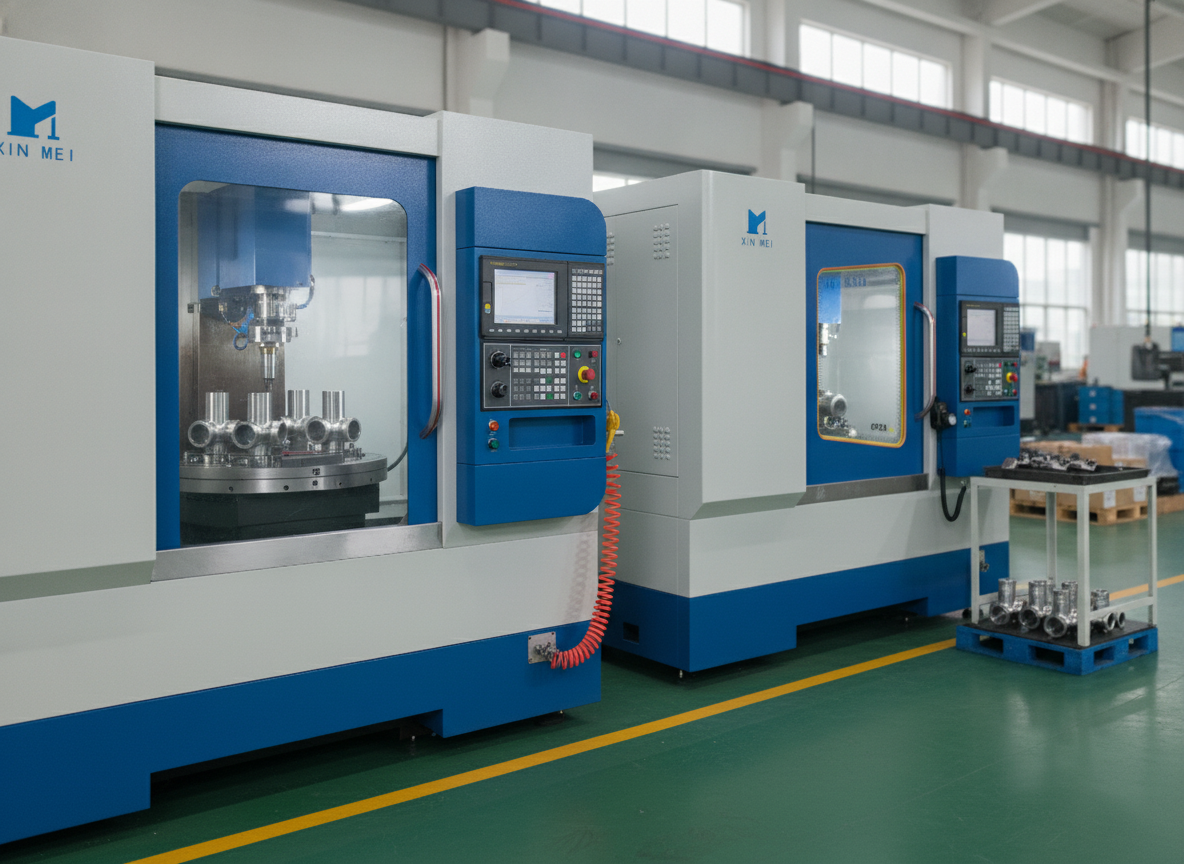
| Machine | Spindles / tools | Labour per part | Setup flexibility | Best volume |
|---|---|---|---|---|
| vertical drilling and tapping machine | One spindle, tool change between holes | Highest. An operator handles every body and waits through each tool change. | Highest; any hole pattern, quick size change | Low to mid volume, mixed valve sizes |
| CNC Horizontal Lifting Six Spindle Drilling and Tapping Machine Tool | 6 spindles drilling and tapping at once | Lowest per body once running. All six holes cut together, so load and unload dominate the cycle. | Low; hole pattern fixed by spindle layout | High volume with a repeatable hole pattern |
| Horizontal turret 12-axis CNC machining center | 12-axis turret, one tool cutting at a time | Middle. Fewer re-fixtures per body, but each feature still comes one tool at a time. | Medium; tool set changes, spindle layout doesn't | Mid to high volume, many features per body |
List price is an input. Fixtures, tooling and robot loading get quoted separately, and on a dedicated six-spindle head the fixture is a serious line of its own. A twelve-axis turret earns its keep on a body with a dozen distinct features and loses on one that needs four holes drilled in a single pass. How many valve sizes will you change over in a month? That answer picks the row faster than any spec sheet.
Batch size decides which column matters most, as this comparison of machine layout optionssets out.
How Do I Choose Between a Multi-Spindle Drilling and Tapping Machine and a CNC Machining Center?
The hole pattern usually decides it. Count the holes on one valve face that share a diameter. Six or more, year after year, and a six-spindle head drills and taps them in one pass.
- Same-diameter holes on one face— multi-spindle synchronous machining pays off here, because all spindles cut at once and cycle time stops scaling with hole count.
- Tolerance and position requirements — a dedicated head holds position repeatably once set; mixed features, angled ports and interpolated bores want a multi-tool machining center with enough tools for mixed features.
- Material — brass cuts freely and rewards multi-spindle speed; stainless punishes tool wear, so fewer, better-controlled tools matter.
- Annual volume — low volume makes fixture build and setup the dominant line; high volume amortizes both.
- Changeover frequency — one valve family all year, multi-spindle; a catalogue of sizes, the machining center.
- Automation plan — both can feed a robot cell, but only if the fixture presents parts the same way every cycle.
- Floor space and fixture life — a horizontal six-spindle bed is long; figure the footprint and how many parts one fixture will survive before rebuilding.
Work through the fuller comparison in this guide to picking valve body machining equipmentbefore you commit.
Fixture Cost Amortization: The Line Buyers Often Compare Wrong
Two quotes land for the same brass gate valve body. Quote A bills the fixture as a separate NRE line. Quote B folds it into the part price and adds a few cents to every body. Same machine, same batch. The difference is where the money sits, and which quote you compare on total cost per good part.
Method note: every figure below is arithmetic on inputs a buyer supplies (fixture build cost, maintenance spend, planned volume). None of it comes from a customer project. Swap in your own quoted numbers before you decide anything.
Valve body machining fixture cost amortization = fixture build cost ÷ parts run on that fixture. At 20,000 parts, a stiff build is cheap per body. At 1,500, it dominates. Add maintenance (shimming at every changeover, worn locating pads, re-cut clamp faces) and the cheap fixture starts losing. A sloppy locating face also raises scrap, and each scrapped body carries the machine time and tooling already spent on it.
Illustrative worked example, buyer-supplied inputs only, not a quote from any project: a fixture priced at USD 6,800 with USD 1,200 of maintenance over its life. Total fixture spend is USD 8,000.
- 20,000 bodies: USD 8,000 ÷ 20,000 = USD 0.40per body.
- 1,500 bodies: USD 8,000 ÷ 1,500 = USD 5.33per body.
The USD 4.93 gap per body is what Quote A and Quote B are really arguing about. Run 1,500 a year for three years and the same fixture amortizes to roughly USD 1.78 per body, so the part price should drop once the build is paid off. A quote that never drops is charging you for a fixture you already own.
Ask whether the fixture can run two valve sizes with a quick jaw or nest change. Re-use spreads the build and cuts changeover. If it can't, Quote B's higher part price may still be the cheaper line.
Fast tool changes shave seconds off a cycle. A fixture that needs re-shimming at every changeover hands minutes back, and that time never lands on the quote. Ask how long a changeover actually takes with the fixture bolted down.
What Does Scrap Rate Really Add to Cost per Valve Body?
Scrap multiplies costs that are already in the part. A body rejected after the finish bore has eaten its blank, its cycle time, its tool wear and a slot on the machine. Divide all of that by the good parts left in the run and the scrap rate adds to cost per good part fast.
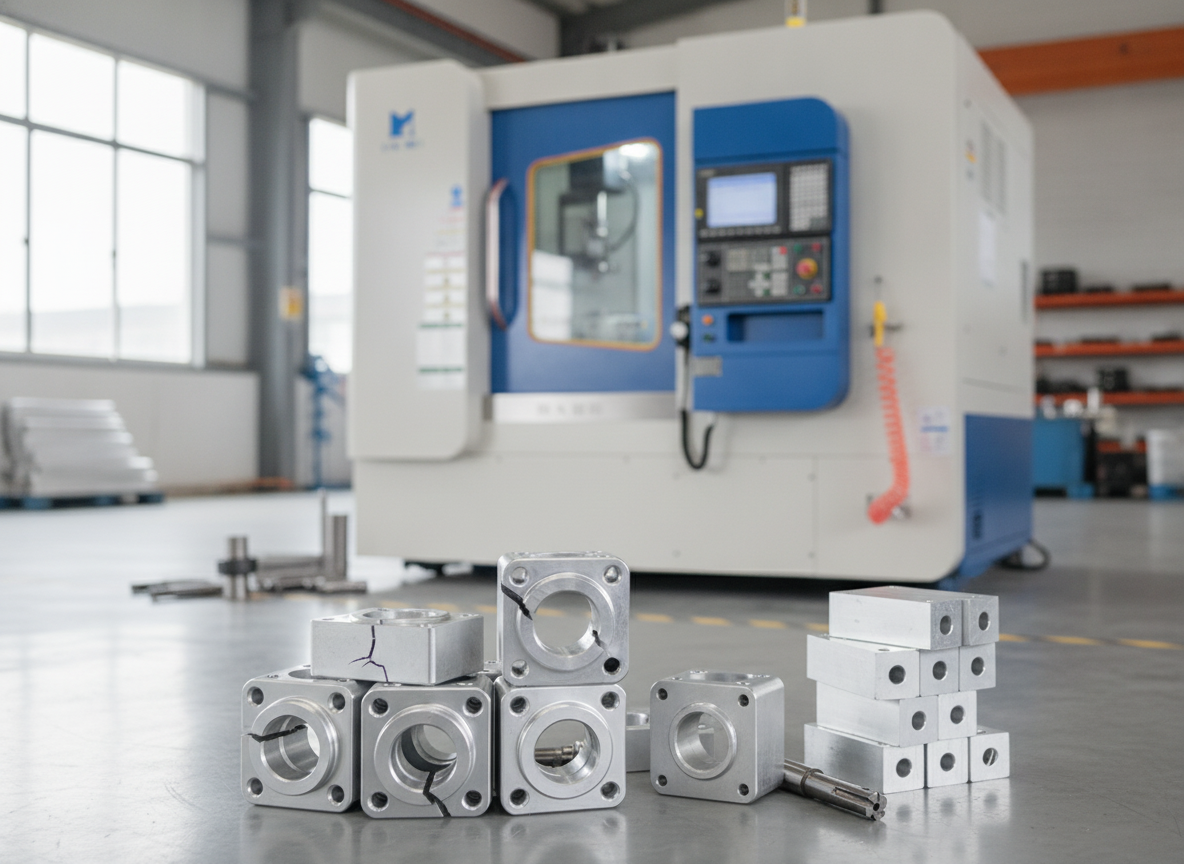
Two percent is a shrug. Eight percent, caught only at final inspection, can rival the machining time itself. Treat 2% and 8% as an illustrative range; your real figure comes off your last hundred parts, not off a brochure.
- Rework costs more than the first cut. Re-boring a face that came out proud rarely restores position tolerance, and you pay for the second setup as well.
- A leak test at final inspection is the worst place to find a seat defect. By then every operation on that body is written off.
- Approve the first-off properly and a shift's worth of scrap never gets made.
- In-process gauging on hole position catches drift while the part is still worth saving.
Where does the scrap actually come from? Setup, tool breakage, casting or forging variation, and a probe that nobody recalibrated. Fix those four and the rate drops without touching spindle speed.
Brass recovers better. Turnings and rejects go back to the mill at a real price; stainless returns less, so the same scrap rate bites harder. On a stainless body with a long cycle, a point of scrap can cost more than the tooling budget for the whole job.
Valve Body Machining Quotation Cost Breakdown: What Should a Quote Include?
A valve body machining quotation cost breakdown you can audit carries one line per cost block, each with its own unit (per part, per lot, one-time). Ask for nine lines. Merge them into "machining" and you lose the one variable that decides your batch economics.
| Quotation line | What it covers and how it moves cost per part |
|---|---|
| Blank / material | Bar or casting plus grade certificate. Scales with batch size and scrap allowance, not with cycle time. |
| Setup and NRE | Programming, first-off approval, changeover hours. Fixed per order, so it thins out as volume climbs. |
| Fixture | Build cost charged upfront or amortized into the part price. Same total either way; a cheap fixture costs you later in changeover and scrap. |
| Machine time | Cycle time multiplied by the rate. The line most buyers compare first, and seldom the largest. |
| Tooling | Inserts, drills, taps and regrinds. Climbs with stainless steel, drops with free-machining brass. |
| Scrap allowance | A percentage applied on top of the lines above, so it compounds every one of them. |
| Inspection | First-off, in-process gauging, final. Tie each charge to the ISO 9001 quality management system: named characteristic, gauge, record and sampling frequency. |
| Secondary operations | Deburring, passivation on stainless, leak testing. Leak tests usually run per lot rather than per part, so the sampling plan you agree keeps this line small. |
| Packaging and freight | Per-part protection and crate weight. Real money on brass bodies shipped in bulk. |
Use those nine lines as the template when you request quotes. Send every supplier the same drawing revision, the same material grade and the same inspection scope, and the bids line up in a spreadsheet instead of three incompatible formats. RFQ quality-audit guide
Two shops can return the same valve body CNC machining cost per part and still sit far apart on the lot price once setup, tooling and inspection open up. Same nine rows, same questions, and the quotes become comparable. The RFQ quality-audit guideshows what a solid answer looks like on each row.
Does the inspection line name a gauge, or just the word "inspection"? Under an ISO 9001 quality management system it should carry four things: the characteristic measured, the gauge used, the record kept, the sampling frequency. Check all four against what you see at the receiving dock.
How to Reduce Valve Body Machining Cost per Part Without Cutting Quality
Valve body CNC machining cost per part gets decided in the process plan, before a chip comes off. The eight levers below cut it. None of them touches tolerance, and most cost less to apply than a new machine.
- Put same-diameter holes on one face. A bonnet bolt circle or an eight-hole flange then runs in one pass through multi-spindle drilling setups. Eight separate tool engagements become one.
- Choose free-machining brass where the design allows it. Lower cutting force buys cycle time and tool life. Check the grade first: lead-free brasses machine slower, and on a potable-water valve you may not have the choice.
- Combine turning and drilling in one setup. Every re-clamp adds labour and error, and a body with a stem bore, seat pocket and flange holes queued across three machines spends most of its life waiting.
- Share fixtures across valve sizes. Amortization only works when the same plate carries the DN15 body and the DN50 body.
- Set tool-life limits and change inserts on count. Wait until the finish starts to complain and you have already scrapped parts.
- Run first-off approval and in-process gauging. Catching drift at part five beats scrapping a batch.
- Increase batch size and group changeovers. Setup minutes divide by the parts you run, so 200 pieces carry half the setup cost per part that 100 do.
- Automate loading and unloading, so the spindle keeps cutting while operators do something else. On valve bodies the load/unload gap is often the longest idle stretch in the cycle.
Multi-tool machines attack the same arithmetic. A machining center with a large tool magazine, twin turrets, or a bolt-on multi-spindle head keeps a whole hole pattern inside one setup, so the body spends less time queued on a pallet and more time under cut. Match the tool count to your hole pattern rather than buying the biggest magazine on the floor. Extra stations earn their keep when they replace two operations, not when they just look good on the spec sheet.
Robotic loading handles lever eight. A robot with a double gripper pulls the finished body and drops a blank into the same jaws, and the spindle never waits for someone to walk over. The payback is plain arithmetic: idle seconds per cycle times parts per year, weighed against the cost of the cell.
It works on a stable part family with consistent blank presentation. Shift sand and variable flash on one-off castings will jam a gripper, and you'll spend the savings on debugging. A pallet changer on a VMC gets you part of the way for a fraction of the money, since it swaps a whole fixture plate instead of a single part.
Material grade and annual volume settle most of the cost before a machine starts. Free-machining brass at 20,000 pieces a year and 316 stainless at 300 live in different worlds, and batch size, fixture count and setup division all follow from those two numbers.
Key Takeaways
- Per-part cost comes from the six cost blocks: material, machine time, fixture and tooling amortization, scrap and rework, inspection, setup. A shop rate alone explains none of it.
- Read the quotation at the same batch size and inspection scope you asked for. A cheap number at half the volume is cheap for a reason.
- Fixtures and scrap carry the most hidden money. Ask exactly where each sits in the quotation.
- Multi-spindle machines win on repeated hole patterns at volume; the twelve-tool turret center handles mixed features in one setup.
- Machine price is one input. Cycle time, fixture cost and batch size settle the per-part number, so a cheap machine with a slow cycle loses to a costlier one on a 5,000-piece run.
Frequently Asked Questions
What does a six-spindle drilling and tapping machine price include?
A base machine price usually covers the iron, the control and the spindle package. It rarely includes workholding, tool holders, coolant and chip management, freight, rigging, commissioning, training or the fixture build for your valve body. Those extras can rival the machine price on a tight-tolerance body. Budget them before you compare the number with a machining service quote. Machine price is the first input; valve body CNC machining cost per part is what you're actually buying.
How does a multi-tool machining center compare with a turret lathe on package and cycle time?
Not on the sticker alone. A turret lathe quote usually bundles collets, bar feed, turret tooling and a workholding package sized to one family of parts. A machining center quote may look lower, then you add fixtures, tool holders, a probe and CAM work. Put both on the same package basis. Then compare cycle time per valve body: count non-cutting time, tool changes, load and unload, and how many bodies each machine finishes in an hour. Fast tool changes only pay off when the job spends its day swapping tools.
Dual-spindle vertical machine center or two single-spindle VMCs?
One dual-spindle vertical machine center shares a base, a control and one operator; two VMCs double the floor space and usually the labor. Fewer setups also mean less handling damage on finished sealing faces. Get both configurations quoted against your annual volume, and ask what each one does to changeover time.
Do multi-spindle machines suit brass or stainless valve bodies?
Brass is the easier case. Free-machining grades cut fast, hold tolerance and produce scrap with decent recovery value, so spindle count pays back quickly. Stainless work-hardens, runs at lower cutting speed and wears tools faster. Rigid multi-spindle machines still win at volume, but tool life sets your real cost per part.
How many spindles does a multi-hole valve body need?
Count the holes on one face that share a diameter and tolerance. Six spindles cover most flange and bonnet patterns in a single pass. Beyond that, plan a second operation or a twelve-tool turret machine.
Can robotic grinding handle stainless valve bodies with frequent geometry changes?
It can, though stainless galls and loads the abrasive, so force control and wheel choice matter more than robot brand. Frequent design changes push programming and fixture cost up. Suitability comes down to two things: whether the robot holds constant force through the grind path, and whether the fixture can locate each new body repeatably without a rebuild. If either answer is no, the cell will sit idle while someone shims a fixture.
How is accuracy verified after assembly?
Verify the body before assembly: bore position, seat flatness and hole-to-hole spacing on a CMM or air gauge. After assembly, leak test to API 598 practice and record results by lot. A seating error caught at final test costs far more than one caught in process.
What lead time milestones should a purchase order carry?
Set dates for drawing approval, first-off sample, fixture build, machining, inspection and packing. First-off approval slips most often, because it waits on both sides. Tie payment to those milestones.
What drives valve body CNC machining cost per part?
Cycle time is the big one, followed by setup amortization, tool life, scrap rate and inspection. A 20-minute cycle on a plain VMC can beat an 8-minute cycle on a cell you only fill twice a week. Material matters just as much: 316 stainless cut at half the surface speed of brass roughly doubles the machine hours in every body. Ask each supplier for the cycle time and the batch size behind their number.
How do I compare valve body CNC machining cost across quotes with different batch sizes?
Convert every quote to valve body CNC machining cost per good part at the same annual volume and the same scope. A supplier pricing 200 pieces against one pricing 20,000 is quoting two different businesses, and setup plus fixture amortization explain most of the gap. Ask each one which volume they assumed.
How do I keep cost per part stable over a year?
Fix tool-life limits, maintain fixtures on a schedule and gauge in process rather than at the end. Batch similar valve sizes together to cut changeover, and review scrap monthly. The routine is dull. It also keeps quotes from drifting.