+86 13163919000
 info@xinmeiintelligent.com

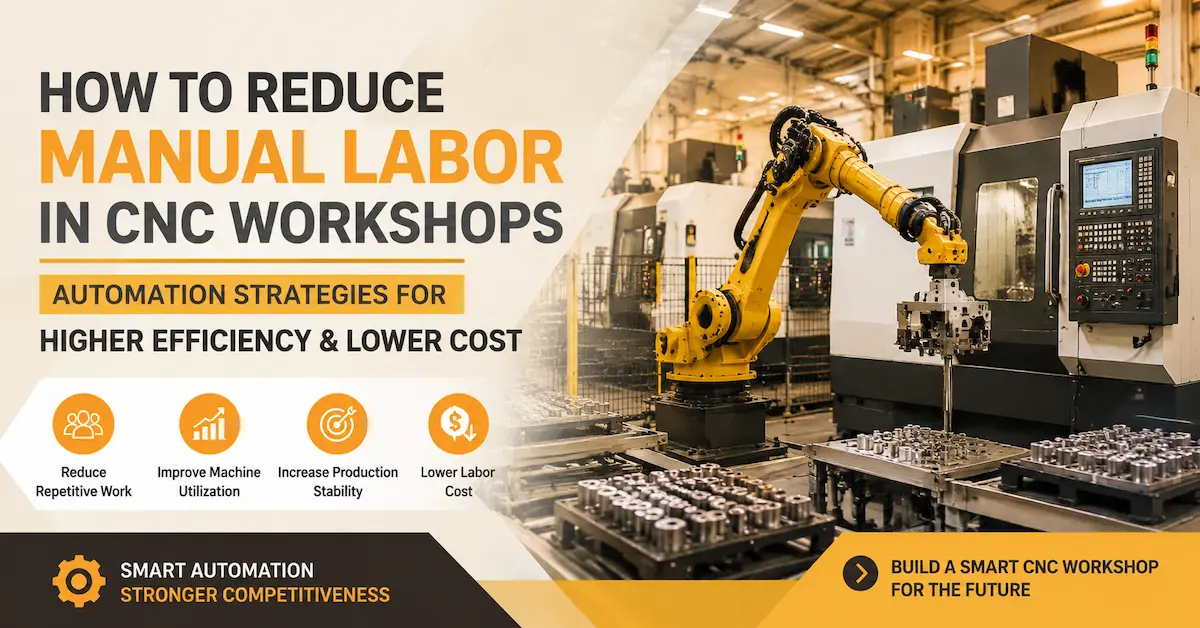
For many CNC factories, machining speed is not always the biggest production limitation. A large amount of time is often spent on repetitive handling tasks, including loading raw materials, removing finished parts, positioning components, and preparing the next machining cycle.
As production volume increases, manual loading can reduce machine utilization, increase labor dependency, and create inconsistent production rhythms.
So, how to automate CNC machine loading becomes an important question for manufacturers looking to improve efficiency and build smarter production systems.
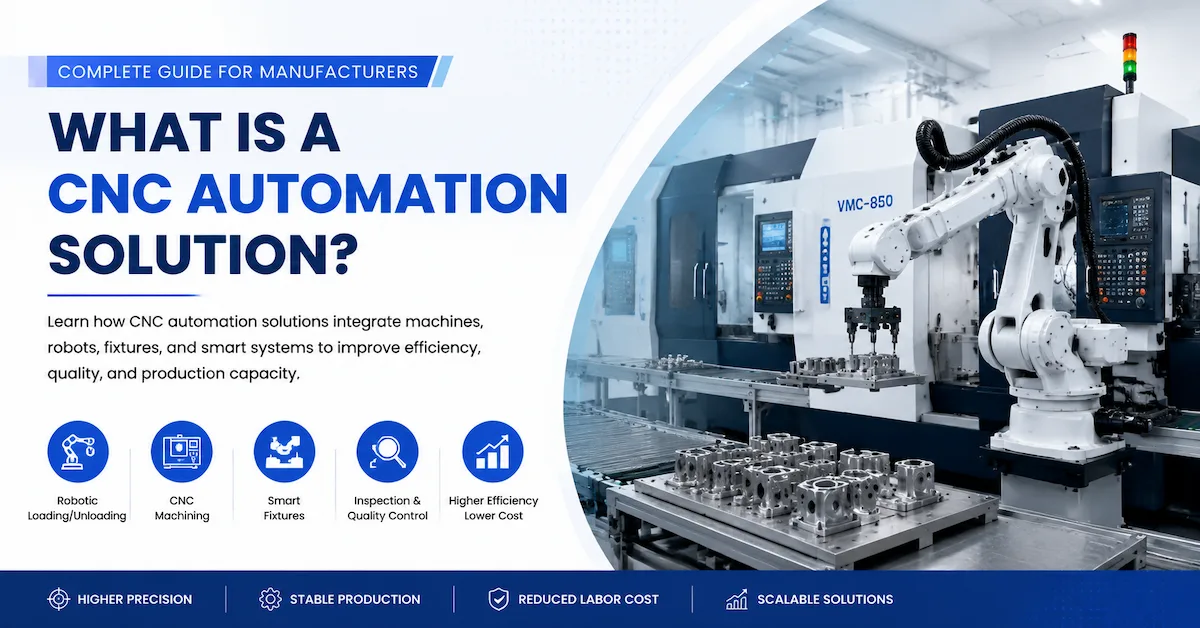
CNC loading automation uses robots, fixtures, sensors, and control systems to automatically transfer workpieces into and out of CNC machines. The goal is to create a more stable, repeatable, and efficient machining workflow.
Xinmei Intelligent provides CNC automation solutions including robotic loading and unloading systems, special-purpose CNC machines, and intelligent production-line integration for industries such as automotive parts, valves, bathroom hardware, door control components, and precision metal manufacturing.
Explore the Xinmei robotic loading and unloading solution.
What Is CNC Machine Loading Automation?
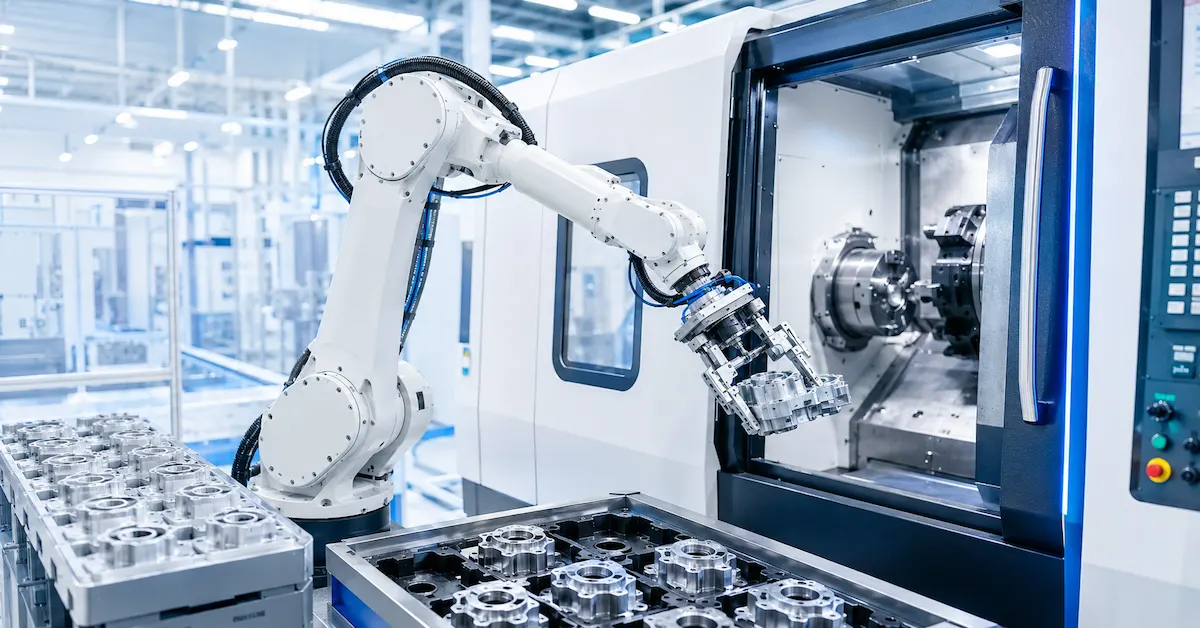
CNC machine loading automation is a system that automatically handles workpieces before and after machining.
Instead of requiring an operator to manually:
- Pick up raw parts
- Place components into fixtures
- Start machining
- Remove completed parts
- Transfer products to the next process
an automated system performs these tasks through programmed equipment.
A typical CNC loading automation system includes:
- Industrial robot
- Robot gripper
- CNC machine interface
- Automatic fixture
- Material tray or feeding system
- Safety enclosure
- Sensors and control system
- Finished-part collection system
When considering how to automate CNC machine loading, manufacturers should focus on the complete workflow instead of only selecting a robot.
The robot, fixture, CNC machine, and production process must work together.
Why Do Factories Automate CNC Machine Loading?
Many factories already have CNC equipment but still experience production limitations.
Reduce Labor Dependency
Manual CNC loading requires operators to repeatedly perform the same actions.
These include:
- Loading parts
- Checking positioning
- Removing finished products
- Handling materials
- Monitoring machine cycles
For large-volume production, these repetitive operations consume significant labor resources.
Automation allows workers to focus on:
- Production monitoring
- Quality management
- Machine maintenance
- Process improvement
Improve CNC Machine Utilization
A CNC machine creates value when it is cutting material, not waiting for operators.
Manual handling can create:
- Idle machine time
- Delayed cycle starts
- Production interruptions
- Uneven output
A robotic loading system keeps the machining process more continuous.
Improve Production Consistency
Human operation may create differences between:
- Different operators
- Different shifts
- Different production periods
Automation improves repeatability by controlling:
- Loading position
- Clamping sequence
- Transfer timing
- Production rhythm
Support Continuous Production
Automated loading systems can support:
- Longer operating hours
- Night production
- Reduced operator attendance
- Stable batch manufacturing
This is especially valuable for factories producing standardized components.
Main Components of an Automatic CNC Loading System
Industrial Robot
The robot is responsible for moving workpieces between storage areas and CNC machines.
Robot selection depends on:
- Workpiece weight
- Required reach
- Cycle time
- Working environment
- Loading direction
- Production volume
A suitable robot should have enough capacity without unnecessary oversizing.
Robot Gripper
The gripper directly contacts the workpiece.
A good gripper design should:
- Hold parts securely
- Prevent surface damage
- Support repeat positioning
- Handle oil or coolant conditions
- Match different product shapes
For example, valve bodies, faucet bodies, automotive components, and hardware parts may require different gripping solutions.
CNC Fixture System
The fixture determines machining accuracy after loading.
A good automated fixture should:
- Position parts accurately
- Confirm correct placement
- Maintain stable clamping
- Prevent deformation
- Support quick loading cycles
A robot cannot solve an unstable fixture problem. Fixture design must be considered together with automation.
CNC Communication System
The robot and CNC machine need to communicate.
Typical signals include:
- Machine ready
- Door open
- Part loaded
- Fixture clamped
- Machining completed
- Alarm status
Reliable communication ensures safe and continuous operation.
Safety System
A complete system should include:
- Safety fences
- Emergency stops
- Door interlocks
- Sensors
- Safety scanners
- Alarm systems
Safety should be planned during system design.
How to Automate CNC Machine Loading Step by Step
Understanding how to automate CNC machine loading requires looking at the entire implementation process.
Step 1: Analyze the Existing CNC Process
Before automation, evaluate:
- Current loading method
- Workpiece size
- Machining cycle time
- Operator movement
- Production problems
- Output requirements
This determines whether automation is suitable.
Step 2: Select the Right Automation Method
Possible solutions include:
- Simple automatic loader
- Robot loading cell
- Multi-machine robotic system
- Complete CNC production line
The choice depends on production requirements.
Step 3: Design Fixtures and Grippers
Fixtures and grippers should be developed around the actual workpiece.
Consider:
- Part shape
- Material
- Weight
- Surface requirements
- Loading orientation
- Changeover needs
Step 4: Integrate Robot and CNC Machine
Integration includes:
- Mechanical installation
- Electrical connection
- CNC communication
- Safety configuration
- Robot programming
- Trial operation
Step 5: Test and Optimize
Before mass production, verify:
- Loading accuracy
- Cycle time
- Safety operation
- Part quality
- Production stability
Optimization ensures the system achieves the expected output.
Manual CNC Loading vs Automated CNC Loading
| Comparison | Manual Loading | Automated CNC Loading |
|---|---|---|
| Labor requirement | High | Lower |
| Loading consistency | Operator dependent | Program controlled |
| Production rhythm | Variable | Stable |
| Machine utilization | Limited | Improved |
| Long-shift operation | Difficult | Easier |
| Safety risk | Higher | Reduced |
| Scalability | Requires more workers | Supports expansion |
For stable, repeatable production, automation usually provides stronger long-term benefits.
Which Industries Benefit from CNC Loading Automation?
A CNC machine loading automation solution is suitable for industries with repeat production requirements.
Common applications include:
| Industry | Parts |
| Automotive | Brake parts, steering components, housings |
| Valve Manufacturing | Valve bodies, manifolds |
| Bathroom Hardware | Faucet bodies, fittings |
| Door Control | Door closer bodies, floor spring parts |
| Electrical Components | Connectors and terminals |
| Industrial Hardware | Shafts, brackets, mechanical parts |
The best automation projects usually involve parts with:
- Stable design
- Regular production volume
- Repeat machining processes
- Clear quality requirements
How to Choose a CNC Loading Automation Supplier
When evaluating how to automate CNC machine loading, choosing the right supplier is as important as choosing the robot.
Buyers should evaluate:
Engineering Capability
The supplier should understand:
- CNC machining processes
- Fixture design
- Robot integration
- Production flow
Similar Project Experience
Ask:
- Have you automated similar parts?
- Can you provide previous cases?
- Do you understand our industry?
System Integration Ability
The supplier should manage:
- CNC equipment
- Robots
- Fixtures
- Sensors
- Safety systems
- Production testing
After-Sales Support
Important services include:
- Installation
- Commissioning
- Operator training
- Remote support
- Spare parts
Common Mistakes When Automating CNC Loading
Choosing a Robot Before Studying the Process
The robot should be selected after understanding:
- Part requirements
- Cycle time
- Fixture design
- Factory layout
Ignoring Fixture Design
Automation cannot compensate for unstable positioning.
Underestimating Changeover Requirements
Factories producing multiple models should consider:
- Quick-change fixtures
- Flexible grippers
- Program switching
Focusing Only on Labor Savings
Automation also improves:
- Production stability
- Quality consistency
- Machine utilization
- Delivery reliability
Why Choose Xinmei Intelligent?
Xinmei Intelligent provides CNC automation solutions for factories seeking higher efficiency and more stable production.
The company supports:
- Robotic loading and unloading systems
- CNC machine automation
- Special-purpose CNC machines
- Intelligent production lines
- Fixture optimization
- Manufacturing process improvement
Xinmei works with industries including:
- Automotive parts
- Valves
- Bathroom hardware
- Door control products
- Precision metal components
Learn more through the Xinmei About Us page.
Information Needed Before Requesting an Automation Proposal
Before contacting a supplier, prepare:
- Product drawings
- Workpiece samples
- Material information
- CNC machine model
- Current loading method
- Production volume
- Cycle time
- Factory layout
- Automation goals
This allows engineers to design a solution based on real production conditions.
Submit requirements through the Xinmei Contact Us page.
FAQ
How to automate CNC machine loading?
To automate CNC machine loading, factories need to evaluate the CNC process, select suitable robots and fixtures, integrate communication systems, and test the complete workflow.
What equipment is needed for CNC loading automation?
A typical system includes robots, grippers, fixtures, CNC communication, safety systems, and material handling equipment.
Can existing CNC machines be automated?
Yes. Existing CNC machines can often be upgraded with robotic loading systems after evaluating machine compatibility and available space.
Is CNC loading automation suitable for small factories?
Yes. Small and medium factories can use automation cells designed around specific production needs.
What parts are suitable for robotic CNC loading?
Parts with stable shape, repeat production volume, and predictable machining processes are ideal for automation.
How much does CNC loading automation cost?
Cost depends on robot type, fixture complexity, CNC compatibility, safety equipment, and automation level.
Conclusion
Understanding how to automate CNC machine loading helps manufacturers improve productivity, reduce labor dependency, and build more reliable production systems.
CNC loading automation is not simply adding a robot beside a machine. It requires proper planning of robots, fixtures, CNC communication, safety systems, and production workflow.
For factories producing automotive parts, valves, bathroom hardware, door control products, and precision metal components, automated loading can improve machine utilization and support long-term manufacturing growth.
Xinmei Intelligent provides customized CNC automation solutions designed around real factory requirements.
Contact Xinmei Intelligent to evaluate your CNC process and develop a suitable loading automation solution.